
Factory workers’ ear health supplements are dietary products intended to support everyday wellness, not protection against machinery noise or treatment for tinnitus. Choosing ear health supplements for factory workers starts with separating an optional supplement routine from the hearing protection, workplace controls, and medical care your ears need.
- Ear health supplements for factory workers do not replace noise controls, fitted hearing protection, or hearing tests.
- Tinniva is best for adults who prefer gummies for an optional ear wellness supplement routine—not workplace hearing protection.
- OSHA’s general-industry hearing conservation threshold is 85 dBA averaged over an 8-hour workday.
- Persistent tinnitus needs evaluation; supplements are not a proven tinnitus treatment.
Why ear wellness matters for factory workers
Factory work puts the source of noise outside your control: production equipment, compressed air, material handling, and nearby operations. A supplement choice does not change that exposure. Your first decision is how to reduce noise reaching your ears, not which gummy to take.
For a 2026 workplace hearing plan, distinguish two established U.S. benchmarks. OSHA’s general-industry noise standard, 29 CFR 1910.95, requires a hearing conservation program at an exposure of 85 dBA averaged over an 8-hour workday; its permissible exposure limit is 90 dBA over 8 hours. NIOSH recommends a more protective exposure limit of 85 dBA over 8 hours, using a different calculation for increasing noise levels.
Those figures are exposure benchmarks, not supplement targets. You cannot determine your exposure from how loud a machine feels, and the absence of ringing does not establish that a shift was safe. Ask your employer for measurements and an explanation of what they mean for your actual duties.
If your work also includes changing jobsites, the ear health guide for construction workers covers a related audience. For factory workers, build your decisions around the equipment, tasks, and shift conditions you actually encounter.
Build your factory ear health routine in 2026
1. Identify your noise exposure before choosing a supplement
Start with information your employer already holds. Ask your supervisor or safety representative for the noise assessment covering your workstation and the tasks you perform away from it. A measurement for one machine does not automatically describe an entire shift.
Write down where communication becomes difficult, which jobs involve impact noise, and whether you move between quieter and louder areas. These notes help the safety team understand your work; they do not replace a calibrated assessment. Phone sound-meter readings are not a substitute for the employer’s exposure assessment.
NIOSH’s recommended limit uses a 3 dB exchange rate: as exposure rises from 85 dBA to 88 dBA, the recommended duration falls from 8 hours to 4 hours. This illustrates why both level and duration matter. Do not apply that calculation as though it were OSHA’s separate compliance method.
- Request the assessment for your workstation and duties.
- Include overtime, maintenance, and temporary assignments in the discussion.
- Report equipment changes that alter the noise around you.
- Ask which hearing conservation requirements apply to your role.
2. Reduce exposure and check your hearing protection
Use the workplace safety process before buying anything yourself. Engineering controls, such as reducing noise at the source, address the hazard; hearing protectors address the sound reaching your ears. Your employer’s safety team should explain the controls and protection required for each task.
Fit matters. Earplugs that are not inserted correctly and earmuffs with a disrupted seal do not provide their intended protection. Safety glasses, headwear, and other protective equipment need to work together rather than compete for space.
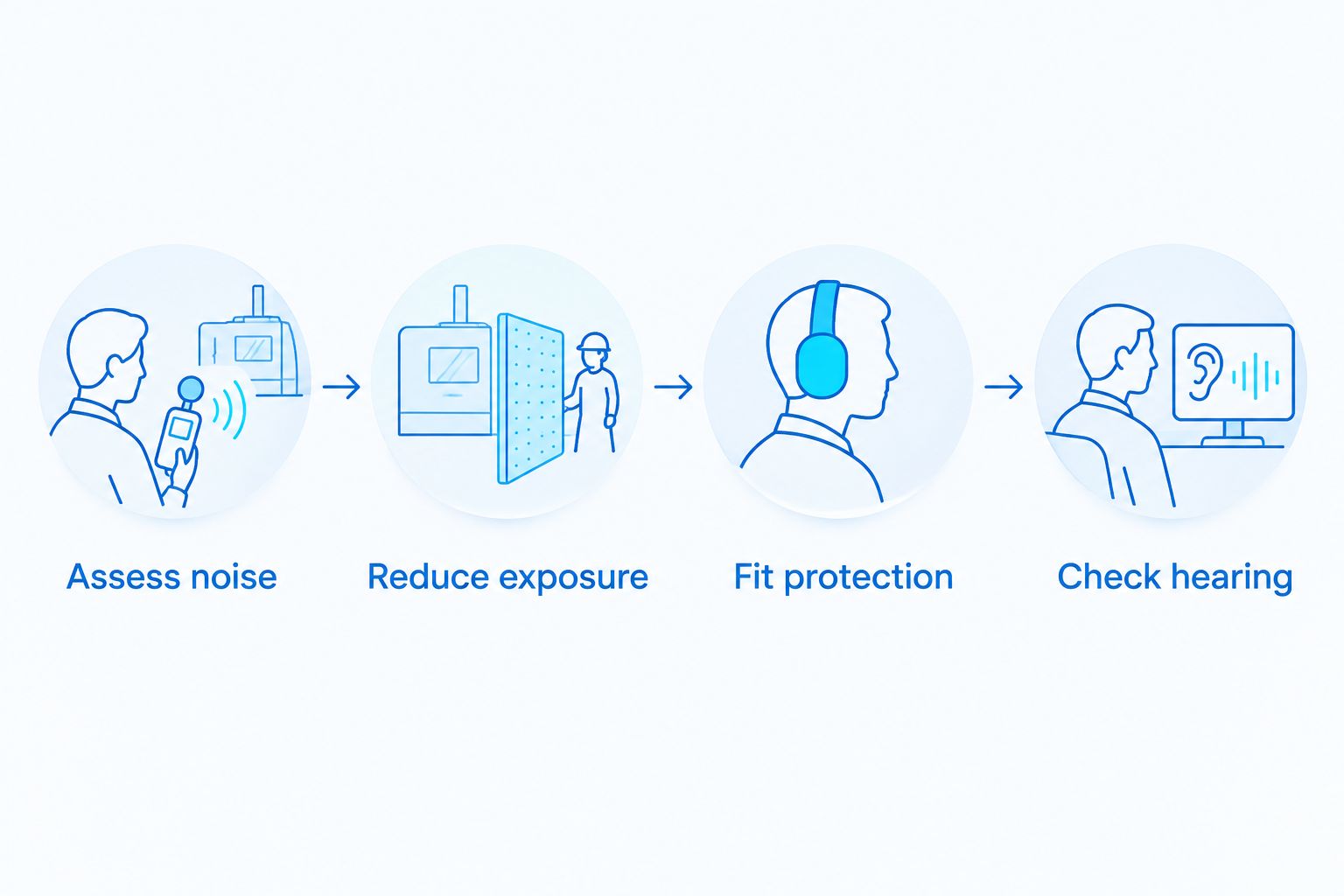
For your 2026 routine, follow this sequence instead of treating supplements as an extra layer of protective equipment:
- Assess noise: confirm the relevant exposure assessment.
- Reduce exposure: follow the employer’s noise-control procedures.
- Fit protection: request instruction and individual fit testing where available.
- Check hearing: attend the hearing tests required by your workplace program.
The sequence keeps prevention separate from wellness purchases. A bottle or pouch of supplements cannot tell you whether your earplugs seal correctly or whether a noisy task needs a different control.
3. Decide whether an optional gummy fits your routine
Before choosing a format, list what you already take and why you want another supplement. Bring that list to a pharmacist or clinician, particularly if you take medication, have a health condition, or are considering several products with overlapping ingredients. Food and a consistent daily routine remain separate from treating a diagnosed deficiency.
Tinniva Ear Health Gummies are a dietary supplement marketed for everyday ear wellness. The practical reason to consider this format is your preference for gummies; that preference is not evidence of protection against industrial noise.
Tinniva is best for adults who prefer gummies for an optional ear wellness supplement routine—not workplace hearing protection. Keep that boundary clear when deciding whether the product belongs in your day. A convenient format is useful only if the actual label and your health needs fit.
- State your goal as everyday wellness, not noise-damage prevention.
- Compare the current Supplement Facts label with products you already take.
- Ask a pharmacist about ingredients alongside your medications.
- Follow the labeled directions rather than increasing use after a loud shift.
- Keep workplace hearing protection unchanged when starting a supplement.
4. Evaluate the label rather than the promise
Read the complete label before ordering. Look for serving instructions, ingredient amounts, warnings, allergens, and the manufacturer’s contact information. An ear-health name alone tells you neither what is inside nor whether the formulation suits you.
FDA’s dietary supplement guidance distinguishes supplements from medicines: dietary supplements are not approved by FDA for safety and effectiveness before marketing. A general wellness statement therefore does not establish that a product prevents hearing loss or treats tinnitus. Apply that distinction to every product you consider in 2026.
For Tinniva, assess the current label rather than assuming ingredient amounts, dietary suitability, or independent testing from the product name. A gummy format is an advantage for someone who prefers gummies; its limitation is that format alone says nothing about a clinical outcome.
- Read ingredient amounts per labeled serving, not just front-of-pack wording.
- Check for overlap with multivitamins and other wellness supplements.
- Confirm any dietary or allergen requirements directly from the label.
- Verify a testing claim before relying on it.
- Reject promises to repair noise damage or eliminate tinnitus.
5. Get tinnitus or hearing changes evaluated
Do not make a supplement trial the first response to a change in hearing. New ringing, muffled sound, difficulty understanding speech, or symptoms that follow a shift deserve attention through your workplace reporting process and an appropriate healthcare professional. An evaluation helps distinguish the symptom from its possible causes.
The National Institute on Deafness and Other Communication Disorders states in its tinnitus guidance that vitamins, herbal extracts, and dietary supplements advertised as tinnitus remedies have not been proven effective. That applies even when a product uses reassuring wellness language. Support language is not proof of tinnitus relief.
Sudden hearing loss needs immediate medical attention, especially when it comes with ringing or dizziness. Do not wait for a supplement to work. Ringing that follows your heartbeat or persistent symptoms in one ear also warrant medical assessment.
- Record when the change began and whether it affects one or both ears.
- Report work-related symptoms without waiting for the next scheduled test.
- Seek immediate medical care for sudden hearing loss.
- Ask about hearing testing and appropriate tinnitus management.
- Bring your medication and supplement list to the appointment.
6. Review your routine without treating symptoms as a safety meter
Use a simple notebook or phone note to track symptoms, tasks, hearing-protection problems, and changes to your routine. You do not need an app or a purchased program. The goal is to give your safety team and clinician a clear account, not to diagnose yourself.
Keep supplement observations separate from workplace exposure records. Feeling less bothered by ringing does not demonstrate that noise exposure is safe, and a symptom change after starting a product does not establish that the product caused it. Exposure measurements and hearing tests answer different questions from a symptom diary.
For the rest of 2026, revisit the plan whenever equipment, duties, medication, or symptoms change. Review the label again when buying a replacement, rather than assuming every purchase has identical instructions.
- Record the task, symptoms, and protection used when a problem occurs.
- Note supplement changes without assigning them a medical effect.
- Keep scheduled workplace hearing checks.
- Ask for reassessment after a meaningful change in noise conditions.
- Review ongoing supplement use with a clinician or pharmacist.
Compare your options by the job they actually do
These options serve different purposes; they are not interchangeable alternatives. Noise controls and correctly selected hearing protection address workplace exposure. Supplements do not. Match your decision to the problem before comparing formats or wellness claims.
| Option | Best for | Practical benefit | Key limitation |
|---|---|---|---|
| Workplace noise controls | Reducing noise exposure at its source or along its path | Addresses the workplace hazard | Requires employer assessment and implementation; does not treat existing symptoms |
| Properly selected earplugs or earmuffs | Protecting hearing during designated noisy tasks | Reduces sound reaching the ear when correctly fitted and worn | Depends on selection, fit, condition, and consistent use |
| Hearing evaluation | Investigating tinnitus, hearing changes, or workplace test findings | Assesses hearing and guides next steps | Does not replace exposure controls during future shifts |
| Clinician-directed nutrient supplementation | Addressing an identified deficiency or specific nutritional need | Targets the need identified in an assessment | Is not a general treatment for noise-related tinnitus or hearing loss |
| Ear wellness gummies | Adults who prefer an optional gummy supplement routine | Provides a gummy format for everyday supplement use | Does not replace protection or provide a proven tinnitus treatment |
For a factory worker, the first two rows belong in a prevention discussion. The third addresses symptoms and hearing status. The final two belong in a separate conversation about nutrition and supplement use, with different expectations and no promise of noise protection.
A gummy and an earplug do not compete on convenience because they do not perform the same job. Make room for an optional wellness purchase only after your safety questions have clear answers.
Common mistakes factory workers make
Taking extra gummies after a loud shift
A higher intake does not undo the shift’s exposure. Follow the label, report the noise concern, and seek assessment for hearing changes. Treat the exposure as a workplace safety issue rather than a reason to change a supplement serving.
Using the absence of ringing as proof of safety
Noise exposure does not become safe because your ears feel normal afterward. Use the employer’s assessment and hearing conservation program rather than symptoms alone. The same rule applies when tinnitus becomes less noticeable.
Assuming earmuffs work despite a broken seal
Glasses, headwear, worn cushions, or poor positioning can interfere with an earmuff seal. Ask for help checking the complete protective setup you wear on the production floor. Do not compensate for an uncomfortable fit by removing protection during noisy tasks.
Combining several ear wellness products without checking labels
Different product names can conceal overlapping ingredients. Put the labels side by side and ask a pharmacist to check the combined intake. A larger collection of supplements is not evidence of better ear care.
Waiting for a supplement before reporting hearing changes
A trial purchase must not delay care or workplace reporting. Sudden hearing loss requires immediate medical attention; persistent ringing also deserves assessment. Bring the product label with you rather than using it as a reason to postpone the appointment.
FAQ
What are the best ear health supplements for factory workers?
There is no established supplement that replaces factory noise protection or provides proven tinnitus treatment. Choose any optional supplement around your nutritional needs, medications, and label review—not a promise of protection from machinery noise.
Can ear health gummies prevent hearing damage from factory noise?
Ear health gummies are not a substitute for preventing harmful noise exposure. Workplace noise controls, properly selected and fitted hearing protection, and hearing conservation measures address that risk.
Are Tinniva gummies a treatment for tinnitus?
Tinniva gummies are marketed for everyday ear wellness, not as a proven tinnitus treatment. Persistent ringing needs appropriate assessment rather than reliance on a supplement.
What noise level triggers a hearing conservation program?
Under OSHA’s general-industry noise standard, an exposure averaging 85 dBA over an 8-hour workday triggers hearing conservation requirements. Ask your employer how the exposure assessment applies to your tasks and shift.
Should I take vitamin B12 or zinc for ringing after work?
Do not assume vitamin B12 or zinc treats ringing after a shift. A clinician can assess whether you have a nutritional deficiency or another reason for supplementation while separately evaluating the hearing symptom.
What should I do if one ear suddenly sounds muffled?
Seek immediate medical attention for sudden hearing loss, including a sudden muffled-hearing change. Do not wait for a supplement, the end of a trial period, or your next routine workplace hearing test.
Can I wear hearing protection and take a daily supplement?
Taking a supplement does not change your need for workplace hearing protection. Review the supplement’s label and suitability with a pharmacist or clinician, and follow your employer’s protection requirements independently.
One last thing
Ask your safety representative a specific question: Does my hearing protection fit correctly with everything else I wear? That turns a general concern into a checkable action involving your actual plugs or earmuffs, glasses, and headwear. Keep that question on your 2026 checklist before adding another wellness product.