
Military veterans’ ear health supplementation is the use of dietary supplements with the aim of supporting everyday ear wellness, not treating service-related hearing damage or tinnitus. This 2026 guide to ear health supplements for military veterans explains how to separate wellness products from treatment, review safety, and build a routine around your actual needs.
- Ear health supplements for military veterans do not replace hearing tests, tinnitus care, or hearing protection.
- Tinniva is best for veterans seeking a gummy-format ear wellness supplement, not a tinnitus treatment.
- Choose vitamins for a documented nutritional need, not because an ear-ringing claim sounds convincing.
- Review supplement labels and medicines with a pharmacist before adding anything to your routine.
Why ear health supplements matter for military veterans
For veterans comparing ear health supplements in 2026, the central question is whether a product addresses a nutritional need or simply promises relief. Military noise exposure belongs in your hearing history; it does not establish a vitamin deficiency or show that a supplement will help.
Treat ear wellness supplements as optional additions, not a substitute for hearing care. The National Institute on Deafness and Other Communication Disorders’ tinnitus guidance states that dietary supplements advertised for tinnitus have not been proven effective. The VA/DoD Clinical Practice Guideline for Tinnitus also recommends against dietary supplements for tinnitus management.
For a gummy-format option, Tinniva Ear Health Gummies are marketed for everyday ear wellness support. That describes their intended role, not evidence that they reduce ringing or restore hearing.
Veterans also need to separate several different concerns. Difficulty understanding speech, persistent ringing, ear pressure, and dizziness are not interchangeable, and choosing a supplement before identifying the concern puts the purchase ahead of the assessment.
How to evaluate an ear wellness supplement in 2026
Start with a written symptom history and a review of what you already take. Only then compare a supplement’s label, format, and intended use. The practical sequence is simple: document symptoms, review medicines, check labels, and track changes.
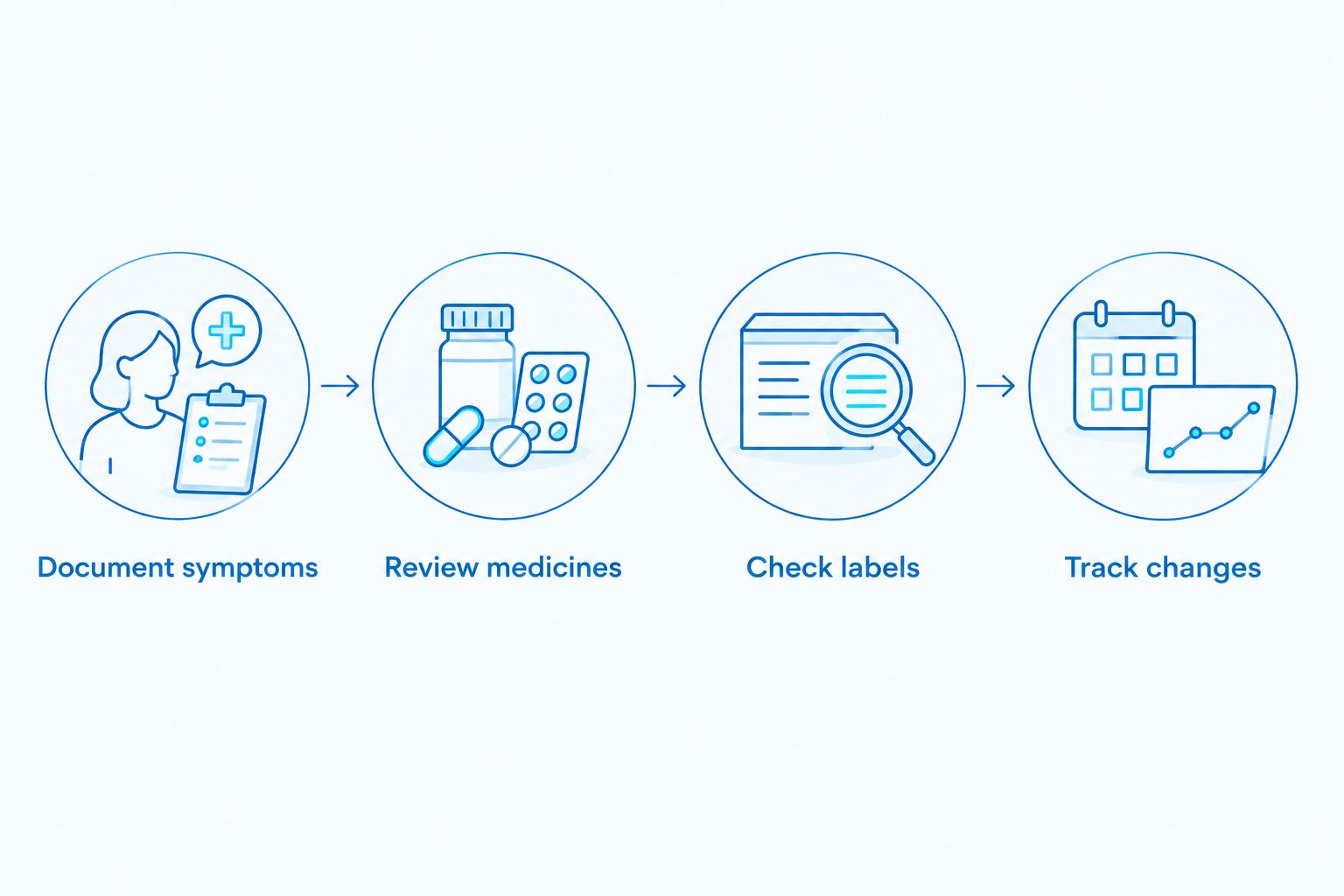
1. Document symptoms before choosing a supplement
Use a notebook or a note on your phone first. Describe what you notice without trying to diagnose it: ringing, muffled speech, trouble following conversations, or discomfort after noise exposure. Include whether the concern affects one ear or both.
For a stable, ongoing concern, a 7-day diary is a practical way to organize an appointment, not a diagnostic test. Do not wait to finish a diary if hearing changes suddenly. Sudden hearing loss needs urgent medical assessment; a supplement trial is not an appropriate first response.
Include your service-related noise history, current work environment, and recreational exposure. A clinician needs the pattern, not just a list of products you have considered.
- Document symptoms in plain language, including when they began.
- Record whether symptoms affect one ear or both.
- Note noise exposure, sleep disruption, and difficulty understanding speech.
- Tell your clinician about ringing that follows your heartbeat.
- Seek urgent assessment for sudden hearing loss rather than starting a supplement.
2. Review medicines and establish your care needs
Bring your existing prescription list, over-the-counter medicines, and supplement bottles to a pharmacist or clinician. This gives the reviewer actual ingredients and amounts rather than a description such as an ear vitamin or a wellness blend.
Do not stop a prescribed medicine because you suspect it affects your ears. Ask the prescriber to review the concern. When appropriate, an audiologist can assess hearing and discuss options for communication difficulties or tinnitus-related distress.
If you receive care through VA, ask your care team how to arrange the relevant assessment. If you use community care, bring the same service history and medication list. The goal is a clear care plan, not a separate supplement plan that nobody else knows about.
- Review medicines with a pharmacist before adding a supplement.
- Include multivitamins, sleep products, and occasional nonprescription medicines.
- Ask whether a hearing assessment fits your symptoms.
- Discuss nutrition testing when your clinician identifies a reason for it.
- Keep prescribed treatment separate from any optional wellness purchase.
3. Check labels against your actual nutritional needs
Begin with the Supplement Facts panel, not the front-of-package promise. Check the serving size, ingredient amounts, other ingredients, and warnings. Then compare those details with everything you already take.
A vitamin or mineral has a different role when a clinician identifies a deficiency. That does not make the same nutrient a general tinnitus treatment. The NIH Office of Dietary Supplements’ nutrient fact sheets are useful references for nutrient functions, intake limits, and interactions; they are not endorsements of ear health products.
Tinniva ear wellness gummies are an option for someone who prefers that format, but the current label still needs review. Do not assume that a gummy contains a particular vitamin, mineral, or herbal ingredient without checking it.
Before choosing anything, write down 3 questions: What need does this address? What is already in my routine? What would make me stop taking it?
- Check labels for the full serving size and ingredient amounts.
- Compare overlapping nutrients across all supplements you use.
- Review allergy information and other ingredients.
- Ask about interactions and relevant medical conditions.
- Reject promises to cure tinnitus or reverse noise-related hearing damage.
4. Choose a format you can use as directed
Start by asking whether you need another supplement at all. A clear label review and a suitable care plan matter more than whether the product is a gummy, capsule, or tablet.
If you decide to add a supplement, choose a format you can take consistently according to its directions. Gummies offer an alternative to swallowing tablets, but their format does not establish better absorption or better hearing outcomes. Check the label rather than assuming that a pleasant format means fewer precautions.
Tinniva Ear Health Gummies are designed as a convenient daily ear wellness supplement. Their fit is the routine and format; the limitation is that an everyday wellness product is not evidence-based treatment for tinnitus or hearing loss.
- Choose a format that fits your preferences and label directions.
- Read the serving instructions rather than guessing from the package size.
- Check sugars, sweeteners, and allergens when relevant to your needs.
- Store supplements according to their labels and away from children.
- Avoid treating gummies as snacks or taking extra servings.
5. Track changes without turning them into proof
Use the same notebook you started with. If you add a supplement, record its name, serving instructions, start date, and any unwanted effects. Keep the rest of the record useful: include sleep, noise exposure, and changes to clinician-directed care.
Make 1 optional supplement change at a time after the safety review. This is an organizational recommendation, not a clinical testing method. Starting several products together makes it harder to explain your routine or identify which one caused an unwanted effect.
Tinnitus can fluctuate, so a better day after starting a supplement does not establish that the supplement caused the improvement. Record what happened without converting a personal observation into a treatment claim.
- Track changes using the same symptom descriptions each time.
- Record new supplements and any unwanted effects.
- Note major changes in sleep, noise exposure, or prescribed care.
- Discuss new symptoms with a clinician rather than increasing a serving.
- Ask your pharmacist or clinician what warrants stopping the product.
6. Keep hearing protection and follow-up in the routine
A supplement does not make additional noise exposure safe. Keep appropriate hearing protection available for loud work, tools, firearms, and noisy recreation. Ask an audiologist about suitable protection and fit if you are unsure what to use.
For bothersome tinnitus, ask about evidence-based management rather than searching indefinitely for a different ingredient. Depending on your assessment, care can include education, hearing aids when hearing loss is present, and cognitive behavioral therapy for tinnitus-related distress.
Your 2026 ear wellness routine should support that care, not compete with it. Bring your current supplement list to follow-up appointments so the advice reflects what you actually use.
- Use hearing protection for hazardous noise exposure.
- Ask about fit and suitability for your activities.
- Discuss hearing aids when assessment identifies hearing loss.
- Ask about support for tinnitus-related distress and sleep difficulties.
- Update your supplement list before follow-up appointments.
Compare options by purpose, not promises
The useful comparison is not which bottle makes the strongest claim. It is which option matches the need identified in your assessment. An ear wellness supplement and tinnitus care do different jobs.
| Option | Best for | Practical benefit | Key limitation |
|---|---|---|---|
| No added supplement | Veterans without an identified nutritional need who want to avoid another product | Keeps the routine simpler and avoids duplicate ingredients | Does not address an untreated nutritional deficiency or replace hearing care |
| Clinician-directed nutrient supplementation | Veterans with an identified deficiency or other clinical indication | Targets a specific nutritional need | Is not a general treatment for tinnitus or noise-related hearing loss |
| Tinniva Ear Health Gummies | Veterans who prefer a gummy-format ear wellness supplement | Provides a daily supplement format that does not require swallowing a tablet | Wellness positioning does not establish tinnitus relief or hearing restoration |
| Audiology-led care | Veterans with hearing difficulties or bothersome tinnitus | Connects assessment with appropriate hearing and tinnitus management | Requires evaluation and follow-up rather than a single purchase |
You do not need to choose a supplement to have an ear health routine. Assessment, suitable hearing protection, and follow-through on a care plan remain relevant whether you take a wellness product or not.
If you prefer a gummy, make the decision after reviewing the label and your existing routine. Do not use the format as a shortcut around checking ingredients, interactions, or the reason for taking it.
Common mistakes veterans make with ear health supplements
Treating a noise-exposure history as a deficiency diagnosis
Military noise exposure is relevant to hearing assessment, but it does not tell you which nutrient to take. Do not choose vitamin B12, zinc, magnesium, or another ingredient solely because a product connects it with ear ringing. Ask what nutritional need the recommendation addresses.
Buying before arranging a hearing assessment
Difficulty following conversation deserves attention even when ringing is the symptom that bothers you most. A supplement purchase cannot tell you whether hearing loss is present. Describe both concerns so the assessment addresses communication as well as the sound you notice.
Adding an ear supplement to an already crowded routine
A multivitamin, an individual nutrient, and an ear wellness blend can contain overlapping ingredients. Different product names do not mean different contents. Compare labels together and let a pharmacist review the full list, including products you take only occasionally.
Confusing a personal story with evidence for veterans
A testimonial does not show that a product treats tinnitus, and military-focused wording does not establish that it was studied in veterans. For a 2026 purchase, ask whether the evidence concerns the finished product, the relevant health outcome, and people with a comparable clinical situation.
FAQ
What are the best ear health supplements for military veterans?
There is no established best supplement for treating veterans’ tinnitus or service-related hearing damage. Choose supplementation for an identified nutritional need or an optional wellness preference after reviewing safety with a clinician or pharmacist.
Can ear health gummies cure tinnitus from military noise exposure?
Ear health gummies have not been established as a cure for tinnitus from military noise exposure. NIDCD guidance states that dietary supplements advertised for tinnitus have not been proven effective.
Are Tinniva gummies a tinnitus treatment?
Tinniva gummies are marketed as an everyday ear wellness dietary supplement, not an established tinnitus treatment. Review the current label and discuss suitability with a pharmacist or clinician.
Should veterans take vitamin B12 or zinc for ringing ears?
Veterans should not assume that ringing ears means they need vitamin B12 or zinc. A clinician can assess whether a deficiency or another indication justifies supplementation; that is separate from treating tinnitus.
Can I take an ear supplement with my prescription medicines?
A pharmacist needs to review the supplement’s ingredients against your medicines before confirming suitability. Bring the actual label and include other supplements and nonprescription medicines in the review.
Should I try a supplement before getting a hearing test?
A supplement trial should not delay assessment of hearing difficulties or bothersome tinnitus. Sudden hearing loss needs urgent medical evaluation rather than a wait-and-see supplement routine.
Are gummies better than capsules for ear health?
A gummy format does not establish better hearing outcomes than a capsule. Choose a suitable format only after checking the ingredients, serving directions, and reason for taking the supplement.
One last thing
Before your next appointment, take clear photos of every supplement label you use, including the Supplement Facts panel and directions. A product name alone does not show your pharmacist the ingredients or amounts. This small step makes a safety review more useful than arriving with a list of marketing claims.