
Best overall: a single nutrient matched to a confirmed deficiency. Best gummy-format option for an everyday wellness routine: Tinniva Ear Health Gummies. This 2026 guide to ear health supplements ranked by ingredients puts a clear nutritional purpose ahead of long ingredient lists; no supplement earns a recommendation as a proven tinnitus treatment.
- Ear health supplements ranked by ingredients should prioritize a confirmed nutritional need, not the longest formula.
- Vitamin B12 and zinc belong in deficiency-focused decisions, not blanket tinnitus recommendations.
- Tinniva Ear Health Gummies fit a gummy-format wellness routine, not a proven tinnitus-treatment role.
- Magnesium and ginkgo do not earn a default recommendation for persistent tinnitus.
Why this matters
An ingredient can be essential to normal health without treating ear ringing when you take more of it. That distinction separates a useful nutritional decision from an unsupported promise.
The National Institute on Deafness and Other Communication Disorders states that vitamins, herbal extracts, and dietary supplements advertised for tinnitus have not been proven effective. For your 2026 shortlist, treat nutritional support and tinnitus treatment as separate questions.
The best ingredient is the one that addresses an identified need—not the one with the most ear-health marketing. If ringing affects sleep, concentration, or daily life, seek an assessment rather than cycling through supplements.
What makes the best ear health supplement?
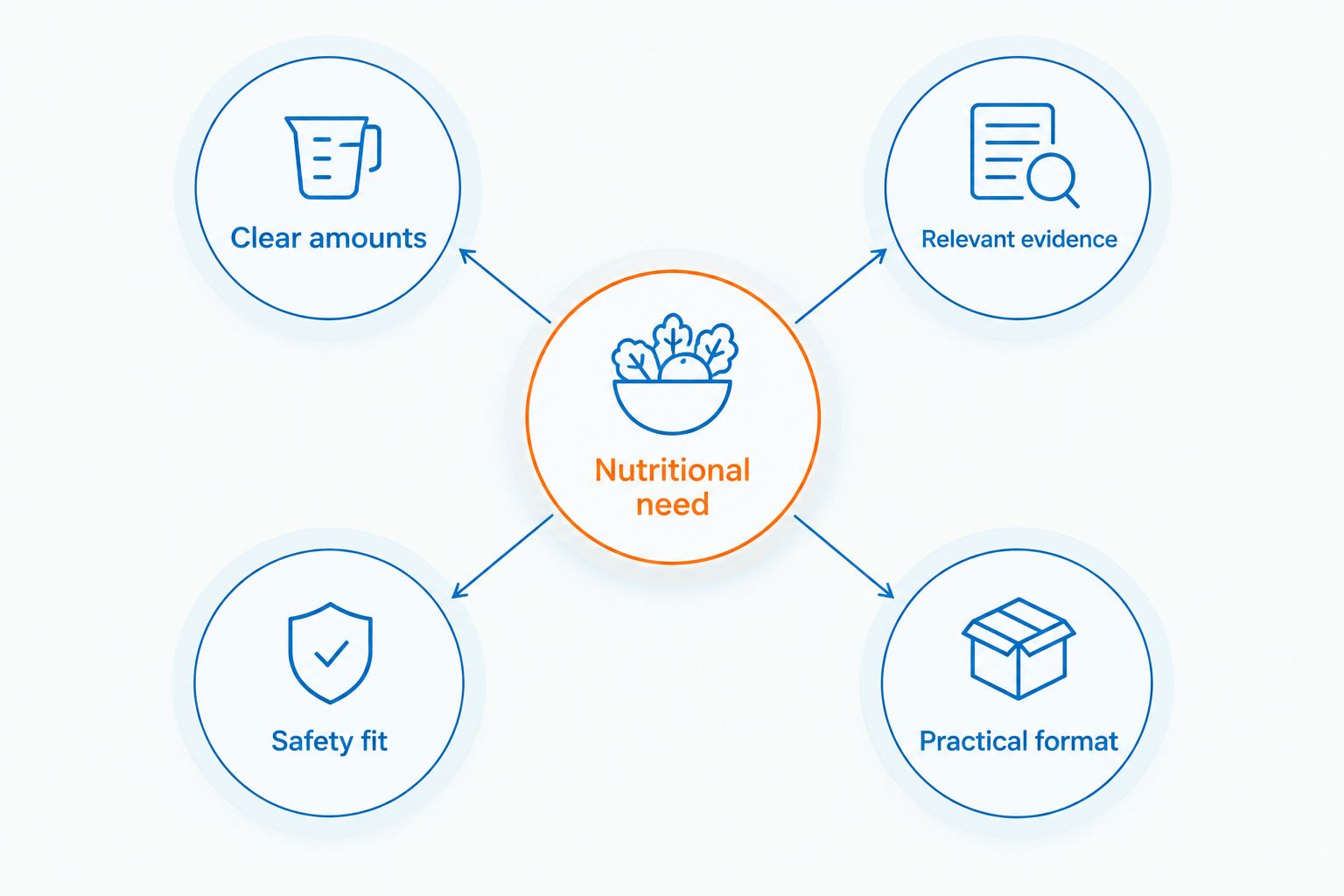
Use these criteria before comparing a gummy, capsule, or herbal blend:
- Nutritional need: The ingredient addresses an identified dietary gap or deficiency.
- Clear amounts: The label states each active ingredient and its amount per serving.
- Relevant evidence: Research addresses the intended outcome, not just general nutrient biology.
- Safety fit: The formula fits your medicines, health conditions, and existing supplements.
- Practical format: You can follow the directions without overlooking serving size or warnings.
Ingredient quality is not the same as ingredient quantity. A short formula with a clear purpose is easier to assess than a blend whose individual amounts remain hidden.
For a 2026 purchase, inspect the current Supplement Facts panel rather than relying on a search-result description. Check the complete serving, inactive ingredients, directions, and warnings together.
Ear health supplements at a glance
This ranking orders options by their decision value: a defined nutritional reason comes before convenience or an ear-health claim. It does not rank unverified brand formulas, manufacturing quality, or treatment effectiveness.
| Rank and option | Best for | Standout consideration | Key limitation |
|---|---|---|---|
| 1. Vitamin B12 | Addressing confirmed B12 deficiency | A specific nutrient with a recognized nutritional role | Not a proven general tinnitus treatment |
| 2. Zinc | Addressing confirmed zinc deficiency | A targeted alternative to a broad blend | Excess intake can interfere with copper status |
| 3. Magnesium | Addressing an identified magnesium need | Requires attention to the supplemental amount | Insufficient evidence for routine tinnitus use |
| 4. Ginkgo biloba | Evaluating herbal tinnitus claims critically | A clear example of evidence mattering more than positioning | Not recommended as routine tinnitus care |
| 5. Tinniva Ear Health Gummies | A gummy-format everyday wellness routine | A supplement format for consumers who prefer gummies | Format alone does not establish ingredient quality or tinnitus benefit |
The first place does not mean everyone should take B12. It means correcting a confirmed deficiency has a clearer purpose than buying an untargeted supplement for ringing.
1. Vitamin B12: best for a confirmed B12 deficiency
Vitamin B12 supports normal nerve function and red blood cell formation. A confirmed deficiency gives B12 supplementation a defined nutritional purpose; an ear-health claim alone does not.
The NIH Office of Dietary Supplements lists an adult recommended intake of 2.4 micrograms per day, with different requirements during pregnancy and breastfeeding. That reference describes nutritional intake, not a tinnitus-treatment dose or a plan for correcting deficiency.
Vitamin B12 pros:
- Addresses a recognized nutritional deficiency when appropriately selected.
- Offers a focused ingredient to discuss with your clinician.
- Makes ingredient amounts easier to assess than a multi-ingredient blend.
Vitamin B12 cons:
- Does not establish a tinnitus benefit for people with adequate B12 status.
- Deficiency management requires attention to its cause, including absorption problems.
Best for: Adults with confirmed B12 deficiency and an appropriate replacement plan.
Before choosing a form or amount, ask what caused the deficiency and how follow-up will work. A large number on the front label does not answer either question, and replacing B12 does not guarantee that ear ringing will improve.
Verdict: Hold until your nutritional need and replacement plan are clear.
2. Zinc: best for a confirmed zinc deficiency
Zinc supports normal immune function and other essential body processes. Its nutritional importance does not establish that taking extra zinc improves tinnitus.
The NIH Office of Dietary Supplements lists adult recommended intakes of 8 milligrams per day for women and 11 milligrams per day for men, outside pregnancy and breastfeeding. The adult upper intake level is 40 milligrams per day from food and supplements combined; it is a safety boundary, not a target.
Zinc pros:
- Has a clear nutritional role when deficiency is present.
- Allows a focused review of the amount you already consume.
- Avoids unrelated ingredients when selected as a single-nutrient supplement.
Zinc cons:
- Excess intake can cause adverse effects and interfere with copper status.
- Routine supplementation is not an established tinnitus treatment.
Best for: Adults whose assessment identifies inadequate zinc status or a specific nutritional need.
Check every supplement you already take before adding zinc. A multivitamin and an ear-health blend can contain the same nutrient, so assess their combined amounts rather than treating each bottle separately.
Verdict: Hold unless a nutritional assessment supports zinc supplementation.
3. Magnesium: best for an identified magnesium need
Magnesium contributes to normal muscle and nerve function. That biological role is not proof that a magnesium supplement reduces persistent tinnitus.
The NIH Office of Dietary Supplements sets an adult upper intake level of 350 milligrams per day for supplemental magnesium, including magnesium-containing medicines. This limit does not include magnesium naturally present in food and is not a tinnitus dosage recommendation.
Magnesium pros:
- Has an established nutritional role beyond ear-health marketing.
- Allows a targeted discussion of dietary intake and supplementation.
- Provides a measurable amount when clearly declared on the label.
Magnesium cons:
- Supplemental magnesium can cause diarrhea and abdominal discomfort.
- Kidney problems and medicine interactions require extra care.
Best for: Adults with an identified nutritional reason to consider magnesium and a suitable safety review.
In 2026, the useful question remains whether magnesium addresses your situation—not which form sounds most specialized. Compare the declared magnesium amount, directions, and warnings before comparing claims about absorption or ear support.
Verdict: Hold for a defined nutritional purpose; skip it as a default tinnitus remedy.
4. Ginkgo biloba: best for checking herbal claims against evidence
Ginkgo biloba is an herbal ingredient promoted for tinnitus. Its placement here is a cautionary comparison, not an endorsement: a botanical name and a traditional-use story do not establish clinical benefit.
The National Center for Complementary and Integrative Health reports that research does not support ginkgo as an effective tinnitus treatment. Ginkgo also requires a safety review, particularly when medicines or bleeding risk are involved.
Ginkgo biloba pros:
- Is a named botanical rather than an unspecified herbal category.
- Has tinnitus-related research that readers can assess.
- Can be evaluated separately when the product is not a mixed blend.
Ginkgo biloba cons:
- Does not have supporting evidence for routine tinnitus treatment.
- Can interact with medicines, including those affecting blood clotting.
Best for: Readers comparing herbal claims who need a clear reason not to equate plant-based with effective or risk-free.
Do not use an extract name or a technical-looking label as a substitute for outcome evidence. Ask whether the research supports the actual reason you intend to take the product.
Verdict: Skip ginkgo as a routine tinnitus supplement.
5. Tinniva Ear Health Gummies: best for a gummy-format routine
Tinniva Ear Health Gummies are a dietary supplement positioned for everyday ear wellness. Their role in this guide is format preference, not a claim that their ingredients outperform the nutrients above.
Tinniva is best for consumers who prefer gummies for an everyday ear wellness supplement routine. Choosing that format is separate from deciding whether the formula addresses a nutritional need.
Tinniva Ear Health Gummies pros:
- Provide a gummy option rather than requiring a capsule preference.
- Are positioned specifically around everyday ear wellness.
- Offer a product to assess against your own routine and label requirements.
Tinniva Ear Health Gummies cons:
- Gummy format does not demonstrate better ingredient quality or absorption.
- Wellness positioning does not establish tinnitus relief or hearing restoration.
Best for: Consumers who prefer gummies and have checked the current formula, directions, and warnings for suitability.
Before choosing any ear wellness gummy, review the active ingredients and their amounts per serving. Also check inactive ingredients against your dietary needs; do not assume that a gummy is sugar-free, vegan, or suitable for a particular allergy.
Verdict: Hold until the current label fits your nutritional needs and safety requirements.
How this ranking works
The 2026 ranking prioritizes a defined nutritional indication, clear ingredient amounts, relevant evidence, and safety. Format comes after those criteria because a convenient supplement still needs a reason to belong in your routine.
Vitamin B12 ranks above the other options only in the context of confirmed deficiency. Zinc and magnesium follow the same conditional logic, while ginkgo lacks a basis for routine tinnitus use and gummies represent a format choice rather than an evidence category.
The nutritional reference amounts above come from NIH Office of Dietary Supplements fact sheets for adults. Tinnitus guidance comes from NIDCD and NCCIH public patient resources; those sources address evidence and safety, not a head-to-head evaluation of the products on this page.
Check the label before choosing
Use this sequence to turn an ingredient ranking into a practical decision:
- Define the purpose. Separate correcting a nutritional gap from trying to reduce tinnitus.
- Read the serving. Check how many gummies, tablets, or capsules make the declared serving.
- Compare totals. Add overlapping nutrients across supplements you already use.
- Review safety. Ask a pharmacist or clinician about medicines, conditions, and warnings.
- Set expectations. Do not treat a wellness claim as a promise of symptom improvement.
Avoid choosing by ingredient count alone. Each added ingredient introduces another amount, purpose, and safety question; a longer formula is not automatically a better fit.
Keep a copy of the label when discussing a supplement with a healthcare professional. The exact formula is more useful than a product category or an advertising headline.
Which ear health supplement should you choose?
Choose a targeted nutrient only when your nutritional assessment supports it. If your goal is relief from persistent tinnitus, prioritize evaluation and evidence-based management rather than selecting the longest supplement formula.
For an everyday wellness routine, Tinniva offers a gummy-format option to assess against the same label and safety criteria. No format removes the need to check ingredients, and no supplement in this guide should replace care for a new hearing change.
FAQ
What's the best ear health supplement by ingredients?
The best ingredient choice is one that addresses a confirmed nutritional need. Vitamin B12, zinc, or magnesium should not be selected solely because a product mentions ear health or tinnitus.
Is vitamin B12 better than zinc for tinnitus?
Neither vitamin B12 nor zinc is established as a general tinnitus treatment. The useful distinction is whether you have a deficiency or another nutritional reason to take one.
Are ear health gummies better than capsules?
Gummies are a format preference, not evidence of better effectiveness. Compare the ingredients, amounts per serving, inactive ingredients, and warnings rather than assuming one format works better.
Can Tinniva Ear Health Gummies cure tinnitus?
Tinniva Ear Health Gummies should not be treated as a tinnitus cure. They are positioned as an everyday ear wellness dietary supplement, which is different from a proven tinnitus treatment.
Should I take magnesium for ringing in my ears?
Do not choose magnesium as a default treatment for ringing in your ears. Discuss persistent tinnitus and any nutritional concerns with a healthcare professional before adding a supplement.
Is ginkgo biloba a good natural tinnitus remedy?
Research does not support ginkgo biloba as an effective tinnitus treatment. It also has safety considerations and potential medicine interactions, so natural does not mean risk-free.
When should I get ear ringing checked instead of taking supplements?
Seek prompt medical care when ringing accompanies sudden hearing loss. Persistent ringing, ringing in one ear, or a sound that follows your heartbeat also warrants medical assessment rather than supplement self-treatment.
One last thing
The serving size matters as much as the ingredient name. Compare amounts for the full labeled serving, not an assumed single gummy or capsule, and include overlapping nutrients from other supplements.
For your 2026 decision, write down the purpose before choosing the product. If the only purpose is a promise to stop ringing, return to the evidence and arrange an assessment instead.