
Call center agents’ ear health supplementation is the optional use of dietary supplements to support everyday wellness, not a way to prevent headset-related hearing damage. This 2026 guide explains how to assess ear health supplements for call center agents, where gummies such as Tinniva Ear Health Gummies fit, and which workplace changes deserve attention first.
- Ear health supplements for call center agents belong behind safer listening practices and appropriate medical assessment.
- Tinniva offers ear wellness gummies; the format does not establish effectiveness for tinnitus or hearing protection.
- Review ingredients, serving directions, medication interactions, and overlapping supplements before adding a product.
- Sudden hearing loss needs urgent medical attention, not a supplement trial.
Why ear health supplementation matters for call center agents
Call center work creates a practical challenge: you need to hear callers clearly without turning every difficult connection into a louder listening session. Background conversations, inconsistent caller volume, and uncomfortable headset fit deserve separate attention. A supplement does not correct any of them.
The distinction matters when you shop. An everyday ear wellness claim is different from evidence that a product treats tinnitus, restores hearing, or protects against noise. The National Institute on Deafness and Other Communication Disorders, or NIDCD, states that dietary supplements advertised for tinnitus have not been proven effective.
Your 2026 ear wellness plan should start with symptoms and sound exposure, not a supplement purchase. A gummy can be an optional routine choice; it cannot replace a workplace equipment review, a hearing assessment, or treatment for an identified condition.
You also need a plan that fits monitored calls, scheduled breaks, and shared equipment. The useful question is not simply which supplement to take. It is which action addresses the problem you actually have.
Build an ear wellness routine around your workday
Check symptoms before choosing supplements
Start by separating a general wellness goal from a symptom that needs assessment. Ringing, muffled hearing, pain, pressure, and dizziness are not interchangeable. Record what you notice instead of treating every ear complaint as a reason to buy the same product.
Sudden hearing loss requires urgent medical evaluation. NIDCD describes sudden deafness as a medical emergency. Do not wait for a supplement to work, even if the change seems like a blocked ear.
For symptoms that are not sudden, arrange an appropriate appointment rather than diagnosing yourself from a product page. A clinician can decide whether you need an ear examination, hearing testing, or another assessment. Tell them that you use a headset for work and explain whether symptoms happen during calls, after shifts, or away from work.
- Seek urgent care for sudden hearing loss.
- Arrange assessment for persistent or worsening ringing.
- Report symptoms affecting only one ear.
- Mention sound that follows your heartbeat.
- Describe pain, drainage, dizziness, or changes in hearing.
Reduce exposure before adding a product
Use the lowest headset volume that lets you understand speech clearly. If callers are difficult to hear, investigate the connection, microphone placement, headset fit, and surrounding noise before raising the volume. Ask your supervisor or equipment team to help with recurring problems.
For your 2026 workplace review, distinguish a device setting from measured sound exposure. NIOSH recommends an occupational noise exposure limit of 85 dBA over 8 hours, with exposure time halved for each 3 dB increase. At 88 dBA, that recommended duration becomes 4 hours.
Those figures describe measured exposure, not a safe percentage on a headset slider. A volume setting cannot tell you the sound level reaching your ear. They are occupational reference points, not a guarantee of safety for every listener.
A headset marketed for noise cancellation also does not automatically qualify as hearing protection. Ask what the equipment actually does rather than assuming the label answers that question.
- Lower playback volume before a call starts.
- Report sudden loud sounds through your workplace process.
- Ask for help with recurring audio spikes.
- Request an occupational noise assessment when exposure is a concern.
- Avoid increasing volume to overpower nearby conversations.
Review supplements as an optional choice
You do not need an ear supplement to begin an ear wellness routine. Start with listening habits, suitable equipment, and any recommended assessment. If you still want a supplement, decide what you expect it to do before comparing formats.
Tinniva ear wellness gummies are best for adults who prefer a gummy format for an optional everyday supplement. That is a format recommendation, not evidence of tinnitus relief. The supplied product description presents the gummies as daily ear wellness support; it does not establish hearing protection or treatment results.
The practical advantage is the gummy format for someone who prefers it to tablets or capsules. The limitation is that a convenient format says nothing about whether the ingredients are appropriate for your health needs. Check the current label rather than assuming a product contains a particular vitamin, mineral, or botanical.
A pharmacist can help review the formula alongside your medicines and existing supplements. A clinician should guide treatment when testing identifies a deficiency or another condition.
- Define your goal as everyday wellness, not a promised cure.
- Compare formats only after checking suitability.
- Ask a pharmacist about medication interactions.
- Discuss supplement use during pregnancy or breastfeeding.
- Keep prescribed care separate from optional wellness purchases.
Read labels before combining products
Compare the Supplement Facts panel with everything else you already take. A multivitamin, a sleep supplement, and an ear wellness product can contain overlapping ingredients. Different names on the front of the packaging do not mean different contents inside.
Look at the serving size and the amount of each ingredient per serving. Do not assume that the number of gummies shown in an image is the recommended amount. Read the directions and warnings on the actual product.
For a 2026 supplement review, treat disease-treatment promises as a warning sign. The FDA does not approve dietary supplements for safety and effectiveness before they are marketed. A claim about supporting normal function is not FDA approval of a tinnitus treatment.
Independent quality verification can help assess specified manufacturing or testing standards. It does not, by itself, prove that a supplement improves tinnitus. Check what a certification covers instead of treating every seal as clinical evidence.
- Read the full Supplement Facts panel.
- Check serving directions and warnings.
- Compare ingredients with your multivitamin.
- Review allergens and other ingredients.
- Verify any testing claim with the named certifier.
- Avoid products promising to reverse hearing damage.
Plan breaks around your actual shift
Use your workplace’s permitted breaks to step away from calls and give yourself time without headset audio. There is no supplement that makes uninterrupted loud listening safe. If your schedule prevents you from addressing discomfort, raise the problem with your supervisor.
Breaks also work better when they are genuinely quieter. Replacing call audio with loud music does not reduce your overall sound exposure. Choose a setting that lets you relax without competing with another source of noise.
Check physical comfort separately from loudness. Pressure from an ear cushion and excessive audio volume require different fixes. Follow the manufacturer’s instructions for fit and cleaning, especially when equipment is shared.
- Use permitted breaks away from call audio.
- Choose quieter spaces when practical.
- Avoid loud personal audio between calls.
- Report pressure points or poor headset fit.
- Follow workplace and manufacturer cleaning instructions.
Track changes without claiming a cure
Keep a simple record of symptoms, work conditions, and changes to your routine. Note whether a difficult shift involved unusually loud calls, poor sleep, a different headset, or more background noise. These observations help you describe the problem; they do not establish its cause.
If you begin a supplement, record when you start and follow its label. Do not increase the amount because ringing continues. Ask a pharmacist or clinician what to do if you notice an unwanted effect.
For your 2026 routine, review safety and usefulness separately. An easy habit is not automatically an effective treatment, and a better day does not prove that a product caused the improvement. Continue recommended assessment even when symptoms fluctuate.
- Record symptoms in plain language.
- Note relevant changes in work conditions.
- Keep the product label available for appointments.
- Follow directions without adding extra servings.
- Seek advice about suspected adverse effects.
The sequence keeps optional products in their proper place: after symptom checks and exposure control, not ahead of them.
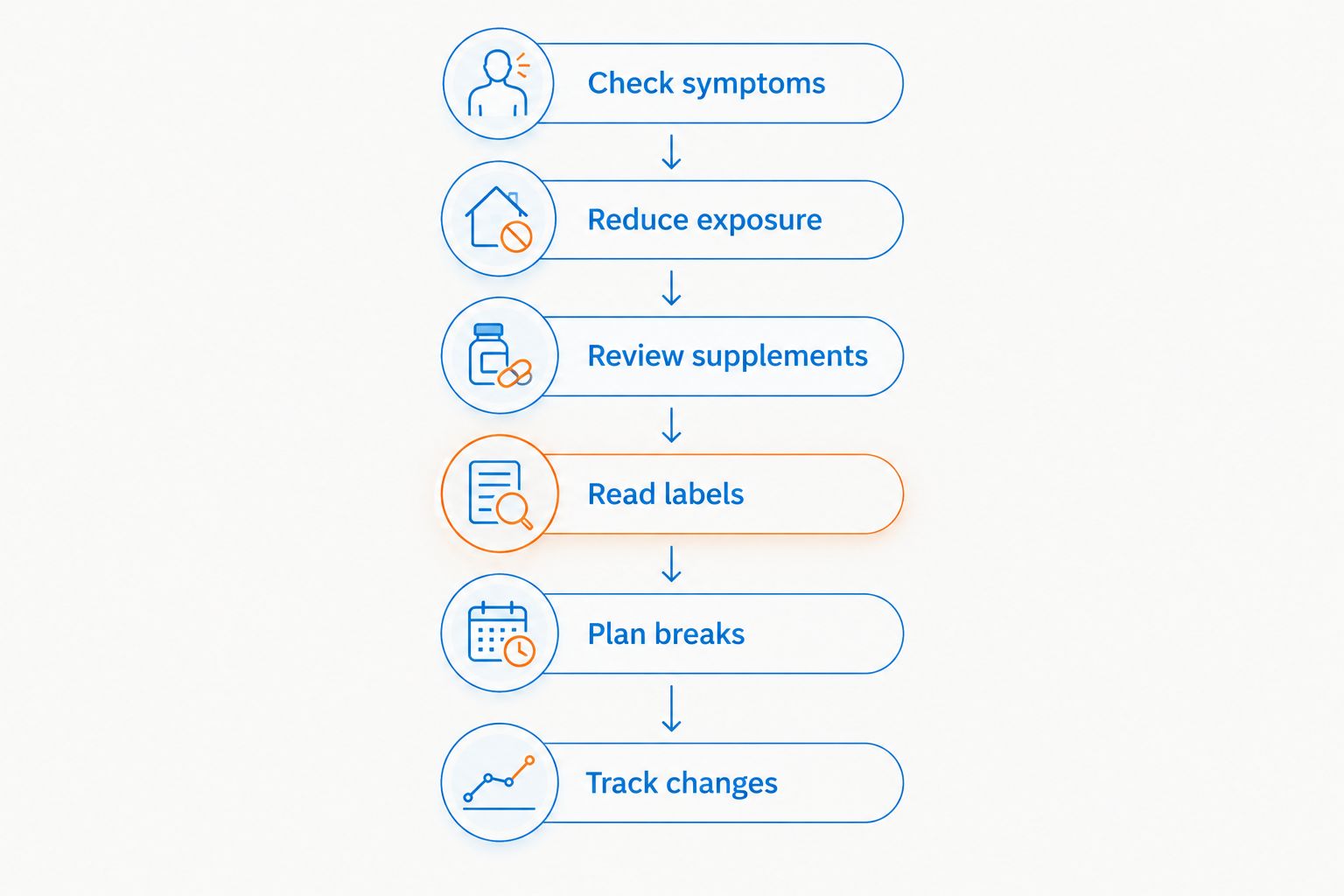
Compare options by the problem they address
These options serve different purposes. Choose by need, not by which option sounds most closely related to ears. A supplement cannot do the job of a hearing assessment, and changing a headset does not treat an underlying medical condition.
| Option | Best for | Practical advantage | Key limitation |
|---|---|---|---|
| Workplace audio and headset review | Agents struggling with loud calls, inconsistent audio, or poor fit | Addresses equipment and listening conditions directly | Requires workplace cooperation; does not diagnose symptoms |
| Clinical assessment and hearing testing | Agents with persistent symptoms or hearing changes | Helps identify the appropriate next step | Does not mean every symptom has a simple treatment |
| Clinician-directed deficiency treatment | People with an identified nutritional deficiency | Addresses a documented nutritional need | Is not a general treatment for tinnitus |
| Tinniva Ear Health Gummies | Adults who prefer gummies for optional everyday ear wellness supplementation | Offers a gummy format for a daily supplement routine | Product positioning does not establish tinnitus relief or hearing protection |
| No added supplement | Agents who have no identified need and prefer to focus on workplace habits | Avoids adding another product or overlapping ingredients | Does not replace assessment when symptoms occur |
You can combine appropriate workplace changes with medical care. Adding a supplement remains a separate decision that depends on the label, your health history, and professional advice—not on whether your job involves a headset.
Common mistakes call center agents make
Turning up every difficult caller
A quiet caller does not always require a louder headset. Connection quality and surrounding noise also affect clarity. If the next caller is much louder, an elevated setting becomes a problem; review audio handling with your equipment team instead of accepting repeated spikes.
Treating ringing as a nutrition diagnosis
Ringing does not tell you that you lack a particular nutrient. Buying a vitamin based on the symptom alone skips the assessment needed to understand it. Use testing and clinical advice when a deficiency is suspected, not a list of popular ingredients.
Assuming gummies protect hearing during shifts
An ear wellness gummy is not protective equipment. Taking it before work does not cancel out loud sound or make a high volume setting safe. Keep supplement decisions separate from the employer’s responsibility to address workplace noise and equipment concerns.
Waiting through a sudden hearing change
Do not schedule a supplement trial before seeking help for sudden hearing loss. Even a change that feels like fullness or blockage needs urgent evaluation. Time spent comparing wellness products should never delay that assessment.
FAQ
What are the best ear health supplements for call center agents?
No ear health supplement is established as the best way to protect call center agents from headset-related hearing damage. Prioritize appropriate listening levels, workplace equipment review, and assessment of symptoms; consider supplements only as optional wellness products.
Can ear wellness gummies stop ringing after a shift?
Ear wellness gummies are not proven to stop tinnitus after a shift. NIDCD states that supplements advertised for tinnitus have not been proven effective, so persistent or worsening ringing deserves assessment rather than a promised supplement fix.
Are Tinniva gummies a replacement for hearing protection?
Tinniva gummies are not a replacement for hearing protection or workplace sound controls. They are marketed as everyday ear wellness supplements, which is a different purpose from preventing noise-related hearing damage.
What headset volume is safe for a full call center shift?
A volume-slider percentage cannot establish a safe exposure for a full shift. Actual sound level and duration matter; use a comfortable listening level and request an occupational assessment when exposure is a concern.
Should I take vitamin B12 or zinc for ringing ears?
Do not assume ringing means you need vitamin B12 or zinc. A clinician can assess whether a deficiency or another condition needs attention, and a pharmacist can check a proposed supplement against your medicines.
Can I combine an ear supplement with my multivitamin?
Check both labels with a pharmacist before combining an ear supplement and a multivitamin. Overlapping ingredients can increase your total intake even when the products are marketed for different purposes.
When should I get urgent help for a hearing change?
Sudden hearing loss requires urgent medical evaluation. Do not wait to see whether a supplement helps, even if the change feels like a blocked or full ear.
One last thing
Bring the headset problem to your next appointment, not just the supplement bottle. Describe the calls, equipment, symptom timing, and any sudden loud sounds. That workday context gives a clinician something useful to assess, while the bottle helps a pharmacist check exactly what you are taking.