
Best overall for tinnitus relief in 2026: no supplement has established benefits strong enough to recommend routinely. Best for a confirmed vitamin B12 deficiency: clinician-guided B12 replacement; best for adults seeking a gummy-format ear wellness supplement rather than a treatment: Tinniva.
- No supplement for tinnitus has established benefits strong enough to recommend routinely.
- Tinniva offers ear wellness gummies; that positioning does not establish tinnitus relief.
- Vitamin B12 and zinc belong in a deficiency discussion, not a universal tinnitus routine.
- Melatonin addresses a sleep question, not the cause of tinnitus.
- Sudden hearing loss needs urgent medical attention, not a supplement trial.
Why this matters
Ringing, buzzing, or hissing can make you want an answer you can order today. The problem is that an ear wellness claim and evidence of tinnitus relief are different things. A supplement can contain familiar nutrients without having demonstrated that it reduces tinnitus.
The American Academy of Otolaryngology–Head and Neck Surgery Foundation's tinnitus guideline advises against recommending dietary supplements, including ginkgo, melatonin, and zinc, for persistent, bothersome tinnitus. Its recommendation concerns tinnitus treatment; it does not mean you should leave a diagnosed nutritional deficiency untreated.
Choose the next step around the problem you actually have: tinnitus, a documented deficiency, difficulty sleeping, or a preference for an everyday wellness format. Those are separate decisions. This 2026 guide keeps them separate rather than presenting every supplement as another route to the same result.
What makes the best supplement for tinnitus?
A useful 2026 shortlist starts with evidence and safety, not the number of ingredients on the label. Use these criteria before choosing an option:
- Relevant evidence: Look for improvement in tinnitus symptoms, not a general statement that an ingredient supports normal body function.
- A clear purpose: Correcting a deficiency and treating tinnitus are different goals. Decide which goal applies to you.
- A readable label: Check ingredient amounts, serving directions, warnings, and overlap with supplements you already take.
- Personal safety: Review medications, medical conditions, pregnancy, and planned procedures with a clinician or pharmacist.
- An honest limitation: A credible choice should explain what it does not establish, especially when relief is the reason you are considering it.
A longer ingredient list does not satisfy any of these criteria by itself. Neither does the presence of a nutrient associated with normal nerve or immune function.
Supplements at a glance
The order below reflects different decision paths, not a ranking of proven tinnitus treatments. None earns a blanket recommendation for tinnitus relief.
| Option | Best for | Standout feature | Key limitation |
|---|---|---|---|
| Tinniva Ear Health Gummies | Adults who prefer gummies for everyday ear wellness | Gummy-format ear wellness supplement | Ear wellness positioning does not establish tinnitus relief |
| Vitamin B12 | People with a confirmed B12 deficiency | Replaces an essential nutrient when deficient | Not an established tinnitus treatment in people without deficiency |
| Zinc | People with a confirmed zinc deficiency | Targeted nutrient replacement | Routine use is not recommended for tinnitus |
| Melatonin | People discussing sleep difficulties with a clinician | Addresses a sleep-related question | Not recommended as a tinnitus treatment |
| Ginkgo biloba | People checking a commonly promoted tinnitus ingredient | A useful evidence-checking example | Not recommended for persistent, bothersome tinnitus |
| D3 K2 Gummies | People reviewing vitamin D and K supplementation | Combines the vitamin categories named in the product | Not an established tinnitus treatment |
1. Tinniva Ear Health Gummies: best for gummy-format ear wellness
Tinniva sells dietary supplement gummies marketed for ear wellness and tinnitus-related support. The relevant distinction is format and positioning: these are wellness supplements, not an established treatment for ringing or hearing loss.
Best for: Adults who prefer a gummy format and understand the difference between everyday ear wellness support and demonstrated symptom relief.
Tinniva Ear Health Gummies pros:
- Gummy format suits people who prefer it to tablets or capsules.
- Ear wellness is the product's stated focus.
- The intended role is easy to distinguish from hearing assessment or medical treatment.
Tinniva Ear Health Gummies cons:
- Marketing for tinnitus-related support does not establish a treatment benefit.
- Gummy format alone says nothing about effectiveness, ingredient suitability, or interactions.
- A wellness supplement cannot identify the cause of new or changing symptoms.
Read the current ingredient panel before deciding. Ask a pharmacist to check the complete formula against your medications rather than assuming a supplement is suitable because it is sold as a gummy.
Verdict: Hold if your goal is tinnitus relief; consider only as an informed ear wellness choice.
2. Vitamin B12: best for confirmed B12 deficiency
Vitamin B12 supports normal nerve function and red blood cell formation. Replacing B12 matters when a clinician identifies a deficiency, but that is not evidence that extra B12 relieves tinnitus in someone whose B12 status is adequate.
Best for: People with a confirmed deficiency or a clinician-directed reason to investigate one.
Vitamin B12 pros:
- Addresses a specific nutritional problem when deficiency is present.
- Gives the clinician a defined reason for treatment and follow-up.
- Separates nutrient replacement from broad tinnitus marketing.
Vitamin B12 cons:
- Does not provide an established tinnitus treatment for people without deficiency.
- The appropriate form and regimen depend on the reason for deficiency.
- Self-treatment can delay investigation of symptoms that need assessment.
The NIH Office of Dietary Supplements lists 2.4 micrograms per day as the recommended amount for most adults. That is a nutrition reference, not a tinnitus dose or a replacement regimen for diagnosed deficiency.
Bring dietary restrictions, digestive conditions, and medication use to the appointment. Those details help a clinician decide whether B12 testing belongs in your assessment.
Verdict: Buy only when B12 replacement is indicated; skip B12 as a stand-alone tinnitus remedy.
3. Zinc: best for confirmed zinc deficiency
Zinc is an essential nutrient, but being essential does not make extra zinc an effective tinnitus treatment. Its place on this list is targeted replacement when a deficiency has been identified—not routine use because your ears ring.
Best for: People whose clinician has identified zinc deficiency or a specific need for supplementation.
Zinc pros:
- Offers a defined nutritional intervention when needed.
- Can be assessed alongside your diet and existing supplements.
- Supports a focused discussion instead of an open-ended supplement stack.
Zinc cons:
- Routine zinc supplementation is not recommended for persistent, bothersome tinnitus.
- Excess intake can interfere with copper status.
- Zinc can interact with certain medications, including some antibiotics.
The NIH Office of Dietary Supplements sets the adult upper intake level at 40 milligrams per day, counting food and supplements. This is a safety limit for general use, not a target to reach and not a tinnitus treatment dose; clinician-directed treatment can differ.
Check multivitamins and other wellness products before adding a separate zinc supplement. The relevant amount is the combined intake, not just the newest bottle.
Verdict: Hold until there is a nutritional reason; skip routine zinc for tinnitus relief.
4. Melatonin: best for a separate sleep discussion
Melatonin is a hormone involved in sleep timing and is also sold as a supplement. If nighttime tinnitus is making sleep difficult, the useful question is how to address sleep—not whether melatonin cures the sound.
Best for: People discussing sleep difficulty with a clinician, separate from the search for a tinnitus treatment.
Melatonin pros:
- Brings attention to sleep as a distinct concern.
- Can be discussed within a broader sleep plan.
- Allows sleep outcomes to be considered separately from tinnitus loudness.
Melatonin cons:
- Is not recommended as a treatment for persistent, bothersome tinnitus.
- Can cause drowsiness and interact with medications.
- Does not replace assessment of ongoing insomnia or other sleep disorders.
Before adding a sleep supplement, describe what happens at bedtime: trouble falling asleep, repeated waking, or distress about the sound. Those experiences do not automatically call for the same response.
Verdict: Hold for a clinician-led sleep discussion; skip as a tinnitus remedy.
5. Ginkgo biloba: best for checking tinnitus claims critically
Ginkgo biloba is commonly promoted in tinnitus discussions. Familiarity is not proof: the tinnitus guideline specifically advises against recommending ginkgo for persistent, bothersome tinnitus.
Best for: People who have encountered ginkgo claims and want a clear decision before adding another supplement.
Ginkgo biloba pros:
- Has been studied in tinnitus rather than relying entirely on a theoretical explanation.
- Has an explicit place in professional guideline recommendations, making the treatment decision clearer.
- Provides a useful reminder to check outcomes rather than ingredient popularity.
Ginkgo biloba cons:
- Does not have an established role as a routinely recommended tinnitus treatment.
- Can interact with medicines and raise bleeding concerns, particularly with anticoagulants.
- Does not replace hearing assessment or evaluation of new symptoms.
A claim about circulation does not demonstrate that a product improves tinnitus. Ask for evidence measuring the symptom you want to change, not just a proposed explanation of how an ingredient works.
Verdict: Skip for routine tinnitus relief.
6. D3 K2 Gummies: best for a separate vitamin review
D3 K2 Gummies belong in a discussion about vitamin supplementation, not a ranking of proven tinnitus remedies. Whether you need either vitamin depends on your nutritional and medical circumstances.
Best for: People reviewing vitamin D and K intake with a clinician or pharmacist, independently of tinnitus.
D3 K2 Gummies pros:
- Provide a gummy-format option for the vitamin categories named.
- Offer a specific label to review against an existing supplement routine.
- Keep the nutrient decision identifiable rather than hiding it within a broad ear wellness claim.
D3 K2 Gummies cons:
- Are not an established tinnitus treatment.
- Can overlap with vitamins in other supplements.
- Require particular care with vitamin K if you take warfarin.
The NIH Office of Dietary Supplements lists 100 micrograms, or 4,000 IU, per day as the adult vitamin D upper intake level. This is not a tinnitus dose, and it does not describe the amount in this product. Check the actual label and follow individualized advice.
Verdict: Hold for a nutritional review; skip if the only goal is tinnitus relief.
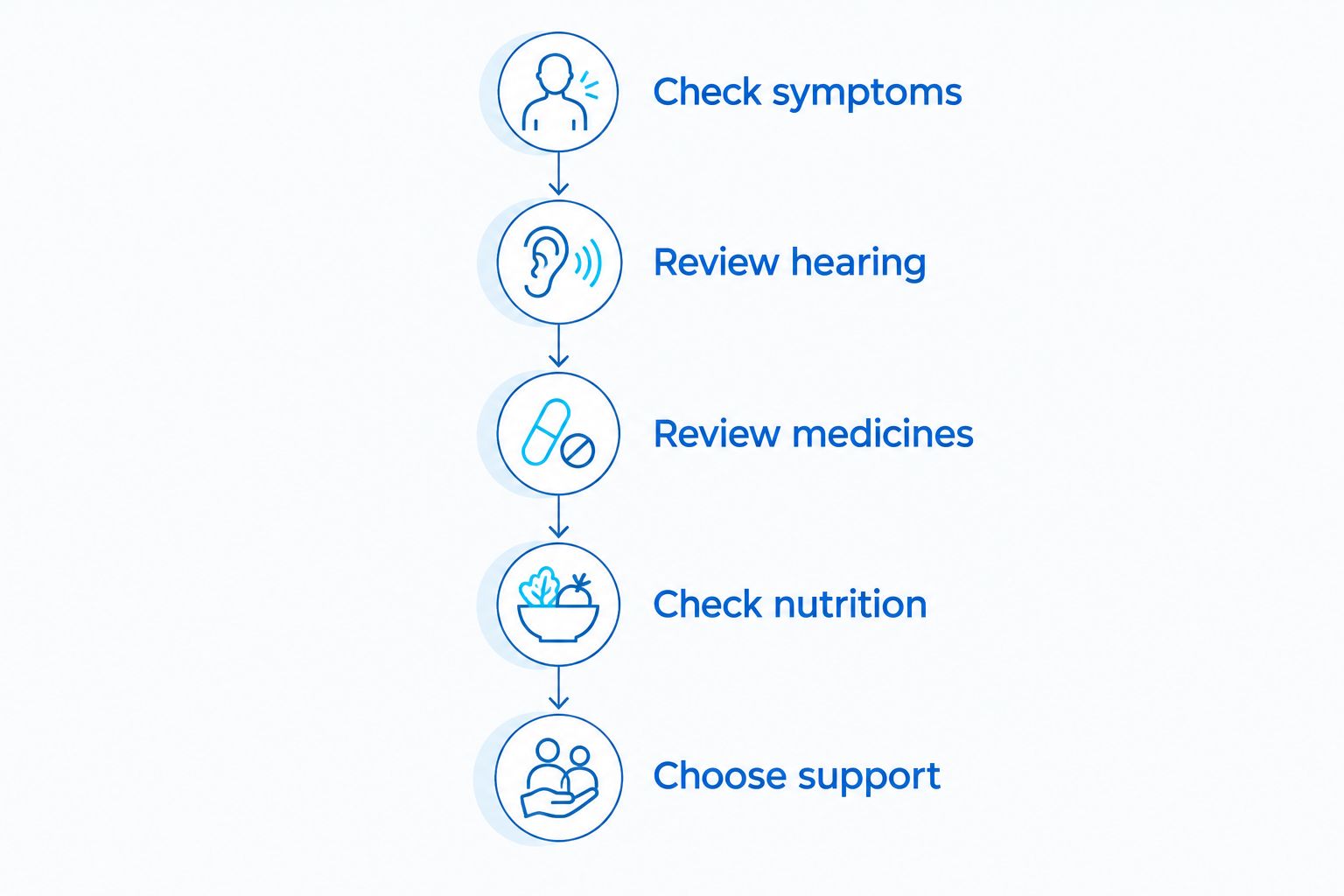
How to make the decision safely
For your 2026 decision, separate the symptom assessment from the shopping decision. A supplement should not be the step that delays care.
- Check symptoms: Seek urgent medical care for sudden hearing loss, including when ringing occurs with it. Ringing that follows your heartbeat also needs medical assessment.
- Review hearing: Arrange an appropriate hearing evaluation for persistent or bothersome symptoms. Describe whether the sound affects one ear or both.
- Review medicines: Bring a list of prescriptions, nonprescription medicines, and supplements. Do not stop prescribed treatment on your own.
- Check nutrition: Discuss targeted testing when your history suggests a deficiency. Avoid assuming every tinnitus symptom means you lack a nutrient.
- Choose support: Discuss tinnitus-focused options and address sleep or distress as separate concerns.
For bothersome tinnitus, cognitive behavioral therapy is a guideline-supported option for reducing its impact. Hearing aids also belong in the discussion when hearing loss is present. Neither choice requires you to believe that a supplement will remove the sound.
How the options are ranked
This 2026 guide ranks options by their decision role: wellness format, confirmed nutritional need, sleep discussion, or a claim to reject. It does not rank them by an invented improvement score or imply that the first option provides the strongest relief.
Evidence for tinnitus outcomes takes priority over convenience. Safety, a clear purpose, and honest limitations come next. Nutrient reference amounts come from NIH Office of Dietary Supplements fact sheets for adult intake; they are not suggested tinnitus regimens.
Which supplement for tinnitus should you choose?
The default choice in 2026 is not to add a supplement solely for tinnitus relief. Start with assessment, particularly if symptoms are new, changing, one-sided, or accompanied by hearing changes.
Tinniva is a gummy-format ear wellness option for adults who prefer gummies, not an established tinnitus treatment. Choose nutrient replacement only for an identified need, and keep sleep treatment separate from claims about reducing ringing.
FAQ
What's the best supplement for tinnitus?
No supplement has established benefits strong enough to recommend routinely for tinnitus relief. A confirmed nutritional deficiency can justify replacement, but that is different from treating tinnitus itself.
Can Tinniva Ear Health Gummies cure tinnitus?
Tinniva Ear Health Gummies should not be treated as a tinnitus cure. They are marketed for ear wellness and tinnitus-related support, which does not establish that they reduce or eliminate ringing.
Does vitamin B12 help with ringing in the ears?
Vitamin B12 replacement is appropriate when a deficiency is identified, but B12 is not an established tinnitus treatment for people without deficiency. A clinician can decide whether testing is relevant to your history.
Should I take zinc every day for tinnitus?
Routine zinc supplementation is not recommended for persistent, bothersome tinnitus. Take zinc for an identified nutritional need under appropriate guidance, and account for zinc already present in other supplements.
Is melatonin better than ginkgo for tinnitus?
Neither melatonin nor ginkgo is recommended as a routine tinnitus treatment. Melatonin belongs in a separate discussion about sleep, while ginkgo also requires attention to medication interactions and bleeding concerns.
Can vitamin D and K gummies replace a hearing check?
Vitamin D and K gummies cannot replace a hearing evaluation. Nutritional supplementation does not identify hearing loss or explain the cause of ringing.
When should I get urgent help instead of trying a supplement?
Seek urgent medical care for sudden hearing loss, even when ringing is the symptom you notice first. Tinnitus that follows your heartbeat also needs medical assessment rather than a supplement trial.
One last thing
A better night's sleep and quieter tinnitus are different outcomes. When you discuss any intervention, say exactly what you want to improve: falling asleep, concentration, distress, or the sound itself. That distinction makes the next decision clearer and keeps a general wellness claim from becoming a treatment promise.