Best for ingredient clarity: a single-ingredient ginkgo capsule. Best for avoiding pills: a clearly measured liquid. Best for a chewable routine: a gummy with a fully disclosed label. For ginkgo biloba supplements for ear wellness in 2026, these are format choices—not proven treatments for tinnitus or hearing loss.
- No ginkgo biloba supplements for ear wellness are established treatments for tinnitus or hearing loss.
- Single-ingredient capsules make ingredient review simpler; liquids and gummies suit different routines.
- Tinniva Ear Health Gummies suit a chewable ear-wellness routine, not a proven tinnitus-treatment plan.
- Check the full label and medication interactions before choosing any ginkgo supplement.
Why this matters
Ear wellness and tinnitus treatment are different goals. A supplement can fit your daily routine without having evidence that it reduces ringing, restores hearing, or addresses the cause of a symptom.
The National Institute on Deafness and Other Communication Disorders states that dietary supplements marketed for tinnitus have not been proven effective. Cochrane's review of ginkgo for tinnitus likewise does not establish a reliable treatment benefit. That evidence sets the boundary for this 2026 guide: compare formats and safety, not promises of relief.
Tinniva Ear Health Gummies are a daily ear-wellness supplement. The gummy format is a practical consideration, but the product name alone does not establish ginkgo content or a tinnitus benefit.
Choose a supplement for a clearly defined wellness purpose—not as a substitute for evaluating new or persistent ear symptoms.
What makes the best ginkgo supplement for ear wellness?
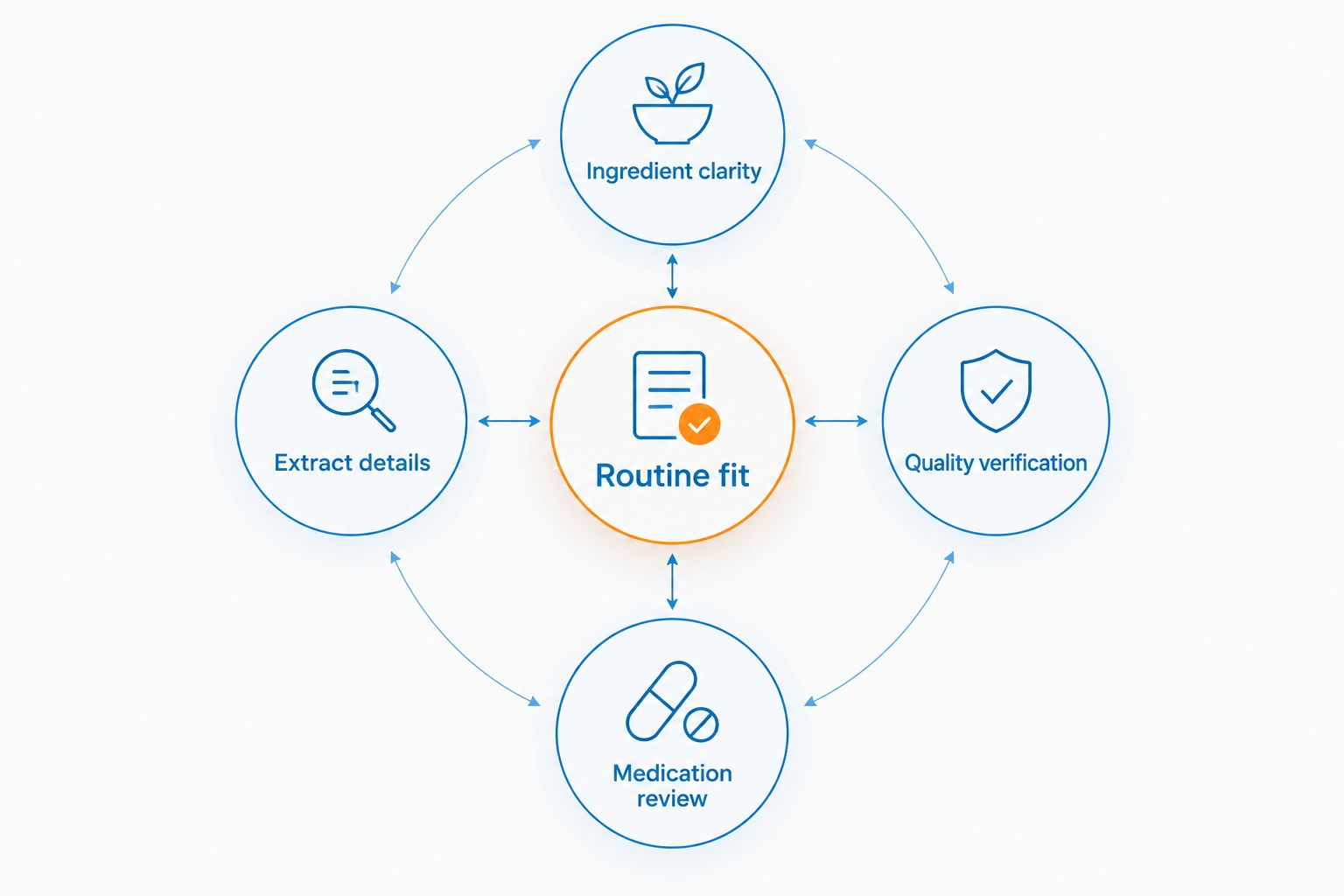
A useful comparison starts with what you can verify. Use these criteria before considering a brand's benefit language:
- Ingredient clarity: The label identifies each active ingredient and its amount per serving. A blend name alone does not tell you the amount of ginkgo.
- Extract details: The label distinguishes a leaf extract from other preparations and states any standardization claim clearly. Different preparations are not automatically interchangeable.
- Quality verification: Any independent certification or testing claim is specific and verifiable. Quality testing does not prove an ear-health benefit.
- Medication review: A pharmacist or clinician checks the formula against your medicines, other supplements, and relevant health conditions.
- Routine fit: You can follow the labeled serving instructions consistently without confusing capsules, drops, or gummies with one another.
For this 2026 comparison, ingredient disclosure and safety come before convenience. A pleasant format cannot make an unclear formula easier to assess.
Ginkgo supplement formats at a glance
These rankings compare ways to take a supplement, not clinical effectiveness. No format earns a recommendation for treating tinnitus, and a capsule is not inherently more effective than a gummy or liquid.
| Rank and option | Best for | Standout feature | Key limitation |
|---|---|---|---|
| 1. Single-ingredient ginkgo capsule | Ingredient-focused comparison | Keeps the formula focused on one active ingredient | Still requires extract, quality, and interaction checks |
| 2. Ginkgo liquid | People who prefer not to swallow pills | Uses a measured liquid serving | Serving volume and concentration need careful review |
| 3. Ginkgo-containing gummy | People who prefer chewing | Offers a chewable format | Ginkgo content, serving size, and additional ingredients need verification |
There is no evidence-based budget winner for tinnitus here. Spending less does not establish value if the outcome you want is unsupported; spending more does not establish effectiveness either.
1. Single-ingredient capsules: best for ingredient clarity
A single-ingredient ginkgo capsule keeps your comparison focused on ginkgo rather than a mixture of active ingredients. You still need to read the complete label: the ingredient name, extract description, and amount per serving answer different questions.
This format ranks first for label comparison, not symptom relief. A capsule containing ginkgo leaf powder is not automatically equivalent to a capsule containing a specified extract, even when the labels display similar-looking amounts.
Single-ingredient capsule pros:
- A focused formula makes it easier to identify what you are considering.
- The stated serving instructions give you a defined unit to review.
- Fewer active ingredients mean fewer separate ingredients to discuss with your pharmacist.
Single-ingredient capsule cons:
- A simple formula still carries ginkgo-related interaction concerns.
- Capsule size and swallowing comfort vary between products.
- Ingredient clarity does not establish a benefit for tinnitus.
Best for: Someone whose clinician has reviewed ginkgo use and who wants a straightforward ingredient comparison.
Before choosing, check whether the listed amount applies to each capsule or the full serving. Then confirm that the extract description and any quality claim are clear enough to assess. Do not use a prominent number on the front of a package as your only comparison.
Verdict: Hold until the full label and medication review are complete; skip capsules sold as a tinnitus cure.
2. Ginkgo liquids: best for avoiding pills
A ginkgo liquid offers an alternative when you prefer not to swallow a capsule. The useful comparison is the ingredient amount in the labeled serving—not the bottle size or the apparent size of a dropper.
Read the directions and ingredient panel together. A serving measured in drops is not interchangeable with a serving measured by volume, and one product's directions should not be transferred to another bottle.
Ginkgo liquid pros:
- Avoids swallowing a solid capsule.
- Provides another format for a clinician-approved supplement routine.
- A clearly labeled serving lets you connect the measured amount with the ingredient declaration.
Ginkgo liquid cons:
- Measuring introduces an extra step into your routine.
- Additional ingredients, including alcohol where present, need review.
- A liquid format does not establish faster or better tinnitus relief.
Best for: Someone who prefers a liquid and can follow the product's measuring instructions accurately.
Use the measuring method specified on the label rather than a household spoon. If you cannot tell how much ginkgo the full serving contains, choose a more transparent label instead of estimating. Ask a pharmacist about unclear instructions before taking it.
Verdict: Hold until the concentration, measuring instructions, and interaction checks are clear.
3. Ginkgo-containing gummies: best for a chewable routine
A gummy offers a chewable supplement format. To qualify as a ginkgo option, however, the actual ingredient panel must identify ginkgo; an ear-health product name or wellness description is not enough.
Tinniva Ear Health Gummies are described as a convenient daily supplement for an everyday ear-health routine. That supports discussing the product as an ear-wellness gummy, but it does not establish its ginkgo content, extract type, or suitability for a particular medication list.
Ginkgo-containing gummy pros:
- Provides a chewable alternative to capsules.
- Offers a format for people who dislike swallowing pills.
- A fully disclosed label allows the same ingredient review used for other formats.
Ginkgo-containing gummy cons:
- Sweeteners, allergens, and other added ingredients need review.
- The serving can involve more than an individual gummy; follow the actual label.
- A chewable format does not prove absorption advantages or tinnitus relief.
Best for: Someone who prefers chewing and has confirmed both the formula and its suitability with a qualified professional.
Tinniva is best suited to consumers seeking a gummy-format ear-wellness supplement, not a proven tinnitus treatment. If your specific goal is to take ginkgo, confirm that ingredient on the current label before choosing any ear-health gummy.
Verdict: Hold until ginkgo content and suitability are confirmed; skip any gummy that promises to cure ringing.
How this ranking works
The 2026 ranking prioritizes ingredient clarity, extract details, quality verification, medication review, and routine fit. Capsules lead because a single-ingredient formula keeps the comparison focused; liquids and gummies serve different format preferences.
This is a decision guide, not a product-testing report or a clinical ranking. It does not treat a supplement's format, certification, or marketing category as proof that it improves hearing or reduces tinnitus.
Safety checks before you buy
Ginkgo can interact with medicines and increase bleeding risk, particularly with anticoagulants such as warfarin. Bring the complete supplement label to a pharmacist or clinician rather than asking only whether ginkgo is generally safe.
Use this review sequence:
- Define your goal. Separate everyday wellness from managing ringing, hearing changes, dizziness, or ear pain.
- List everything you take. Include prescriptions, nonprescription medicines, and other supplements.
- Review the full formula. Multi-ingredient products require checking every active ingredient, not just ginkgo.
- Discuss relevant circumstances. Mention pregnancy, breastfeeding, bleeding problems, and any planned procedure.
- Follow the actual directions. Do not increase the serving because symptoms persist or combine formulas without checking them.
Do not stop a prescribed medicine to make room for a supplement. If a clinician advises against ginkgo, switching from capsules to gummies does not remove the ingredient's risks.
For Tinniva or any other ear-wellness supplement, the same rule applies: a daily-wellness description does not replace an individual safety review.
Which option should you choose?
For an undecided reader, the default is to clarify the goal before choosing a format. If your goal is tinnitus relief, none of these formats has an established treatment advantage. An assessment is more useful than guessing which supplement presentation will work.
If a qualified professional agrees that ginkgo fits your circumstances, start your comparison with a clearly labeled single-ingredient product. Choose a liquid only when it better fits your needs and you can measure it correctly. Choose a gummy only after verifying the ingredient panel—not because chewing suggests a gentler or more effective treatment.
For new ringing or hearing changes in 2026, keep symptom evaluation separate from shopping. Sudden hearing loss needs urgent medical attention. Ringing that follows your heartbeat also warrants medical evaluation rather than a supplement experiment.
For persistent, bothersome tinnitus, ask about a hearing assessment and management options such as cognitive behavioral therapy. Hearing aids can help when hearing loss is also present. These are different decisions from selecting an everyday wellness supplement.
FAQ
What's the best ginkgo biloba supplement for ear wellness in 2026?
No ginkgo supplement is established as an effective tinnitus treatment. For format comparison, a clearly labeled single-ingredient capsule keeps the ingredient review focused, but it still requires a safety check.
Does ginkgo biloba stop ringing in your ears?
Ginkgo biloba has not been established as an effective treatment for tinnitus. Persistent ringing deserves an assessment rather than relying on a supplement to address its cause.
Are ginkgo gummies better than capsules for ear health?
Ginkgo gummies have no established ear-health treatment advantage over capsules. Choose a format only after reviewing its ingredients, serving instructions, and medication interactions.
Do Tinniva Ear Health Gummies contain ginkgo biloba?
Confirm ginkgo content on the current product ingredient panel. An ear-health product name or everyday-wellness description does not establish whether it contains ginkgo or a particular extract.
How much ginkgo should I take for tinnitus?
There is no established ginkgo dose for treating tinnitus. Do not choose or increase a dose based on ringing severity; discuss the actual product with a qualified clinician.
Can I take ginkgo with a blood thinner?
Do not add ginkgo to a blood-thinner regimen without review by your prescriber or pharmacist. Ginkgo can increase bleeding risk, including when taken with warfarin.
When should I get ear ringing checked instead of trying a supplement?
Seek urgent medical attention for sudden hearing loss, with or without ringing. Persistent ringing or sound that follows your heartbeat also needs medical evaluation.
One last thing
The ear-health decision with the clearest practical benefit is often outside the supplement aisle: reducing harmful noise exposure. The National Institute for Occupational Safety and Health uses an occupational exposure limit of 85 dBA over 8 hours, with exposure time halved for every 3 dBA increase: 88 dBA for 4 hours and 91 dBA for 2 hours.
These are occupational risk-management limits, not guarantees that an exposure is safe for every person. The useful lesson is simple: louder sound reduces acceptable exposure time. Turn down the volume, take breaks, and use suitable hearing protection around loud noise; a gummy or capsule is not hearing protection.