
Best overall approach: choose supplements for ear health and balance by nutritional need, not promises of symptom relief. Best for a gummy-format wellness routine: Tinniva Ear Health Gummies. Best for confirmed B12 deficiency: vitamin B12. Best for low vitamin D: vitamin D. Best for diagnosed iron deficiency: iron—not an ear-specific supplement.
- Choose supplements for ear health and balance by nutritional need; no supplement is an established tinnitus cure.
- Tinniva Ear Health Gummies suit a gummy-format ear wellness routine, not treatment for dizziness or hearing loss.
- Vitamin B12, vitamin D, and iron belong in this comparison for different nutritional needs—not interchangeable ear benefits.
- Sudden hearing loss or dizziness with neurological symptoms needs urgent medical care, not a supplement trial.
Why this matters
Ringing, muffled hearing, spinning, and lightheadedness are not the same problem. A supplement advertised for ear wellness does not tell you which symptom you have or what is causing it.
The National Institute on Deafness and Other Communication Disorders states that dietary supplements have not been proven effective for tinnitus. That distinction shapes this 2026 guide: a convenient wellness format earns a different recommendation from a nutrient used to correct a diagnosed deficiency.
Tinniva Ear Health Gummies are best for consumers who want a gummy-format ear wellness supplement, not a treatment for tinnitus or balance disorders. If your main goal is stopping ringing or preventing falls, start with an assessment rather than a shopping list.
What makes the best ear wellness supplement?
Use these criteria before comparing labels. A product belongs in your routine only when its purpose and safety fit your circumstances.
- A clear reason to take it: Separate a general wellness preference from a confirmed nutritional deficiency.
- An accurate benefit claim: Ear wellness support is not the same as restoring hearing, treating tinnitus, or correcting a balance disorder.
- A readable ingredient panel: Check every ingredient, its amount per serving, and the suggested serving—not just the front label.
- Compatibility with your routine: Review medicines, existing supplements, allergies, and relevant health conditions with a pharmacist or clinician.
- A suitable format: Gummies, tablets, and liquids differ in how you take them. Format alone does not establish effectiveness.
- A clear boundary: Know which symptoms require medical care and what outcome would justify continuing a supplement.
For your 2026 shortlist, reject any product whose main appeal is a guaranteed cure. Stronger wording on a package is not stronger evidence.
Supplements for ear health and balance at a glance
These options serve different purposes. The order is a decision guide, not a ranking of proven effects on hearing or balance.
| Option | Best for | Standout feature | Key limitation |
|---|---|---|---|
| Tinniva Ear Health Gummies | A gummy-format ear wellness routine | An ear wellness dietary supplement in gummy form | The wellness positioning does not establish tinnitus or balance treatment benefits |
| Vitamin B12 | Confirmed B12 deficiency | Replaces a nutrient needed for healthy nerve function | No established tinnitus benefit for people with adequate B12 |
| Vitamin D | Low vitamin D or clinician-directed supplementation | Supports normal calcium absorption and bone health | Not a general treatment for dizziness or ear ringing |
| Iron | Diagnosed iron deficiency | Replaces iron when assessment identifies a need | Not an inner-ear treatment; unnecessary iron can be harmful |
Use the symptom to choose the next step
Start by describing what you feel. Spinning suggests a different assessment from feeling faint when you stand, while hearing changes call for a hearing-focused evaluation. None of those descriptions identifies a supplement by itself.
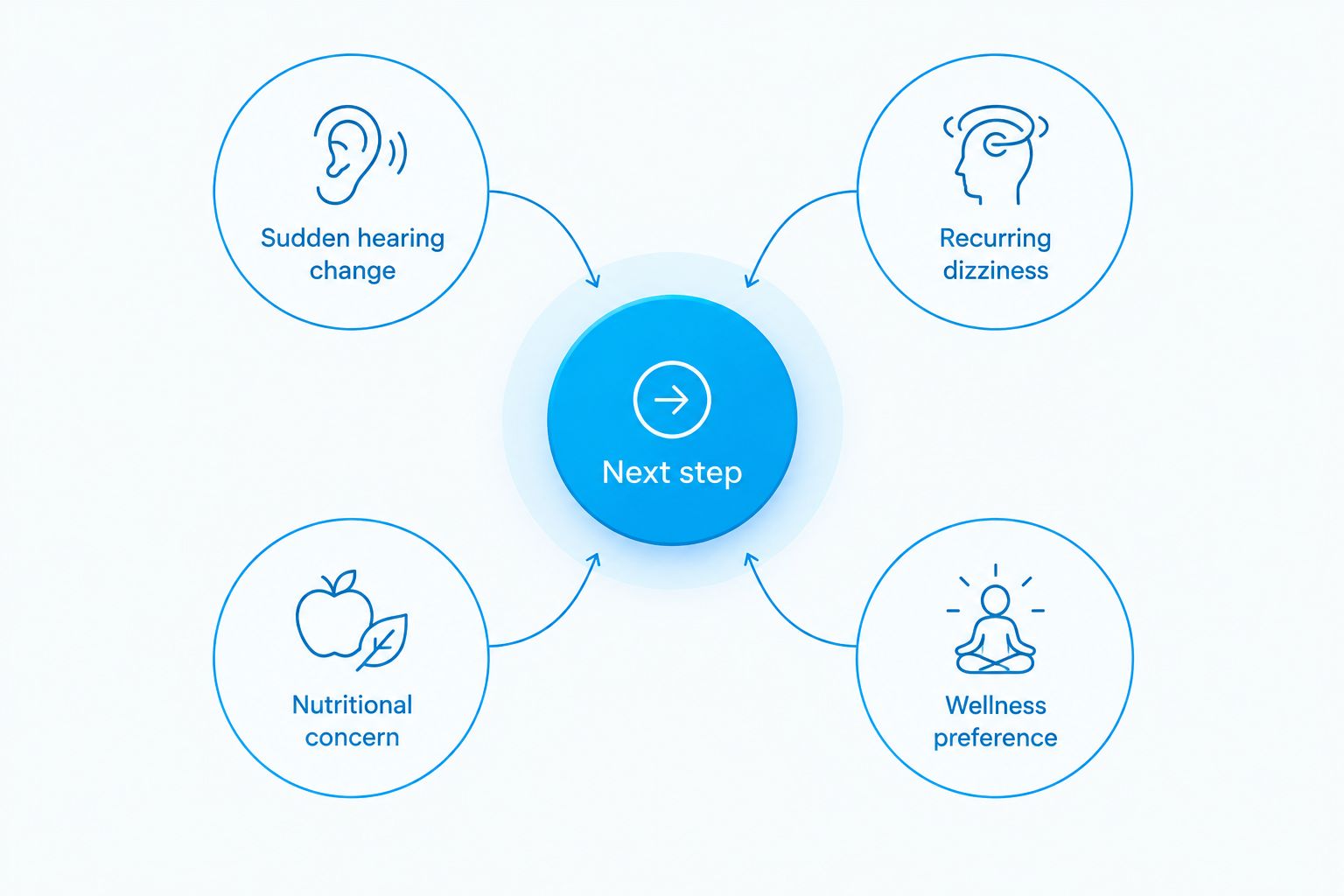
- Sudden hearing change: Seek urgent medical assessment rather than waiting for a supplement to work.
- Recurring dizziness: Arrange an assessment, especially if it affects walking or daily activities.
- Nutritional concern: Discuss your diet, medicines, symptoms, and whether targeted testing is appropriate.
- Wellness preference: Compare supplement labels without expecting treatment effects.
1. Tinniva Ear Health Gummies: best for a gummy wellness routine
Tinniva Ear Health Gummies are a dietary supplement marketed for everyday ear wellness support. The gummy format suits someone who prefers that way of taking a supplement; it does not establish that the product treats ringing, hearing loss, or dizziness.
Treat the product as a wellness choice, not a substitute for an ear examination or hearing test. Read the current Supplement Facts panel before deciding whether its ingredients fit your existing routine.
Tinniva Ear Health Gummies pros:
- A gummy format for people who prefer it to tablets.
- A clearly stated focus on everyday ear wellness.
- A daily supplement format that you can assess alongside your other wellness products.
Tinniva Ear Health Gummies cons:
- Ear wellness marketing does not demonstrate treatment benefits for tinnitus or balance disorders.
- A gummy format does not establish ingredient suitability, effectiveness, or safety for an individual.
- You still need to check the full label for ingredients, serving instructions, and warnings.
Best for: Adults seeking a gummy-format wellness supplement who understand the difference between support language and treatment evidence.
Verdict: Hold until you have checked the label and confirmed that a wellness supplement—not symptom treatment—is your goal.
2. Vitamin B12: best for confirmed B12 deficiency
Vitamin B12 helps maintain healthy nerve cells and supports red blood cell formation. Deficiency can cause neurological problems, including difficulties with balance, but that does not make B12 a universal balance supplement.
The NIH Office of Dietary Supplements lists an adult recommended intake of 2.4 micrograms per day, with different needs during pregnancy and breastfeeding. That reference amount is not a treatment dose; correcting deficiency depends on its cause and your clinician's assessment.
Vitamin B12 pros:
- Addresses a specific nutritional need when deficiency is confirmed.
- Has an established role in normal nerve function.
- Gives you a defined reason for supplementation rather than a broad ear-health promise.
Vitamin B12 cons:
- Taking extra B12 does not establish a tinnitus benefit when your B12 status is adequate.
- The right replacement method depends on factors such as absorption and the cause of deficiency.
- Balance symptoms still need assessment rather than an assumption that low B12 explains them.
Best for: People with confirmed B12 deficiency and a replacement plan suited to its cause.
For a 2026 buying decision, prioritize the recommended form and instructions over a product's ear-health branding. Tell your clinician about numbness, tingling, dietary restrictions, or balance changes rather than choosing a dose yourself.
Verdict: Buy when B12 replacement is recommended for a confirmed need; skip it as an unsupported tinnitus fix.
3. Vitamin D: best for low vitamin D
Vitamin D supports calcium absorption and bone health. It belongs in this comparison as a nutrient to assess when there is a reason to suspect low intake or low levels—not as a general remedy for ear symptoms.
The NIH Office of Dietary Supplements lists an adult upper intake limit of 100 micrograms, or 4,000 IU, per day. That limit is not a target or a recommended dose; a clinician can prescribe a different regimen when medically indicated.
Vitamin D pros:
- Addresses low vitamin D when supplementation is appropriate.
- Supports established nutritional functions rather than relying on an ear-specific claim.
- Can fit a clinician-directed plan that considers diet, health history, and other supplements.
Vitamin D cons:
- Does not provide a general explanation or treatment for dizziness.
- Excess intake can be harmful.
- Combining products can unintentionally increase your total vitamin D intake.
Best for: People advised to supplement vitamin D because of an identified nutritional need.
Do not treat every spinning episode as a vitamin problem. Positional vertigo, for example, requires the right diagnosis and can be treated with repositioning maneuvers when appropriate; buying vitamin D is not a substitute for that assessment.
Verdict: Buy for an established vitamin D need; skip it as a stand-alone balance treatment.
4. Iron: best for diagnosed iron deficiency
Iron deficiency anemia can cause symptoms such as fatigue and lightheadedness. Iron appears here because people sometimes describe lightheadedness as a balance problem, even though it is not the same as an inner-ear disorder.
Testing and clinical context matter. The NIH Office of Dietary Supplements lists an adult upper intake limit of 45 milligrams per day, while medically supervised treatment can use different amounts.
Iron pros:
- Treats an identifiable nutritional deficiency when appropriately prescribed.
- Provides a targeted option when iron deficiency contributes to symptoms.
- Allows follow-up based on the underlying diagnosis rather than an ear-wellness claim.
Iron cons:
- Does not treat tinnitus or an inner-ear balance disorder.
- Can cause gastrointestinal side effects and interact with medicines.
- Unnecessary iron can be harmful; keep iron supplements away from children.
Best for: People with diagnosed iron deficiency whose clinician recommends replacement and follow-up.
For 2026, the buying rule remains simple: do not start iron because dizziness appears on a product page or symptom checklist. The cause of deficiency also needs attention, rather than replacing iron indefinitely without review.
Verdict: Buy only for a diagnosed need and an agreed treatment plan; skip self-prescribing for dizziness.
How these options were ranked
The ranking separates format preference from nutritional treatment. It uses the same criteria throughout: a clear purpose, accurate claims, a readable label, safety checks, and limits on what the option can reasonably do.
The nutritional reference amounts above come from the NIH Office of Dietary Supplements fact sheets for vitamin B12, vitamin D, and iron. They are general reference values, not personalized instructions. This 2026 guide does not rank products by unverified reviews, claimed symptom relief, or assumed ingredient quality.
Which supplement should you choose?
If you are undecided, start with the reason for taking a supplement—not a brand or ingredient. A confirmed deficiency calls for targeted replacement. New or persistent ear symptoms call for assessment. A preference for gummies calls for a label comparison, not an expectation of symptom relief.
Before buying, use this short check:
- Write down your main goal: everyday wellness, a known deficiency, ringing, spinning, or lightheadedness.
- List all medicines and supplements you already take.
- Check whether proposed ingredients duplicate anything on that list.
- Ask what benefit is supported and what would trigger a review.
Avoid starting several new supplements together. That makes it harder to identify which product caused a side effect and adds complexity without establishing a benefit.
FAQ
What's the best supplement for ear health and balance?
There is no single best supplement for ear health and balance. Choose targeted replacement for an identified deficiency, and get persistent ringing, hearing changes, or dizziness assessed rather than treating them as a nutritional problem.
Can Tinniva Ear Health Gummies treat tinnitus?
Tinniva Ear Health Gummies should not be treated as a proven tinnitus treatment. The product is marketed for everyday ear wellness support, which is different from evidence that it reduces ringing or treats a medical condition.
Is vitamin B12 good for balance problems?
Vitamin B12 replacement is appropriate when B12 deficiency contributes to neurological problems. Balance symptoms have other causes, so assessment matters before assuming that taking B12 will help.
Should I take vitamin D if I feel dizzy?
Dizziness alone is not a reason to start vitamin D. Discuss recurring symptoms with a clinician, and use vitamin D for an identified nutritional need or a specific clinical recommendation.
Are gummies better than capsules for ear wellness?
Gummies are not inherently more effective than capsules for ear wellness. Compare the ingredients, serving amounts, warnings, and suitability for your routine rather than assuming the format determines the benefit.
Can iron help with dizziness?
Iron replacement can help when iron deficiency is responsible for symptoms, but iron does not treat every cause of dizziness. Confirm the need and the cause of deficiency before taking it.
When should I get urgent care instead of trying a supplement?
Sudden hearing loss needs urgent medical assessment. Seek emergency care for dizziness accompanied by symptoms such as facial drooping, weakness, trouble speaking, or a sudden severe headache rather than waiting for a supplement to help.
One last thing
Bring the supplement label to your appointment—not just the product name. A photograph of the Supplement Facts panel and a list of everything else you take gives your clinician or pharmacist something specific to review.
For your 2026 ear wellness routine, the most useful distinction is simple: supporting everyday wellness and treating a symptom are different decisions. Keep that boundary clear before buying.