
Best overall for clinician-confirmed zinc deficiency: a single-ingredient zinc gluconate tablet; best for capsule users: zinc citrate; best for adjustable servings: liquid zinc; best for avoiding pills: a clearly labeled zinc gummy. This 2026 guide compares zinc supplements for ear health by dose clarity, format, and safety—not by promises to stop ringing.
- Zinc supplements for ear health are not an established treatment for tinnitus; correcting a confirmed deficiency is a separate goal.
- Single-ingredient zinc gluconate tablets are the default pick when a clinician recommends zinc replacement.
- Tinniva offers ear wellness gummies; confirm the current Supplement Facts before treating any gummy as a zinc supplement.
- Compare elemental zinc per serving, total daily intake, medication interactions, and swallowing preferences before choosing a format.
Why this matters
The best zinc supplement is not necessarily the best response to ear ringing. Zinc is an essential nutrient, but its role in normal body function does not establish that taking extra zinc improves tinnitus or hearing.
Tinniva offers gummies marketed for everyday ear wellness and tinnitus-related support. Keep that wellness purpose separate from treating a diagnosed deficiency or investigating a new hearing symptom.
If you are buying because your ears ring, start with an assessment rather than a larger supplement stack. Sudden hearing loss needs urgent medical attention, including when it happens alongside ringing; a supplement is not an appropriate first response.
What makes the best zinc supplements for ear health?
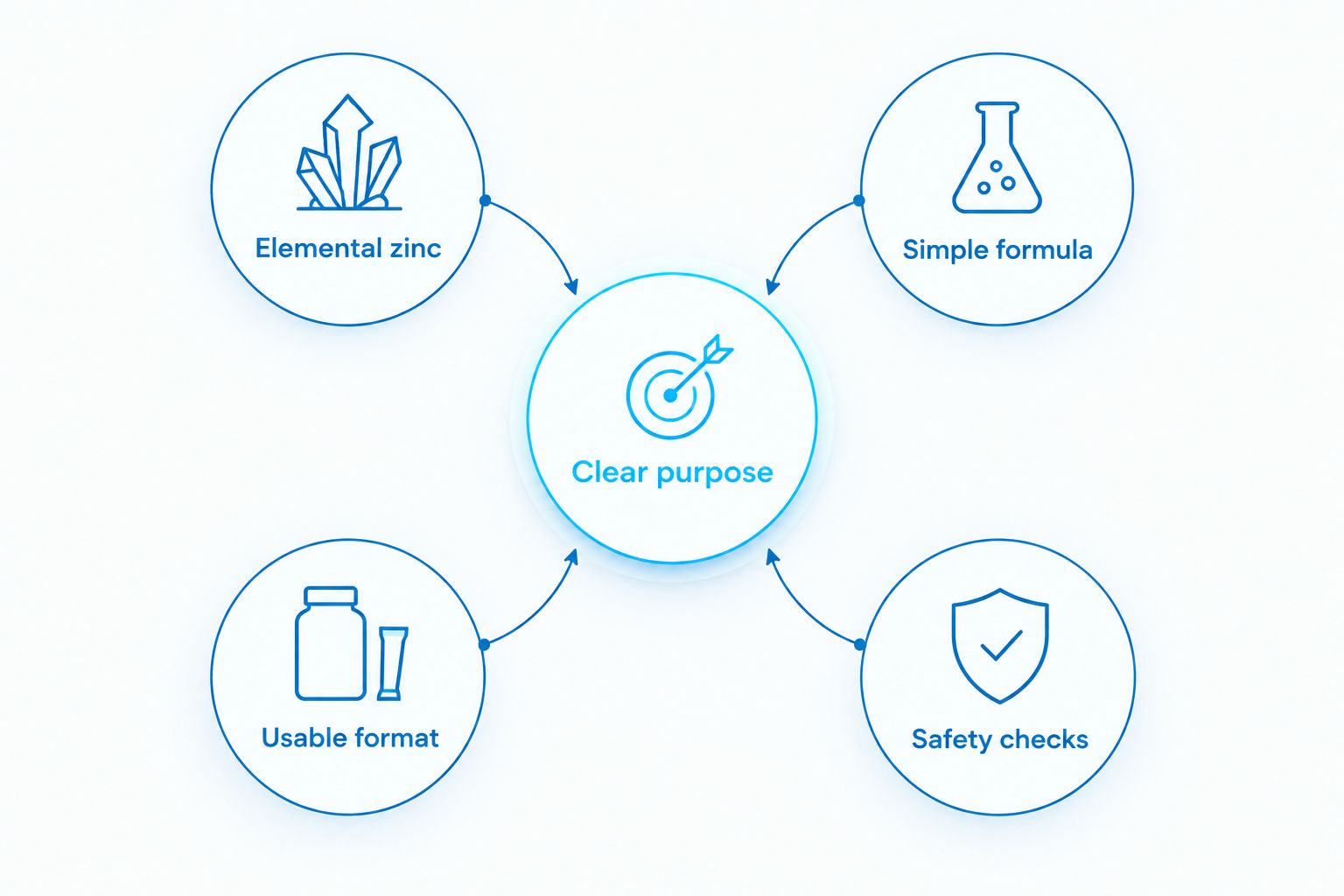
For a 2026 shortlist, these criteria matter more than an ear-health claim on the front label:
- Clear purpose: Choose zinc to address a clinician-identified need, not because a label promises quieter ears.
- Elemental zinc: Compare the amount of zinc itself per serving, rather than the weight of the whole zinc compound.
- Simple formula: A single-ingredient product makes it easier to identify your zinc intake and avoid overlapping nutrients.
- Usable format: Pick a tablet, capsule, liquid, or gummy that you can take according to its directions.
- Safety checks: Review medicines, other supplements, and the intended duration with a clinician or pharmacist.
A product does not earn a higher ranking simply by containing more zinc. The right serving depends on why you need it, what you already consume, and the plan your clinician recommends.
Zinc supplement formats at a glance
These are format recommendations, not evidence that one zinc compound treats ear symptoms better than another. For this 2026 comparison, each option fills a different practical need.
| Rank and option | Best for | Standout feature | Key limitation |
|---|---|---|---|
| 1. Single-ingredient zinc gluconate tablet | A straightforward deficiency-replacement discussion | Keeps the zinc source separate from a broader wellness blend | Requires swallowing a tablet; the serving still needs review |
| 2. Single-ingredient zinc citrate capsule | People who prefer capsules | A capsule format without requiring an ear-health blend | Does not solve pill-swallowing difficulties |
| 3. Liquid zinc | People who need a measured liquid serving | Allows measurement according to the product directions | Measuring errors are possible; concentration varies by product |
| 4. Zinc gummy | Adults who avoid tablets and capsules | Chewable format | Serving count, sweeteners, and added nutrients need checking |
No format in this table has an established tinnitus-treatment advantage. Choose between them for a defined nutritional need and a manageable routine.
1. Zinc gluconate tablets: best zinc option for a simple formula
A single-ingredient zinc gluconate tablet is the default starting point when a clinician recommends zinc replacement. Its practical advantage is simplicity: you can review the zinc serving without sorting through a long ear-wellness blend.
This recommendation is about label clarity, not a claim that gluconate restores hearing. Read the Supplement Facts panel rather than relying on the product name.
Zinc gluconate tablet pros:
- A single-ingredient formula makes zinc intake easier to identify.
- A fixed tablet serving avoids measuring a liquid.
- The formula can be reviewed separately from other wellness supplements.
Zinc gluconate tablet cons:
- A tablet is unsuitable if swallowing pills is difficult.
- A fixed serving does not automatically match your clinician's recommendation.
- Zinc can cause nausea and other digestive symptoms.
Best for: Adults discussing a straightforward replacement plan for an identified zinc need.
Check whether the listed serving means one tablet or several. Also compare the zinc amount with your multivitamin; a simple product still creates duplication when combined with another zinc source.
Verdict: Buy only when zinc replacement is appropriate and the labeled serving matches your care plan.
2. Zinc citrate capsules: best zinc option for capsule users
A single-ingredient zinc citrate capsule offers another way to take supplemental zinc without choosing a multi-nutrient ear-health formula. It belongs on the shortlist if you already prefer capsules and have a clear reason to supplement.
Do not choose citrate because you expect a different tinnitus outcome. The capsule format is a practical preference, not proof of better ear-health results.
Zinc citrate capsule pros:
- Offers a capsule alternative to tablets.
- A single-ingredient version keeps the nutrient list straightforward.
- A fixed serving avoids using a dropper or measuring device.
Zinc citrate capsule cons:
- Still requires swallowing a pill.
- Capsule ingredients matter if you have dietary restrictions.
- More zinc per capsule is not automatically more useful.
Best for: Adults who prefer capsules and have a clinician-approved reason to take zinc.
Review the full ingredient list, including the capsule shell. Do not open a capsule or divide its contents unless the manufacturer or pharmacist confirms that this is appropriate.
Verdict: Buy for capsule preference, not for a claimed advantage against ringing.
3. Liquid zinc: best zinc option for measured liquid servings
Liquid zinc fits people who cannot comfortably take tablets or capsules. A liquid product can provide a measured serving, but only when you follow that product's concentration and directions.
Never transfer the serving instructions from one bottle to another. Different liquids can contain different amounts of zinc in the same volume.
Liquid zinc pros:
- Avoids swallowing a solid pill.
- Supports measurement using the product's specified device.
- Lets a pharmacist review the serving in both volume and elemental zinc.
Liquid zinc cons:
- Measurement adds a step and creates room for error.
- Taste can make the routine harder to maintain.
- Drops, dropperfuls, and milliliters are not interchangeable instructions.
Best for: Adults who need a liquid format and can follow a clearly defined serving.
Ask the pharmacist to show you how to measure the recommended amount. A household spoon is not a substitute for an appropriate measuring device.
Verdict: Buy when liquid solves a swallowing problem and the measurement instructions are clear.
4. Zinc gummies: best zinc option for avoiding pills
A zinc gummy provides a chewable alternative to tablets and capsules. The important word is zinc: an ear-wellness gummy is not automatically a zinc supplement, and the front label does not replace the Supplement Facts panel.
Count the full serving, not just one gummy. Check added nutrients and sweeteners before deciding whether the format suits your routine.
Zinc gummy pros:
- Avoids swallowing tablets or capsules.
- Does not require measuring a liquid.
- Offers a chewable format for adults who prefer it.
Zinc gummy cons:
- The labeled serving can require multiple gummies.
- Added sugars, sugar alcohols, or other ingredients need review.
- A broader wellness formula can overlap with other supplements.
Best for: Adults who prefer chewables and can confirm the zinc amount and complete ingredient list.
Tinniva Ear Health Gummies are described as a daily ear-wellness supplement. Tinniva is best for adults seeking an ear-wellness gummy format, not as a substitute for medical evaluation of tinnitus. Confirm the current label before choosing the product specifically for zinc intake.
Verdict: Hold until the label confirms zinc content, serving size, and compatibility with your other supplements.
How much zinc is appropriate?
The NIH Office of Dietary Supplements lists the adult recommended dietary allowance as 11 mg per day for men and 8 mg per day for women. These figures describe total intake from food and supplements, not a suggested supplement serving for every adult.
The adult tolerable upper intake level is 40 mg per day from all sources. That is a safety limit, not a target; medically supervised treatment is a separate situation.
For a 2026 label review, use this sequence:
- Identify the serving. Check the zinc amount for the complete labeled serving.
- Add overlapping supplements. Include multivitamins and other products containing zinc.
- Review the purpose. Ask whether supplementation addresses an identified need.
- Confirm duration. Agree on when to reassess instead of continuing indefinitely.
Excess zinc can interfere with copper absorption. Zinc also interacts with some medicines, including certain antibiotics and penicillamine, so ask a pharmacist about timing rather than inventing your own schedule.
What does the evidence say about zinc and tinnitus?
Zinc is not an established treatment for tinnitus. The Cochrane review titled Zinc supplementation for tinnitus found no evidence that oral zinc supplementation improves tinnitus symptoms in adults; that finding does not establish a benefit for any particular gummy, capsule, or liquid.
The distinction is important: correcting zinc deficiency supports nutritional care, while treating tinnitus requires attention to the symptom and its possible causes. One goal does not prove the other.
The NIH Office of Dietary Supplements' Zinc Fact Sheet for Health Professionals provides the intake and safety figures used above. For tinnitus assessment and management, NIDCD's tinnitus information is a more appropriate starting point than a supplement's promotional claims.
Keep a short record of when ringing occurs, whether it affects one or both ears, and whether hearing changes accompany it. Bring that information and your supplement labels to your appointment.
How these options are ranked
This 2026 ranking prioritizes a clear purpose, identifiable elemental zinc, formula simplicity, practical use, and safety review. It does not rank brands by clinical effectiveness or imply a head-to-head product test.
Single-ingredient tablets lead because they offer a straightforward label to discuss. Capsules, liquids, and gummies follow as alternatives for different preferences—not as weaker or stronger tinnitus treatments.
Which zinc supplement should you choose?
Choose a single-ingredient zinc gluconate tablet if your clinician recommends zinc and you have no format preference. Choose a citrate capsule if you prefer capsules, a liquid if swallowing is the obstacle, or a verified zinc gummy if you need a chewable option.
If ear ringing is your only reason for buying, pause the purchase and arrange an assessment. A supplement format cannot answer why the symptom started.
FAQ
What's the best zinc supplement for ear health?
A single-ingredient zinc gluconate tablet is a practical default when a clinician recommends zinc replacement. No zinc format is established as the best treatment for tinnitus or hearing problems.
Can zinc supplements stop ringing in my ears?
Zinc supplements are not an established treatment for tinnitus. An assessment can help identify hearing changes or other issues that a supplement cannot address.
How much zinc should an adult take each day?
The adult recommended dietary allowance is 11 mg daily for men and 8 mg daily for women, counting food and supplements. These are nutritional intake targets, not automatic supplement instructions.
Is taking more zinc better for ear health?
No, taking more zinc is not an established way to improve ear health. The adult upper intake level is 40 mg daily from all sources, and excess zinc can interfere with copper absorption.
Are zinc gummies better than zinc tablets?
Zinc gummies are not established as better for ear health than tablets. Choose by the labeled zinc amount, ingredients, serving instructions, and your ability to use the format consistently.
Are Tinniva Ear Health Gummies a zinc supplement?
Check the current Supplement Facts panel to confirm whether Tinniva Ear Health Gummies contain zinc and how much they provide. The product is described as an everyday ear-wellness supplement, which does not by itself establish zinc content.
Should I take zinc if ringing starts with sudden hearing loss?
Seek urgent medical attention for sudden hearing loss rather than trying zinc first. Ringing alongside a sudden hearing change needs prompt assessment.
One last thing
For your 2026 supplement review, photograph the back label—not just the front. The Supplement Facts panel shows the serving and nutrient amounts you need to compare; the front label mainly tells you how the product is positioned.
Bring every supplement label to the same review. A zinc product that looks reasonable alone can duplicate zinc already present in your daily routine.