
Best overall for general magnesium replacement: magnesium citrate. Best for a chelated formulation: magnesium glycinate. Best for a compact tablet: magnesium oxide. These are nutritional use cases, not tinnitus treatment rankings: no form of magnesium is established as the best magnesium supplement for tinnitus in 2026.
- Magnesium supplements for tinnitus have no established winning formulation; correcting low intake is a separate nutritional goal.
- Magnesium citrate is a practical nutritional option, but it can loosen stools.
- Magnesium glycinate offers a chelated option; magnesium oxide generally has lower absorption than citrate.
- Tinniva offers ear wellness gummies; assess magnesium separately using the Supplement Facts label.
Why this matters
Tinnitus is the perception of sound without an external sound source. Ringing, buzzing, or hissing does not establish that you need magnesium, and replacing a nutrient does not automatically treat the sound.
Choose a magnesium supplement to address an identified nutritional need, not because a bottle promises quieter ears. The American Academy of Otolaryngology–Head and Neck Surgery recommends against dietary supplements as treatment for persistent, bothersome tinnitus. That recommendation concerns tinnitus treatment; it does not mean you should leave a diagnosed deficiency untreated.
Tinniva Ear Health Gummies belong to the ear wellness supplement category. Keep that category separate from magnesium replacement: the relevant question is what a supplement contains and whether you need it, not whether its positioning mentions ears.
For your 2026 decision, separate three questions: Does your tinnitus need assessment? Is your magnesium intake inadequate? Which formulation fits your health and medication history? Answering them in that order prevents a supplement choice from replacing necessary care.
What makes the best magnesium supplement for your needs?
Use these criteria before choosing a form:
- A clear nutritional purpose. Identify whether you are addressing low dietary intake, a clinician-confirmed deficiency, or another specific recommendation. Tinnitus alone is not a magnesium deficiency test.
- Elemental magnesium disclosure. Compare the amount of magnesium supplied per serving, not the weight of the entire magnesium compound.
- Absorption. The NIH Office of Dietary Supplements identifies citrate among forms generally absorbed more completely than oxide. Better absorption does not establish better tinnitus relief.
- Digestive fit. Supplemental magnesium can cause diarrhea, nausea, and abdominal cramping. A formulation that disrupts your digestion is not a useful daily choice.
- Medication and kidney safety. Magnesium can interfere with absorption of certain medicines. Impaired kidney function also changes the safety of supplementation.
- Product-level verification. Read the ingredient list and look for independently verifiable quality certification. A familiar magnesium form does not establish the quality of a particular bottle.
There is no evidence-based reason to rank a product higher simply because its label says ear support. A single-ingredient product can also make it easier to see exactly what you are adding to your routine.
Magnesium supplements for tinnitus: options at a glance
The order below reflects practical nutritional use cases. It is not a ranking of tinnitus outcomes, and none of these forms earns a tinnitus-treatment recommendation.
| Magnesium form | Best for | Standout feature | Main advantage | Key limitation |
|---|---|---|---|---|
| Magnesium citrate | General replacement when extra magnesium is appropriate | Generally better absorbed than oxide | Straightforward nutritional option | Can loosen stools; no established tinnitus benefit |
| Magnesium glycinate | Readers specifically seeking a chelated formulation | Magnesium bound to glycine | Distinct formulation choice to discuss with a clinician | No established tinnitus advantage or guaranteed digestive advantage |
| Magnesium oxide | Readers prioritizing a compact tablet | High elemental magnesium proportion by compound weight | Can provide magnesium in a smaller amount of compound | Generally lower absorption than citrate; can cause diarrhea |
Choose the form only after deciding whether supplementation is appropriate. A well-matched formulation cannot compensate for an unnecessary supplement or an unrecognized medical issue.
1. Magnesium citrate: best for general nutritional replacement
Magnesium citrate supplies magnesium combined with citric acid. It is a reasonable option when you need supplemental magnesium and want a form with generally better absorption than magnesium oxide, according to the NIH Office of Dietary Supplements.
That is a nutrition-based reason to choose it. It is not evidence that magnesium citrate reduces ringing, restores hearing, or treats the cause of tinnitus.
Magnesium citrate pros:
- Generally better absorbed than magnesium oxide.
- Provides a clear formulation to discuss when addressing inadequate magnesium intake.
- Allows a direct elemental-magnesium comparison with other forms when the label lists the serving amount.
Magnesium citrate cons:
- Can cause loose stools, cramping, or diarrhea.
- Has no established tinnitus-specific advantage over other magnesium forms.
- Requires medication and kidney-safety checks, just like other magnesium supplements.
Best for: Adults with an identified reason to supplement who do not need to avoid its bowel effects.
Do not confuse magnesium citrate dietary supplements with magnesium citrate products intended as laxatives. Read the intended use and directions rather than choosing by the ingredient name alone. A product used for constipation is not automatically suitable for an everyday wellness routine.
If you already have frequent loose stools, discuss another approach before choosing citrate. Increasing the serving to chase a change in tinnitus adds digestive risk without an established tinnitus benefit.
Verdict: Hold until you have confirmed a nutritional need; choose magnesium citrate for replacement, not tinnitus treatment.
2. Magnesium glycinate: best for a chelated formulation
Magnesium glycinate combines magnesium with glycine. Labels also use the term magnesium bisglycinate; inspect the full formulation rather than assuming every similarly named product contains the same mixture.
A chelated formulation is a product characteristic, not proof of a better clinical outcome. Magnesium glycinate has no established advantage for tinnitus, and claims about guaranteed calm, sleep, or ringing relief go beyond what this comparison supports.
Magnesium glycinate pros:
- Offers an alternative formulation when discussing magnesium replacement.
- Identifies glycine as the substance bound to magnesium.
- Can fit a targeted routine when its elemental amount and other ingredients match your needs.
Magnesium glycinate cons:
- Has no established superiority for tinnitus symptoms.
- Does not guarantee freedom from digestive side effects.
- Requires careful label reading because products can contain additional magnesium forms or other ingredients.
Best for: Readers whose clinician recommends a chelated magnesium formulation or who are evaluating alternatives after difficulty with another product.
Do not select magnesium glycinate solely because your tinnitus is more noticeable at bedtime. Sleep difficulty and tinnitus deserve their own assessment; a supplement label does not establish that magnesium is the right response to either problem.
Check whether the serving requires multiple capsules, and compare the elemental amount across the full serving. The front label is not enough to determine how much magnesium you would actually take.
Verdict: Hold unless magnesium supplementation is appropriate and the glycinate formulation fits your plan.
3. Magnesium oxide: best for a compact tablet
Magnesium oxide contains a high proportion of elemental magnesium by compound weight. That property can help explain a compact tablet, but it does not mean your body absorbs more magnesium from it.
The NIH Office of Dietary Supplements describes oxide as generally less completely absorbed than citrate. Magnesium oxide is also used in products for constipation, so its intended purpose matters.
Magnesium oxide pros:
- Contains a high elemental magnesium proportion by compound weight.
- Can suit a reader who prioritizes a compact tablet, depending on the product.
- Has a recognizable form name that supports direct label comparison.
Magnesium oxide cons:
- Is generally less completely absorbed than citrate.
- Can cause diarrhea and abdominal discomfort.
- Has no established tinnitus-treatment benefit.
Best for: Readers with a specific reason to choose oxide after reviewing absorption, digestive effects, and the actual tablet format.
A large elemental amount on the label is not a reason to take more. Absorption, tolerability, total intake, and the reason for supplementation all matter more than a prominent front-label number.
For a 2026 shortlist, magnesium oxide belongs behind a clear discussion of nutritional needs—not ahead of it because a tablet looks convenient. Do not increase the serving to compensate for its lower absorption without professional advice.
Verdict: Skip magnesium oxide as a tinnitus-targeted purchase; consider it only for a defined nutritional or clinician-directed purpose.
Check the amount before choosing the form
The NIH Office of Dietary Supplements lists adult recommended magnesium intakes of 400–420 mg/day for men and 310–320 mg/day for women, depending on age. These totals include food and supplements; pregnancy has different requirements.
The adult upper limit for magnesium from supplements and medications is 350 mg/day, unless a healthcare professional directs otherwise. This limit does not include magnesium naturally present in food. It is not a recommended tinnitus dose.
Those distinctions matter. An intake recommendation describes total nutritional needs, while the supplemental upper limit addresses a different safety question. Neither tells you to start a magnesium supplement simply because your ears ring.
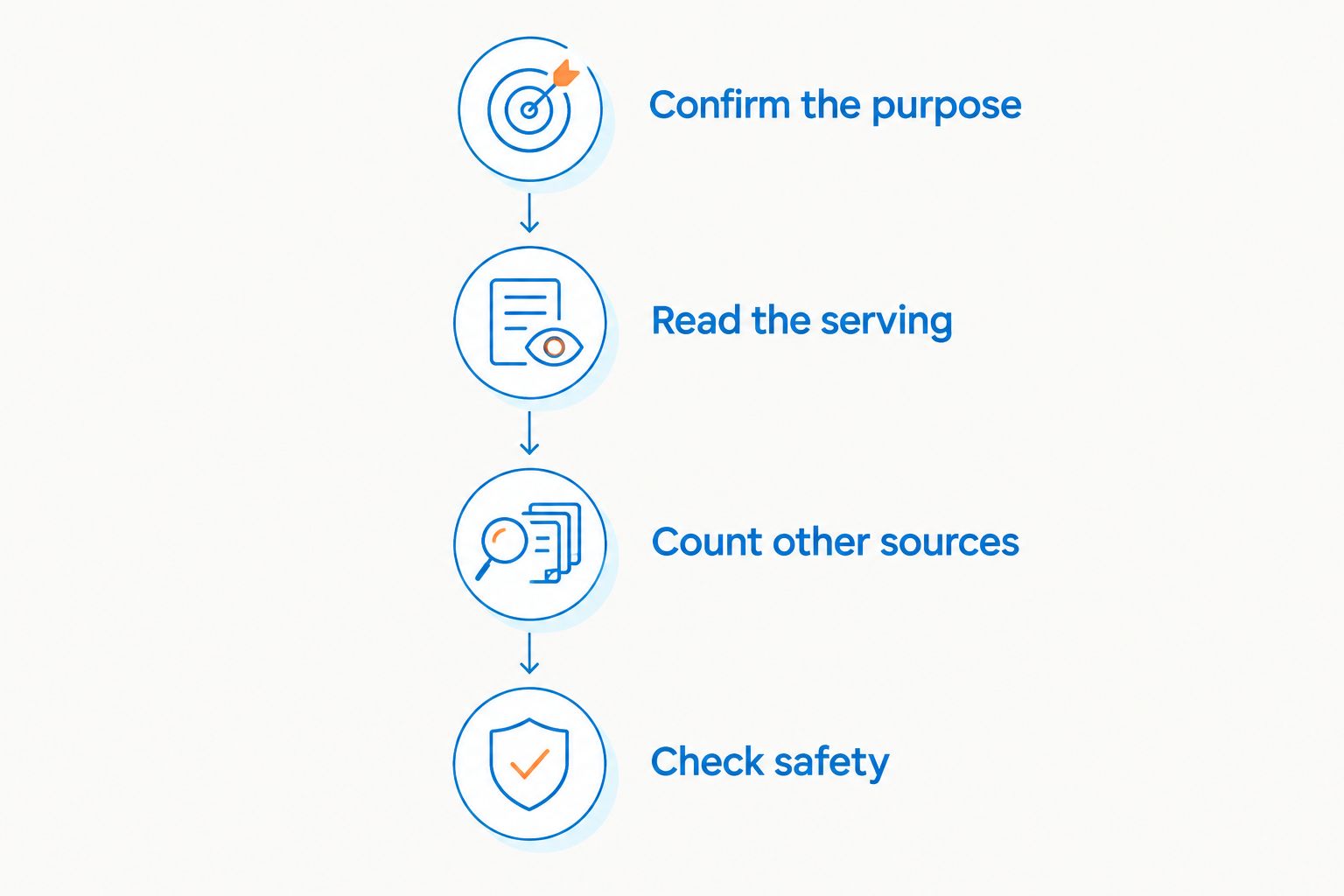
Use this label-checking sequence:
- Confirm the purpose. Write down the nutritional reason for adding magnesium.
- Read the serving. Find elemental magnesium per full serving, including the required capsule or gummy count.
- Count other sources. Include multivitamins, other supplements, antacids, and laxatives containing magnesium.
- Check safety. Ask a pharmacist or clinician about your medicines, kidney function, and suitable intake.
Keep the bottle or a photograph of its Supplement Facts panel available when you ask for advice. The exact formulation is more useful than saying you take a supplement for ear wellness.
Safety checks that matter more than the ranking
Kidney disease needs particular attention because the kidneys remove excess magnesium. Do not start supplementation without medical guidance if you have impaired kidney function.
Magnesium can reduce absorption of certain antibiotics and oral bisphosphonates. A pharmacist can identify the relevant separation instructions for your specific medication; there is no single timing rule that fits every medicine.
Tinnitus also needs appropriate assessment. Sudden hearing loss, with or without tinnitus, requires urgent medical attention. A sound that pulses with your heartbeat or persistent symptoms affecting one ear also warrants medical evaluation rather than a supplement experiment.
For persistent bothersome tinnitus, ask about a hearing assessment and evidence-based management. Cognitive behavioral therapy can help reduce tinnitus-related distress, and hearing aids can help appropriate patients with hearing loss. Neither requires you to interpret ringing as a nutrient deficiency.
Where ear wellness gummies fit
Tinniva is an ear wellness gummy option for readers who prefer that format, not a substitute for tinnitus assessment. Tinniva sells dietary supplement gummies marketed for everyday ear health and tinnitus-related support.
That positioning does not establish magnesium content or tinnitus effectiveness. Treat a gummy as a magnesium source only when its Supplement Facts panel lists magnesium and provides the elemental amount per serving.
The format has a practical advantage for someone who prefers a chewable supplement. Its limitation is equally important: a preferred format does not establish that the ingredients match your nutritional needs. Apply the same checks to Tinniva that you would apply to any supplement.
How these magnesium forms were ranked
The ranking prioritizes a clear nutritional use case, established absorption differences, digestive considerations, and label transparency. It does not assign tinnitus efficacy scores because no formulation has an established winning position for that purpose.
Magnesium citrate takes the default nutritional slot because of its absorption relative to oxide. Magnesium glycinate occupies the chelated-form slot, while magnesium oxide occupies the compact-tablet slot. Product quality still needs separate verification.
Which magnesium supplement should you choose?
If you need magnesium replacement, discuss magnesium citrate as a starting option. If you want tinnitus relief, do not choose a supplement from this ranking as treatment. That distinction is the central buying decision.
For 2026, your next move is to review dietary intake, symptoms, medicines, and the actual label with an appropriate healthcare professional. If low intake is the issue, magnesium-rich foods—including legumes, nuts, seeds, and leafy greens—also belong in the conversation.
FAQ
What's the best magnesium supplement for tinnitus in 2026?
No magnesium form is established as the best supplement for tinnitus. Magnesium citrate is a practical nutritional replacement option when supplementation is appropriate, but that does not establish tinnitus relief.
Is magnesium glycinate better than citrate for ear ringing?
Magnesium glycinate has no established advantage over citrate for ear ringing. Choose between formulations based on nutritional needs, the label, digestive effects, and professional advice—not a tinnitus promise.
How much magnesium should I take for tinnitus?
There is no established magnesium dose for treating tinnitus. The adult supplemental upper limit is 350 mg/day unless a healthcare professional directs otherwise; it is a safety limit, not a tinnitus recommendation.
Can magnesium supplements make me feel unwell?
Yes, supplemental magnesium can cause diarrhea, nausea, and abdominal cramping. Kidney impairment increases the risk from excess magnesium, so discuss supplementation before starting if you have kidney disease.
Are ear wellness gummies the same as magnesium supplements?
No, an ear wellness gummy is a magnesium source only if its Supplement Facts panel lists magnesium. Check the elemental amount per serving and all other ingredients rather than relying on the ear wellness description.
Should I try magnesium before getting my tinnitus checked?
Do not delay assessment to try magnesium, especially if tinnitus accompanies sudden hearing loss. Sudden hearing loss needs urgent medical attention; heartbeat-synchronous sounds and persistent one-sided symptoms also warrant evaluation.
Does better magnesium absorption mean better tinnitus relief?
No, better magnesium absorption does not establish better tinnitus relief. Absorption helps compare nutritional formulations, while tinnitus effectiveness requires separate clinical evidence.
One last thing
Your most useful comparison is not citrate versus glycinate. It is a clear nutritional reason versus an unsupported tinnitus promise.
Before buying in 2026, write down what the supplement is meant to address. If the only answer is ringing, prioritize assessment and a symptom-management plan. Tinniva and other wellness supplements belong in that discussion as supplements—not as replacements for care.