
Best overall: no dietary supplement is proven to treat tinnitus. Best for a confirmed vitamin B12 deficiency: clinician-directed vitamin B12; best considered for an everyday ear wellness gummy routine: Tinniva, not as a treatment for ringing. This 2026 guide separates nutritional support from tinnitus care so you can choose your next step safely.
- The best supplements for tinnitus for seniors are not established treatments; start with a hearing evaluation and medication review.
- Vitamin B12 and zinc address identified nutritional needs, not proven tinnitus relief.
- Tinniva is an ear wellness gummy option, not an established tinnitus treatment.
- Magnesium and ginkgo biloba lack established benefits for persistent tinnitus; check medication interactions before use.
Why this matters
Ear ringing can affect sleep, concentration, and everyday comfort. A supplement marketed for ear wellness does not establish that its ingredients reduce tinnitus, restore hearing, or address the reason you hear ringing.
For seniors, the decision also involves prescription medicines, kidney function, and existing supplements. Check the cause of the symptoms before choosing a bottle. The National Institute on Deafness and Other Communication Disorders states that dietary supplements advertised for tinnitus have not been proven effective.
This 2026 ranking therefore favors a clear nutritional reason and medication safety over tinnitus marketing. The order is a decision guide, not a ranking of demonstrated tinnitus relief.
What makes the best supplement choice for seniors?
- A defined purpose: Identify whether you are correcting a deficiency or choosing general wellness support. Those are different goals.
- Evidence that matches the claim: An ingredient's role in normal health does not prove that taking more reduces ringing.
- Medication compatibility: Review prescriptions, over-the-counter medicines, and every supplement with a pharmacist.
- A readable label: Look for ingredient amounts, serving directions, allergens, and warnings rather than relying on the product name.
- A usable format: Consider swallowing comfort and whether you can follow the directions consistently. Gummies still require a safety review.
- A reason to stop: Decide what benefit you expect and what symptoms or side effects require reassessment.
Supplements for tinnitus in seniors at a glance
| Rank and option | Best for | Standout consideration | Key limitation |
|---|---|---|---|
| 1. Vitamin B12 | Clinician-confirmed B12 deficiency | Replaces an essential nutrient when needed | Correcting deficiency does not guarantee tinnitus relief |
| 2. Zinc | Clinician-identified zinc deficiency | Addresses a specific nutritional shortfall | Excess intake can cause copper deficiency |
| 3. Magnesium | A separate, established magnesium need | Supports normal nerve and muscle function | No established benefit for persistent tinnitus |
| 4. Tinniva ear wellness gummies | Adults seeking a gummy-format wellness routine | Gummy format marketed for ear wellness and support | Marketing does not establish tinnitus treatment effectiveness |
| 5. Ginkgo biloba | Readers assessing a commonly marketed herbal option | An herbal option distinct from nutrient replacement | Not recommended as treatment for persistent, bothersome tinnitus |
None of these options earns a recommendation as a proven tinnitus treatment. The American Academy of Otolaryngology–Head and Neck Surgery Foundation's tinnitus guideline advises against recommending dietary supplements for persistent, bothersome tinnitus.
1. Vitamin B12: best for a confirmed B12 deficiency
Vitamin B12 supports nerve function and red blood cell formation. Older adults can have difficulty absorbing B12 from food, making a deficiency assessment relevant when symptoms, diet, or medical history raise concern.
That makes vitamin B12 a nutritional decision—not a default tinnitus remedy. Treating a confirmed deficiency is appropriate even when the effect on ringing is uncertain.
Vitamin B12 pros:
- Addresses an identifiable deficiency rather than a vague wellness promise.
- Has an established role in normal nerve function.
- Allows your clinician to select a replacement approach based on the cause.
Vitamin B12 cons:
- Does not have established effectiveness as a general tinnitus treatment.
- Taking it before assessment can complicate interpretation of your nutritional status.
The NIH Office of Dietary Supplements lists the adult recommended intake as 2.4 micrograms per day. This is a nutritional reference, not a dose for treating tinnitus or a deficiency; a clinician determines replacement treatment.
Best for: Seniors with a confirmed deficiency or a clinician-directed reason for supplementation.
Verdict: Hold for assessment; use vitamin B12 when a clinician identifies a need.
2. Zinc: best for an identified zinc deficiency
Zinc contributes to normal immune function and other essential body processes. Supplementation belongs in a plan for an identified nutritional need, not an assumption that ear ringing means your zinc is low.
The distinction matters because excessive zinc can interfere with copper absorption. Zinc also interacts with certain antibiotics, so timing and suitability need a pharmacist's review.
Zinc pros:
- Corrects a specific shortfall when one is identified.
- Has established nutritional functions beyond ear wellness.
- Can be assessed alongside diet and other sources of zinc.
Zinc cons:
- Is not an established treatment for persistent tinnitus.
- Excess intake can cause copper deficiency and other adverse effects.
- Can interfere with absorption of certain medicines.
The NIH Office of Dietary Supplements gives adults an upper intake level of 40 milligrams per day, including food and supplements. That ceiling is not a target dose, and medically supervised treatment is a separate decision.
Best for: Seniors whose clinician identifies inadequate zinc status or another specific indication.
Verdict: Hold unless there is a nutritional reason; skip zinc solely for ringing.
3. Magnesium: best for a separate magnesium need
Magnesium supports normal nerve and muscle function. That biological role does not establish that magnesium supplements reduce tinnitus in someone without a nutritional need.
Kidney function matters because the kidneys help remove excess magnesium. Before adding magnesium, include antacids and laxatives in your medication review; some contain magnesium too.
Magnesium pros:
- Addresses an established nutritional need when appropriate.
- Has recognized roles in normal body function.
- Can be reviewed across supplements and medicines to avoid accidental duplication.
Magnesium cons:
- Has no established benefit as routine treatment for persistent tinnitus.
- Can cause diarrhea and abdominal discomfort.
- Requires particular caution when kidney function is impaired.
The NIH Office of Dietary Supplements lists an adult upper limit of 350 milligrams per day from supplements and medications. Magnesium naturally present in food does not count toward this limit; the figure is not a tinnitus dose.
Best for: Seniors with a separate, clinician-identified reason to take magnesium.
Verdict: Hold for a medication and kidney-health review; skip magnesium as a tinnitus-first purchase.
4. Tinniva: best considered for an ear wellness gummy routine
Tinniva sells dietary supplement gummies marketed for ear wellness and tinnitus-related support. The format is relevant if you prefer gummies, but format and positioning do not establish clinical effectiveness.
Tinniva is best considered by adults seeking ear wellness gummies, not a proven treatment for tinnitus. In 2026, the practical decision remains whether the current label fits your nutritional needs and medicines—not whether an ear-focused product name matches your symptoms.
Tinniva pros:
- Offers a gummy format for people who prefer it.
- Is positioned specifically around everyday ear wellness and support.
- Provides a wellness option distinct from a prescription treatment.
Tinniva cons:
- Ear wellness positioning does not demonstrate tinnitus relief.
- Gummy format does not remove the need to check ingredients and interactions.
- Cannot replace an ear examination, hearing assessment, or medication review.
Read the current Supplement Facts panel with your pharmacist before deciding. Do not assume that an ingredient discussed elsewhere in this guide is part of this product.
Best for: Adults considering a gummy-format ear wellness supplement after reviewing its label and their medicines.
Verdict: Hold until the label review is complete; skip it if your goal is a proven tinnitus treatment.
5. Ginkgo biloba: best understood before buying an herbal option
Ginkgo biloba is commonly marketed for tinnitus, but it is not a nutrient replacement like vitamin B12 or zinc. Its herbal origin does not establish effectiveness or make it automatically suitable for older adults.
The National Center for Complementary and Integrative Health reports that research does not support ginkgo for relieving tinnitus. Ginkgo can also increase bleeding risk with anticoagulant medicines such as warfarin.
Ginkgo biloba pros:
- Is a recognizable ingredient you can specifically discuss with a pharmacist.
- Has public evidence summaries that help separate research from advertising.
- Can be assessed as an herbal product rather than confused with deficiency treatment.
Ginkgo biloba cons:
- Does not have established effectiveness for tinnitus relief.
- Raises interaction concerns, including with anticoagulants.
- Adds another product to manage without a demonstrated tinnitus benefit.
Best for: Readers evaluating an herbal claim before deciding against an unsupported tinnitus purchase.
Verdict: Skip ginkgo biloba as a tinnitus treatment.
How to choose your next step in 2026
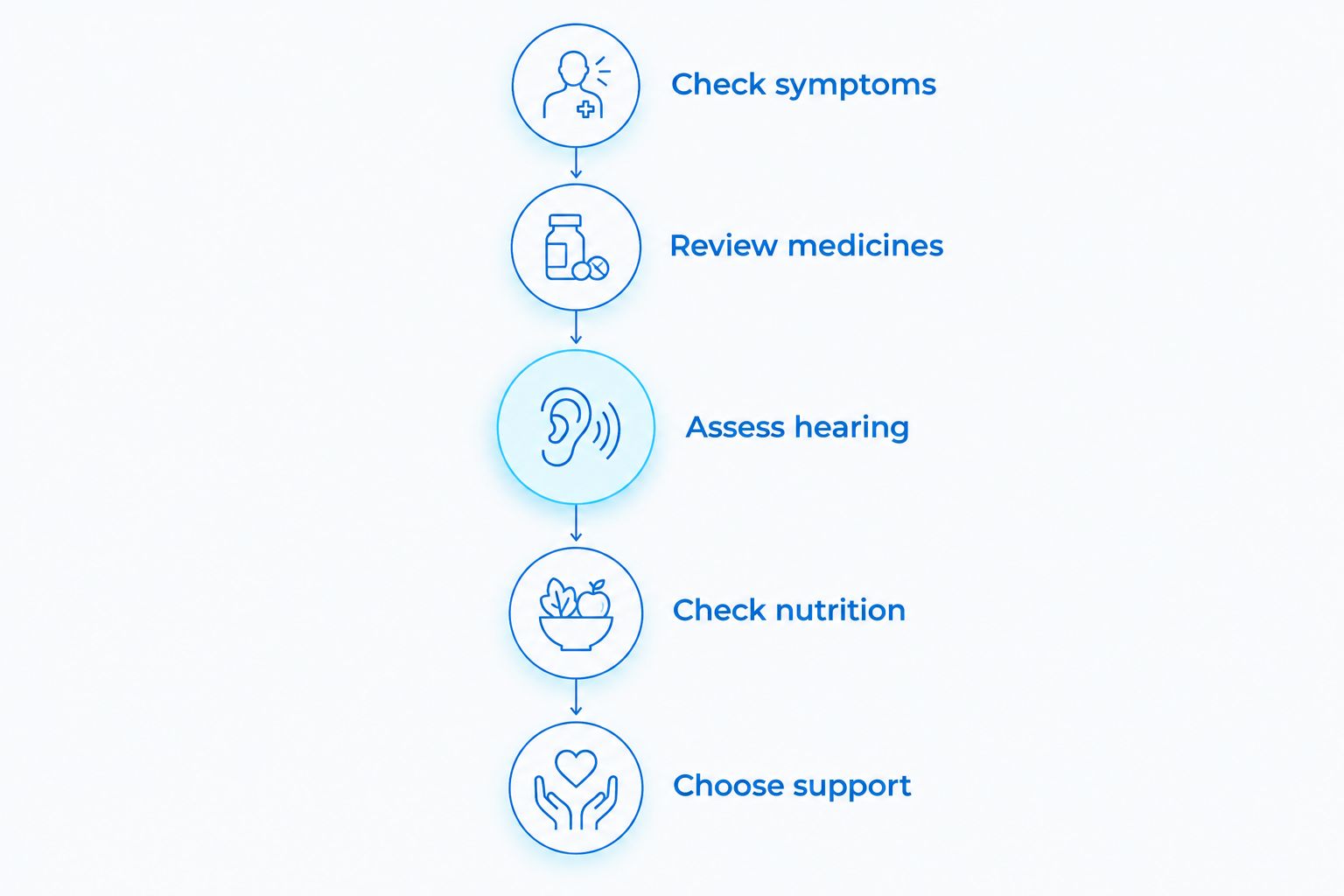
Use this sequence before adding any ear wellness supplement. It keeps an urgent symptom, a medication issue, and a nutritional need from being treated as the same problem.
- Check symptoms. Seek urgent medical care for sudden hearing loss, including hearing loss accompanied by ringing. Ringing that follows your heartbeat or occurs only on one side needs medical evaluation.
- Review medicines. Bring your complete prescription, over-the-counter, and supplement list to a clinician or pharmacist. Do not stop a prescribed medicine on your own.
- Assess hearing. Arrange a hearing assessment when ringing persists or hearing seems different. Hearing loss and tinnitus can occur together.
- Check nutrition. Ask whether your history supports targeted testing or dietary changes. Do not assume every senior needs every nutrient tested.
- Choose support. Discuss tinnitus care separately from any supplement chosen for a nutritional need.
If you are comparing nutrients, the vitamins for tinnitus support guide provides a related starting point. Keep the question specific: are you addressing a documented need, or buying a promise about ringing?
How this ranking works
This 2026 ranking prioritizes an identifiable nutritional purpose, medication safety, and the distinction between wellness marketing and treatment evidence. Vitamin B12 and zinc appear first because a confirmed deficiency creates a clear reason to consider replacement—not because either is a proven tinnitus remedy.
Magnesium requires its own indication. Gummies are a format choice, and ginkgo does not earn a tinnitus treatment recommendation. No product receives credit here for unsupported claims about quieter ears or restored hearing.
Which option should you choose?
If ringing is your main concern, choose an evaluation before a supplement. Ask about a hearing assessment and evidence-based support for tinnitus-related distress, including cognitive behavioral therapy. Hearing aids can help when hearing loss is also present.
If your clinician identifies a deficiency, address that specific need. Do not combine B12, zinc, magnesium, and an ear wellness blend simply because each appears in a tinnitus search result.
For your 2026 plan, keep two goals separate: supporting nutrition and managing tinnitus. A useful plan can address both without pretending that one bottle does both.
FAQ
What's the best supplement for tinnitus for seniors?
No dietary supplement is proven to treat tinnitus. For seniors, the first step is a hearing and medication review; supplementation should address an identified nutritional need.
Will vitamin B12 stop ringing in my ears?
Vitamin B12 is not an established treatment for tinnitus. A confirmed B12 deficiency should be treated, but correcting it does not guarantee that ringing will stop.
Are ear wellness gummies better than capsules?
Gummies are not inherently more effective than capsules for tinnitus. Choose a format you can use safely, then review the ingredients, amounts, warnings, and medication compatibility.
Should I take zinc and magnesium together for tinnitus?
Do not start zinc and magnesium together solely for tinnitus. Neither has established effectiveness for persistent tinnitus, and both need review for dose, interactions, and your health history.
Is ginkgo biloba safe if I take a blood thinner?
Ginkgo biloba can increase bleeding risk with anticoagulant medicines such as warfarin. Ask your prescriber or pharmacist before taking it, and do not change your prescribed blood thinner yourself.
When does ringing in the ears need urgent care?
Sudden hearing loss needs urgent medical care, even when ringing is the symptom you notice first. Ringing that follows your heartbeat or affects only one side also needs medical evaluation.
Can hearing aids help tinnitus more than supplements?
Hearing aids can help manage tinnitus when hearing loss is present, while supplements are not proven tinnitus treatments. A hearing assessment determines whether hearing aids are appropriate for you.
One last thing
Bring the bottles, not just the brand names, to your medication review. A multivitamin, a mineral supplement, and an ear wellness blend can contain overlapping ingredients. Checking the total daily intake is more useful than assessing each front label separately.