
Best overall: supplements matched to a confirmed nutritional need, not a universal hearing formula. Best for an optional gummy routine: Tinniva. This 2026 guide compares supplements for age-related hearing support by their purpose and limitations; none is established as a way to reverse age-related hearing loss.
- Choose supplements for age-related hearing support to address confirmed nutritional needs, not to reverse hearing loss.
- Vitamin B12 and vitamin D belong in a deficiency-focused discussion, not a universal hearing supplement routine.
- Tinniva offers ear wellness gummies; the gummy format does not establish a hearing or tinnitus treatment benefit.
- Arrange a hearing evaluation when conversations become harder to follow; supplements do not replace hearing care.
Why this matters
Age-related hearing loss and a nutritional deficiency are different problems. Correcting a deficiency supports your health, but that does not establish that the same supplement improves age-related hearing loss in someone with adequate nutrient levels.
The National Institute on Deafness and Other Communication Disorders describes age-related hearing loss as a condition assessed through hearing care. Its guidance discusses hearing aids, assistive devices, and other hearing interventions—not supplements as a replacement for evaluation.
For your 2026 decision, separate everyday nutrition from treatment for hearing loss. A supplement belongs in a plan only when its purpose is clear. Trouble understanding speech deserves attention even if you already take vitamins.
What makes the best hearing-support supplement?
Use these criteria before choosing an ingredient or format:
- A clear nutritional purpose: Know whether you are addressing a documented deficiency, inadequate intake, or an optional wellness preference.
- Evidence that matches the claim: Evidence about normal nutrient function does not prove improved hearing or reduced tinnitus.
- A readable label: Check the serving size, ingredient amounts, warnings, and directions rather than relying on the product name.
- Compatibility with your medicines: Ask a pharmacist about interactions and overlapping ingredients across your supplements.
- A defined review point: Know who will review your need for the supplement and whether follow-up testing is appropriate.
For this 2026 comparison, a specific nutritional indication ranks ahead of a broad ear-wellness claim. The order below is a decision guide, not a ranking of proven hearing improvement.
Supplements for age-related hearing support at a glance
| Option | Best for | Standout feature | Key limitation |
|---|---|---|---|
| Vitamin B12 | Clinician-confirmed B12 deficiency | Directly addresses a specific nutrient need | Does not establish a benefit for age-related hearing loss without deficiency |
| Vitamin D | Clinician-identified low vitamin D or inadequate intake | Supports an established nutritional requirement | A vitamin D need is not proof of a hearing benefit |
| Zinc | Confirmed zinc deficiency | Replaces a nutrient when replacement is indicated | Excess intake can cause copper deficiency |
| Magnesium | A clinician-identified magnesium need | Addresses a defined nutritional issue | Kidney disease and medicine interactions require attention |
| Tinniva Ear Health Gummies | An optional ear-wellness gummy routine | Gummy-format dietary supplement | Ear-wellness positioning does not establish treatment effectiveness |
The NIH Office of Dietary Supplements provides nutrient requirements, safety information, and interaction guidance in its consumer fact sheets. Those references support nutritional decisions; they do not turn this list into a hearing-treatment ranking.
1. Vitamin B12: best for confirmed B12 deficiency
Vitamin B12 supports normal nerve function and red blood cell formation. A B12 supplement makes sense when a clinician identifies deficiency or another reason you need supplementation—not simply because hearing becomes harder with age.
The NIH Office of Dietary Supplements lists 2.4 micrograms per day as the recommended dietary allowance for most adults. That is a general nutritional requirement, not a dose shown to restore hearing. Treatment for deficiency requires individualized advice.
Vitamin B12 pros:
- Addresses a specific, identifiable nutritional problem.
- Has an established role in normal nervous system function.
- Allows a clinician to connect supplementation with symptoms, medical history, and appropriate testing.
Vitamin B12 cons:
- Adequate B12 status does not establish a reason to take extra B12 for hearing.
- Deficiency can involve absorption problems that need more than a self-selected supplement.
Best for: Adults with confirmed B12 deficiency or a clinician-identified need for replacement.
Ask what caused the low B12 and how your response will be assessed. Choosing a supplement without addressing the cause leaves the more useful question unanswered.
Verdict: Buy when B12 replacement is indicated; skip it as a stand-alone hearing treatment.
2. Vitamin D: best for an identified vitamin D need
Vitamin D helps the body absorb calcium and supports bone health. Supplementation can address inadequate intake or a clinician-identified deficiency, but those purposes are separate from treating age-related hearing loss.
NIH guidance lists 600 IU per day for adults aged 19–70 and 800 IU per day for adults over 70. These are general daily intake recommendations from all sources, not hearing-support doses or instructions to start a supplement.
Vitamin D pros:
- Supports an established nutritional requirement.
- Can address a defined intake gap or deficiency.
- Gives you a clear reason to review existing multivitamins and other vitamin D sources.
Vitamin D cons:
- Taking more than you need can be harmful.
- Correcting vitamin D status does not guarantee better hearing or less tinnitus.
Best for: Adults whose intake, health history, or clinical assessment identifies a vitamin D need.
For a 2026 supplement review, bring every relevant label to your appointment. Vitamin D can appear in several products, and the combined amount matters more than the amount in any single bottle.
Verdict: Buy for an identified nutritional need; skip high-dose self-treatment for hearing changes.
3. Zinc: best for confirmed zinc deficiency
Zinc supports normal immune function and other essential processes. A zinc supplement has a clear nutritional role when deficiency is established, but that is not a reason to recommend zinc routinely for age-related hearing support.
Ear-related marketing often places zinc alongside other vitamins and minerals. An ingredient's presence in a formula does not establish that the finished product improves hearing or relieves tinnitus.
Zinc pros:
- Addresses a specific deficiency when replacement is appropriate.
- Supports essential body functions.
- Can be evaluated against your diet and existing supplement intake.
Zinc cons:
- Excess zinc can cause copper deficiency.
- Zinc can interact with certain medicines, including some antibiotics.
- Taking zinc without an indication adds risk without an established hearing benefit.
Best for: Adults with a clinician-confirmed zinc deficiency and a replacement plan.
Ask your pharmacist whether zinc needs to be separated from any medicines you take. Also check whether your multivitamin already contains it before adding another product.
Verdict: Buy only when zinc replacement is indicated; skip routine zinc for hearing loss alone.
4. Magnesium: best for a defined magnesium need
Magnesium supports normal muscle and nerve function. That biological role does not establish that taking extra magnesium prevents or reverses age-related hearing loss.
The useful question is whether you need magnesium supplementation for a specific nutritional or medical reason. A hearing concern by itself does not answer that question.
Magnesium pros:
- Addresses a recognized nutrient need when supplementation is appropriate.
- Supports established normal body functions.
- Can be reviewed alongside your diet, medicines, and other supplements.
Magnesium cons:
- Supplemental magnesium can cause diarrhea and abdominal discomfort.
- Impaired kidney function increases the risk of magnesium toxicity.
- Magnesium can interfere with the absorption of certain medicines.
Best for: Adults whose clinician identifies a reason for magnesium supplementation.
Do not use the word “nerve” on a supplement label as evidence of hearing repair. Normal nerve function is a broad nutritional concept; a treatment claim needs evidence about the condition being treated.
Verdict: Hold until there is a clear indication and a safety review.
5. Tinniva Ear Health Gummies: best for an optional gummy routine
Tinniva sells an ear-wellness dietary supplement in gummy form, marketed for everyday ear health and tinnitus-related support. It belongs in an optional wellness discussion, not in place of a hearing assessment or a clinician-directed deficiency treatment.
Tinniva is an ear-wellness gummy option for adults who prefer gummies, not a treatment for age-related hearing loss. That distinction keeps the decision grounded in what you are choosing: a supplement format and wellness purpose, not a promise of restored hearing.
Gummy-format pros:
- Offers a format for people who prefer gummies to tablets.
- Fits an optional everyday wellness routine.
- Makes format preference a clear part of the decision.
Gummy-format cons:
- A gummy format does not demonstrate hearing or tinnitus benefits.
- Suitability still depends on the current ingredient label, directions, and your health circumstances.
- It should not replace treatment for a confirmed nutritional deficiency without professional advice.
Best for: Adults seeking an optional ear-wellness gummy after reviewing its label and suitability.
Verdict: Hold until the label and safety review fit your needs; skip it as a substitute for hearing care.
How to make the choice without guessing
Start with the problem you want to solve. A nutritional gap, persistent ringing, and difficulty understanding conversation call for different questions, even when the same product marketing mentions all three.
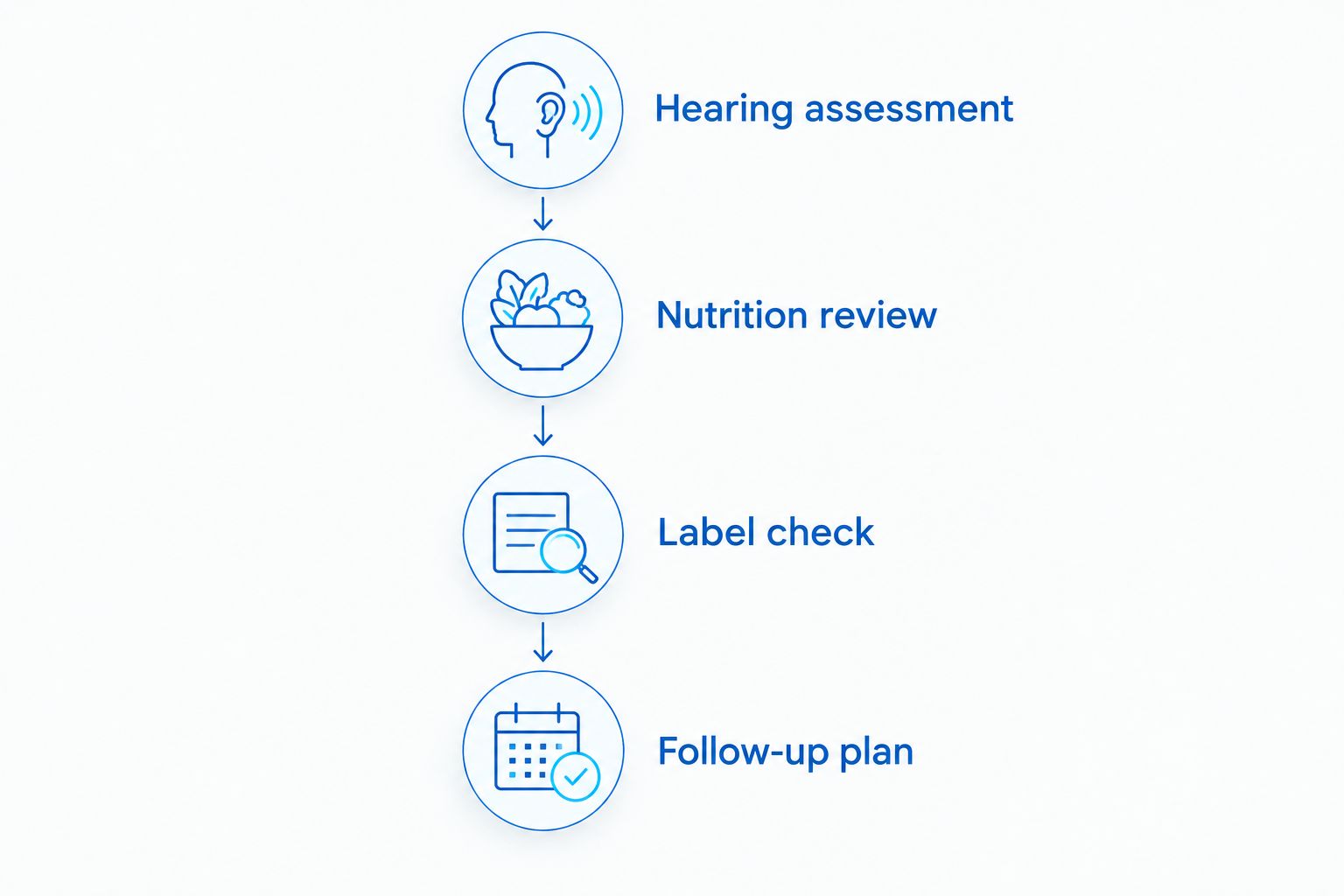
Use this sequence before adding a supplement:
- Hearing assessment: Arrange an evaluation when hearing changes affect conversation, television listening, or everyday activities.
- Nutrition review: Discuss your diet, symptoms, medicines, and relevant health conditions. Let the clinician decide whether testing is appropriate.
- Label check: Review ingredients, serving directions, warnings, and overlap with products you already take.
- Follow-up plan: Agree on what the supplement is meant to address and how that need will be reviewed.
For your 2026 plan, do not make quieter ringing or clearer speech the assumed outcome of a vitamin routine. A supplement can have a valid nutritional purpose without being a hearing treatment. Keep those goals separate when deciding whether to continue it.
How we ranked these options
This ranking prioritizes a clear indication, established nutritional purpose, label transparency, and safety. The nutrient options appear before the optional wellness gummy because a confirmed deficiency gives supplementation a defined purpose.
The comparison uses NIH Office of Dietary Supplements nutrient guidance and NIDCD hearing guidance as its reference framework for this 2026 guide. It does not claim comparative product testing or a measured hearing benefit from any listed option.
Which hearing-support supplement should you choose?
Choose the supplement that addresses a confirmed need; choose hearing care for a hearing problem. If you have no identified nutritional issue, there is no established basis here for naming B12, vitamin D, zinc, magnesium, or an ear-wellness gummy the best treatment for age-related hearing loss.
If you are undecided, make the hearing appointment first and bring your current supplement labels. That gives you a practical next step without committing to a product whose purpose is unclear.
FAQ
What's the best supplement for age-related hearing support in 2026?
There is no universally best supplement established to reverse age-related hearing loss. Choose supplementation for a confirmed nutritional need and arrange a hearing evaluation for hearing changes.
Can vitamin B12 improve hearing loss?
Vitamin B12 is appropriate for treating B12 deficiency, but it is not an established treatment for age-related hearing loss. A clinician can assess whether you have a reason to test or supplement.
Should older adults take vitamin D for hearing support?
Older adults should meet their vitamin D needs, but hearing support alone is not an established reason to take extra vitamin D. Review intake and individual health needs with a clinician.
Are ear-health gummies better than capsules?
Gummies are a format preference, not evidence of better hearing outcomes. Compare ingredient amounts, warnings, and suitability rather than assuming one format works better.
Can supplements stop tinnitus?
No dietary supplement is established as a reliable treatment for tinnitus. Persistent or bothersome ringing deserves an assessment rather than repeated supplement changes.
Can I take several hearing-support supplements together?
Do not combine supplements until a pharmacist or clinician checks their ingredients and your medicines. Multiple products can duplicate nutrients and increase the risk of excessive intake or interactions.
When should I seek urgent help for hearing changes?
Sudden hearing loss needs urgent medical attention, especially when it develops rapidly in one ear. Do not wait for a supplement to work or assume the change is ordinary aging.
One last thing
The most useful item to bring to a hearing appointment is not another supplement recommendation—it is a description of where you struggle. Note whether speech is harder in background noise, whether one ear seems different, and whether the change was sudden or gradual.
For 2026, make that your starting point. A clear account of your hearing difficulty helps direct care; a product category cannot diagnose the cause.