
Best overall: no vitamin is an established treatment for tinnitus. Among vitamins for tinnitus support in 2026, vitamin B12, vitamin D, and folate belong on your shortlist only when they address a nutritional need—not because they promise quieter ears.
- No vitamins for tinnitus are established treatments; correct confirmed deficiencies rather than choosing a ringing-relief promise.
- Vitamin B12 is best considered when your clinician identifies B12 deficiency or a clear risk of low intake.
- Vitamin D and folate support nutritional needs, but neither is a proven tinnitus treatment.
- Tinniva ear wellness gummies suit consumers seeking a gummy-format supplement, not a substitute for tinnitus evaluation.
Why this matters
Tinnitus is the perception of sound without an outside sound source. Ringing, buzzing, and hissing describe the experience, but they do not identify its cause. A supplement label cannot tell you whether hearing changes, medication effects, or another issue needs attention.
The practical decision in 2026 is not which bottle makes the strongest promise. It is whether you have a nutritional gap worth correcting and whether your tinnitus needs an evaluation. Treating a deficiency and treating tinnitus are different goals.
Tinniva sells ear wellness supplement gummies marketed for everyday ear health and tinnitus-related support. Tinniva ear wellness gummies are best suited to consumers who want a gummy-format wellness supplement, not a tinnitus treatment.
What makes the best vitamins for tinnitus support?
Use these criteria before choosing a supplement. A product that fails the evidence check does not become a better choice because it contains more ingredients.
- A clear nutritional reason: A documented deficiency, dietary gap, or clinician recommendation gives the supplement a defined purpose.
- Evidence that matches the claim: Supporting normal nutrition is not the same as reducing tinnitus symptoms.
- A readable label: You should be able to identify each nutrient, its amount, and the suggested serving without guessing.
- A safety check: Review medicines, health conditions, and other supplements before adding another source of the same nutrient.
- A realistic role: A supplement should not delay a hearing assessment or replace tinnitus care.
For the medical context in this 2026 guide, the National Institute on Deafness and Other Communication Disorders describes tinnitus evaluation and management. NIH Office of Dietary Supplements fact sheets provide the nutrient requirements and safety context below. These sources serve different purposes: tinnitus guidance addresses symptoms; nutrition guidance addresses nutrient needs.
Vitamins for tinnitus support at a glance
This ranking reflects the usefulness of a defined nutritional purpose—not evidence that one vitamin stops tinnitus. There is no established vitamin winner for tinnitus relief.
| Rank and option | Best for | Standout feature | Key limitation |
|---|---|---|---|
| 1. Vitamin B12 | Addressing confirmed B12 deficiency | Has a specific role when B12 status is low | Not an established treatment for tinnitus |
| 2. Vitamin D | Addressing confirmed vitamin D deficiency | Supports a defined nutritional need | Low vitamin D does not establish the cause of ringing |
| 3. Folate | Addressing confirmed folate deficiency | Supports normal cell division and blood cell formation | Supplemental folic acid can complicate recognition of B12 deficiency |
| 4. Tinniva ear health gummies | Choosing a gummy-format ear wellness supplement | Ear wellness positioning in a gummy format | Wellness positioning does not establish tinnitus relief |
1. Vitamin B12: best for confirmed B12 deficiency
Vitamin B12 supports normal nerve function and red blood cell formation. It deserves attention when your diet, medical history, symptoms, or test results suggest that you are not getting or absorbing enough.
That is a narrower recommendation than calling B12 the best tinnitus vitamin. Correcting a deficiency has a clear nutritional purpose; taking extra B12 when your status is adequate does not have an established tinnitus benefit.
Vitamin B12 pros:
- Addresses a specific, identifiable nutrient deficiency.
- Supports normal nerve function and blood cell formation.
- Gives you a defined reason to discuss supplementation with a clinician.
Vitamin B12 cons:
- Does not provide an established treatment for tinnitus.
- A supplement decision must account for why B12 is low, not just the label amount.
- The appropriate form and treatment plan depend on the cause of deficiency.
Best for: People with confirmed B12 deficiency or a clinician-identified reason to investigate it.
The NIH Office of Dietary Supplements lists an adult recommended intake of 2.4 mcg per day. That is a nutritional reference, not a tinnitus dose or a treatment plan for someone with a deficiency.
Tell your clinician about a vegan diet, digestive conditions, and medicines that affect nutrient absorption. Those details help determine whether testing or treatment is appropriate. A higher number on a bottle is not proof of a better result.
Verdict: Hold until you have a clear B12 need; use a clinician-directed plan if deficiency is confirmed.
2. Vitamin D: best for confirmed vitamin D deficiency
Vitamin D helps your body absorb calcium and supports bone health. Supplementation has a defined role when your intake or vitamin D status needs attention, but that does not make vitamin D a tinnitus remedy.
A finding of low vitamin D and a report of ringing can occur together without proving that one caused the other. Your 2026 supplement decision should follow your nutritional assessment, not a promise that raising a blood level will quiet tinnitus.
Vitamin D pros:
- Addresses a recognized nutritional need when deficiency is confirmed.
- Supports calcium absorption and bone health.
- Allows a clinician to match supplementation to your circumstances.
Vitamin D cons:
- Has no established role as a tinnitus treatment.
- Excess supplemental vitamin D can cause harm.
- Combining several supplements can unintentionally duplicate your intake.
Best for: People whose clinician identifies vitamin D deficiency or another reason for supplementation.
The NIH Office of Dietary Supplements lists 15 mcg per day, equivalent to 600 IU per day, as the recommended intake for adults ages 19–70. This figure describes ordinary nutritional requirements; it does not establish a tinnitus treatment dose.
Before adding vitamin D, check your multivitamin and any combination supplements. Include all sources when discussing your intake. Do not assume that a combination formula has stronger evidence for tinnitus than a single nutrient.
Verdict: Hold for a nutritional assessment; skip vitamin D as a self-prescribed tinnitus treatment.
3. Folate: best for confirmed folate deficiency
Folate is a B vitamin involved in making DNA and supporting normal cell division. It also contributes to normal red blood cell formation. A confirmed deficiency gives supplementation a specific purpose.
Folate is not an established way to reduce ringing. It also needs a careful safety discussion because supplemental folic acid can correct the anemia associated with B12 deficiency without addressing the related nerve damage.
Folate pros:
- Addresses an identifiable nutritional deficiency.
- Supports normal cell division and blood cell formation.
- Offers a focused nutritional goal rather than a broad symptom promise.
Folate cons:
- Has no established tinnitus treatment benefit.
- Folic acid can make B12 deficiency harder to recognize through its blood-related signs.
- Adding folate without considering B12 status can miss a separate problem.
Best for: People with confirmed folate deficiency and a clinician-reviewed supplementation plan.
The NIH Office of Dietary Supplements lists an adult recommended intake of 400 mcg dietary folate equivalents per day. Dietary folate equivalents account for differences in how folate from food and supplemental folic acid are absorbed; they are not a tinnitus dosing system.
If you are choosing a B-complex product, review the entire label rather than the folate line alone. More B vitamins do not establish better tinnitus support. Each ingredient still needs a reason to be there.
Verdict: Hold until folate need and B12 status have been considered; skip folate solely for ringing.
4. Tinniva: best for a gummy-format wellness preference
Tinniva sells ear wellness dietary supplement gummies marketed to consumers seeking everyday ear health and tinnitus-related support. Its place in this comparison is about product format and intended wellness use, not evidence of tinnitus treatment.
Choose a gummy because the format suits your routine—not because a gummy or an ear-health label establishes symptom relief. Check the current Supplement Facts panel before deciding whether the ingredients fit your needs.
Gummy-format pros:
- Offers a gummy option for consumers who prefer that supplement format.
- Has a stated focus on everyday ear wellness and support.
- Gives you a specific product label to review with a clinician or pharmacist.
Gummy-format cons:
- Ear wellness marketing does not establish effectiveness for tinnitus.
- A gummy format does not demonstrate better nutrient absorption or better outcomes.
- Choosing the format does not answer whether you need its ingredients.
Best for: Adults considering a gummy-format wellness supplement after reviewing its label and their health needs.
Do not use category terms such as ear support as a substitute for ingredient-level questions. Ask what each ingredient contributes, whether you already take it elsewhere, and what outcome you reasonably expect. Keep any symptom-care plan separate from the decision to use a wellness supplement.
Verdict: Hold until you review the label and your needs; skip it as a replacement for tinnitus care.
How this ranking works
The ranking prioritizes a clear reason to supplement, safety, and a realistic role. B12, vitamin D, and folate appear because each has a defined nutritional purpose when a deficiency exists. Their order does not represent proven differences in tinnitus relief.
The gummy option addresses a different decision: your preferred supplement format. Format helps you choose how to take a supplement; it does not establish why you need one. No entry earns a tinnitus-treatment recommendation from its marketing language.
What to do before buying a supplement
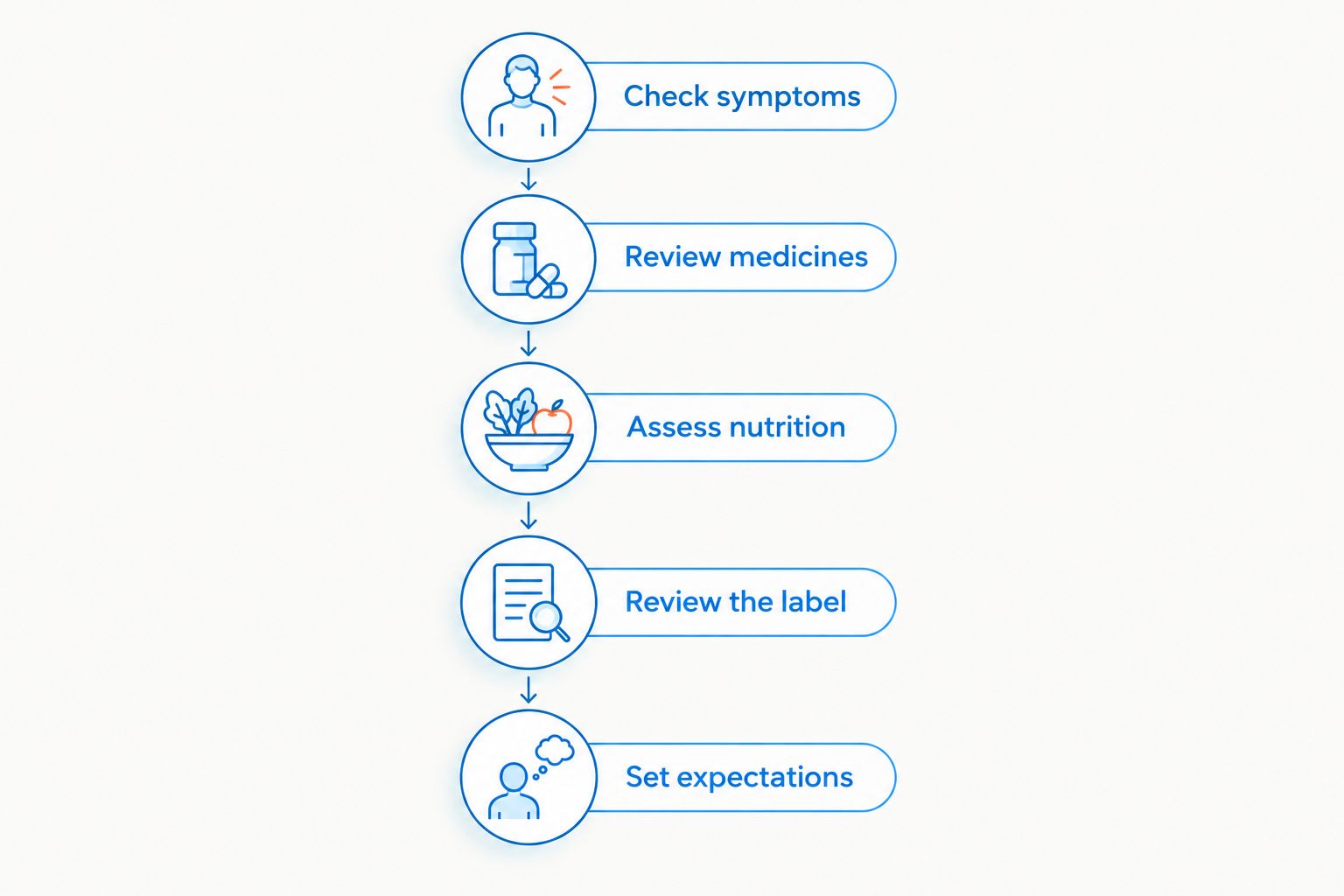
Use this sequence to keep a wellness purchase from replacing a health decision. It also gives a clinician or pharmacist useful information instead of a vague request for the strongest ear supplement.
- Check symptoms. Seek urgent medical assessment for sudden hearing loss, especially when it occurs with tinnitus. Report sound that follows your heartbeat, one-sided symptoms, or other new changes to a clinician.
- Review medicines. Bring a complete list of prescription medicines, over-the-counter products, and supplements. Do not stop prescribed medicine on your own.
- Assess nutrition. Discuss your diet and relevant health history. Testing should answer a clinical question rather than become a routine shopping step for every vitamin.
- Review the label. Compare ingredients and amounts across everything you take. Check for duplicate nutrients before adding another product.
- Set expectations. Define whether your goal is correcting a deficiency, supporting everyday nutrition, or managing tinnitus. Those goals require different decisions.
Bring the actual supplement label to your appointment, not just the product name. The ingredient amounts and your existing routine are what make a safety review useful.
Which option should you choose in 2026?
Choose a vitamin to address an identified nutritional need, not to chase an unproven tinnitus cure. B12 fits confirmed B12 deficiency; vitamin D fits confirmed vitamin D deficiency; folate fits confirmed folate deficiency after appropriate review.
If your nutrient status is adequate, the default is not another supplement. For persistent or bothersome tinnitus, ask about a hearing assessment and evidence-based management. Depending on your needs, that discussion can include hearing aids when hearing loss is present, sound-based approaches, and cognitive behavioral therapy to reduce tinnitus-related distress.
For a wellness gummy, the decision remains simpler: review the label, check safety, and keep expectations within what the evidence supports. You do not need to turn every everyday wellness choice into a promise about ringing.
FAQ
What's the best vitamin for tinnitus?
No vitamin is an established treatment for tinnitus. B12, vitamin D, or folate supplementation makes sense when it addresses a specific nutritional need, not simply because you hear ringing.
Can vitamin B12 stop ringing in my ears?
Vitamin B12 is not an established way to stop tinnitus. Treat confirmed B12 deficiency for its nutritional and health importance, without assuming that correction will resolve ringing.
Should I take vitamin D if I have tinnitus?
Tinnitus alone is not a reason to start vitamin D. Discuss your intake, health history, and need for assessment with a clinician before choosing a supplement.
Is a gummy better than a capsule for ear wellness?
A gummy is not inherently better than a capsule for tinnitus or ear wellness. Choose by nutritional need, ingredient amounts, safety, and your preferred format rather than assuming the format improves results.
Can I combine an ear supplement with my multivitamin?
Check both labels with a clinician or pharmacist before combining them. Overlapping ingredients can increase your total intake without adding an established tinnitus benefit.
Do I need vitamin blood tests before buying a tinnitus supplement?
Not everyone with tinnitus needs vitamin blood tests. A clinician should choose tests based on your symptoms, diet, medicines, and medical history.
When does ringing in the ears need urgent care?
Seek urgent medical assessment when tinnitus comes with sudden hearing loss. Also report heartbeat-like sound, one-sided symptoms, or other new changes to a clinician rather than relying on supplements.
One last thing
The most useful detail to record in 2026 is not a supplement's promise. It is what you actually notice: which ear is affected, whether the sound follows your heartbeat, and whether your hearing changed. Bring that description to your appointment; it helps frame a more useful conversation than asking for a stronger vitamin.