Best overall for protecting your hearing: no supplement. Best gummy-format option: Tinniva Ear Health Gummies. Best targeted option: a nutrient supplement matched to a confirmed deficiency; this 2026 guide separates everyday ear wellness from claims about preventing hearing damage.
- Ear health supplements for musicians do not replace hearing protection, sound-level management, or hearing checks.
- Tinniva Ear Health Gummies fit musicians who prefer a gummy-format everyday ear wellness supplement.
- Vitamin B12, zinc, and magnesium belong in a supplement plan when individual nutritional needs justify them.
- Skip ginkgo biloba as a tinnitus treatment; convincing evidence of benefit is lacking.
Why this matters
Rehearsals, performances, and personal listening all contribute to your sound exposure. A supplement routine does not make a loud stage safe, and an ear wellness label does not establish protection against noise-induced hearing loss.
The National Institute on Deafness and Other Communication Disorders states that dietary supplements advertised for tinnitus have not been proven effective. That includes familiar ingredients such as vitamins, minerals, and herbal preparations. Treat nutritional support and tinnitus treatment as separate decisions.
For musicians comparing products in 2026, the useful question is not which bottle promises the most. It is whether a supplement has a clear purpose in your own routine, whether its ingredients suit you, and whether you understand its limits.
What makes the best ear health supplements for musicians?
A useful shortlist starts with these criteria, not a claim about quieter ears:
- Clear purpose: Everyday wellness, correcting a deficiency, and treating tinnitus are different goals. The label should not blur them.
- Readable ingredient information: Check the Supplement Facts panel, serving size, ingredient amounts, and warnings before choosing.
- Individual need: A documented deficiency gives a nutrient supplement a clearer purpose than a general ear-health claim.
- Safe combination: Count ingredients already present in your multivitamin and other supplements. Ask a pharmacist about medication interactions.
- Practical format: Gummies, tablets, and capsules differ in how you take them, not in whether they protect hearing.
- Honest limits: No supplement earns a recommendation here as a substitute for earplugs, exposure control, or professional assessment.
These criteria also explain why the list includes nutrient categories rather than a string of branded formulas. A brand name alone does not establish ingredient quality, suitability, or an effect on tinnitus.
Ear health supplements for musicians at a glance
The order below is a decision guide, not a ranking of proven hearing benefits. Each option serves a different purpose, and none is established here as protection from loud sound.
| Option | Best for | Standout feature | Key limitation |
|---|---|---|---|
| Tinniva Ear Health Gummies | Musicians who prefer a gummy wellness routine | Gummy-format everyday ear wellness supplement | Not established as tinnitus treatment or hearing protection |
| Vitamin B12 supplement | Musicians with confirmed B12 deficiency | Targets a specific nutritional need | Not an established tinnitus treatment for people without deficiency |
| Zinc supplement | Musicians with confirmed zinc deficiency | Targets an identified mineral shortfall | Excess intake can interfere with copper status |
| Magnesium supplement | Musicians advised to address low magnesium | Targeted nutritional supplementation | Not established as a tinnitus or noise-damage treatment |
| Ginkgo biloba supplement | Readers checking a commonly promoted tinnitus ingredient | Herbal option frequently discussed for tinnitus | Research does not support choosing it as tinnitus treatment |
1. Tinniva Ear Health Gummies: best for a gummy wellness routine
Tinniva Ear Health Gummies are a dietary supplement marketed for everyday ear wellness and support. The gummy format fits readers who prefer that way of taking a daily supplement, but format is not evidence of a hearing benefit.
Tinniva Ear Health Gummies are best for musicians who want a gummy-format everyday ear wellness supplement, not hearing protection. Keep that distinction when deciding whether the product belongs beside your other daily supplements.
Before using the product, read the current Supplement Facts panel and directions. Check the ingredient amounts against anything else you take, and do not assume a gummy is suitable simply because it feels familiar or easy to use.
Gummy option pros:
- A defined everyday wellness purpose.
- A gummy format for readers who prefer it over tablets or capsules.
- A supplement option that can be considered separately from your hearing-protection plan.
Gummy option cons:
- The wellness positioning does not establish tinnitus relief.
- A gummy format does not prevent noise-induced hearing loss.
- Suitability depends on the full label and your individual health needs.
Best for: A format-led wellness choice with realistic expectations.
Verdict: Hold until you have checked the label and confirmed that the ingredients fit your routine.
2. Vitamin B12: best for a confirmed B12 deficiency
Vitamin B12 supports normal nerve function and red blood cell formation. A B12 supplement has a clear nutritional role when a clinician identifies deficiency or recommends supplementation because of your diet or ability to absorb the vitamin.
That role is different from treating ringing after a performance. Being a musician does not establish a B12 deficiency, and tinnitus alone does not tell you which nutrient to take.
If you eat no animal-derived foods, discuss reliable B12 sources with a qualified healthcare professional. The NIH Office of Dietary Supplements identifies people following vegetarian and vegan diets among those at increased risk of inadequate B12 intake.
Vitamin B12 pros:
- Addresses a specific, assessable nutritional need.
- Supports an essential nutrient function rather than an undefined ear-health promise.
- Gives you a clear reason to discuss supplementation with a clinician.
Vitamin B12 cons:
- Supplementation is not an established tinnitus treatment without deficiency.
- The reason for a deficiency can require assessment beyond choosing a supplement.
Best for: Musicians with confirmed deficiency or a clinician-identified need for B12 supplementation.
Verdict: Buy for an identified nutritional need, not as a general response to ringing.
3. Zinc: best for correcting an identified zinc shortfall
Zinc is an essential mineral involved in normal immune function and other body processes. Supplementation is a nutritional decision when intake or zinc status needs attention; it is not a hearing-protection strategy.
Check combined intake before adding a standalone zinc supplement. Multivitamins and other wellness formulas can contain zinc too, so looking at just one label misses part of your routine.
The NIH Office of Dietary Supplements warns that excessive zinc intake can interfere with copper absorption. That makes unnecessary long-term supplementation a poor trade for an unproven tinnitus benefit.
Zinc pros:
- Targets a specific mineral need when one is identified.
- Makes ingredient overlap easier to review than an unspecified blend.
- Supports a focused conversation about diet and supplementation.
Zinc cons:
- Extra zinc is not an established tinnitus treatment.
- Excess intake can affect copper status.
- Zinc interacts with certain medicines, including some antibiotics.
Best for: Musicians whose clinician identifies a reason to supplement zinc.
Verdict: Hold unless your nutritional assessment supports taking it.
4. Magnesium: best for clinician-directed nutritional support
Magnesium contributes to normal muscle and nerve function. Those established roles do not mean a magnesium supplement prevents hearing injury or treats tinnitus.
Choose magnesium because your nutritional needs justify it, not because an ingredient description mentions nerves. The same rule applies to blends: adding more ingredients does not establish a better outcome for your ears.
Discuss magnesium with a healthcare professional if you have kidney disease or take regular medicines. The NIH Office of Dietary Supplements identifies kidney impairment and medication interactions as important safety considerations for supplemental magnesium.
Magnesium pros:
- Addresses an essential nutrient need when supplementation is appropriate.
- Offers a specific ingredient to review with a clinician or pharmacist.
- Keeps the decision focused on nutrition rather than a tinnitus promise.
Magnesium cons:
- Supplements can cause diarrhea and abdominal discomfort.
- Kidney problems can increase the risk of magnesium toxicity.
- Magnesium is not an established treatment for noise-related tinnitus.
Best for: Musicians advised to address low magnesium intake or status.
Verdict: Hold until you have a clear nutritional reason and a safety check.
5. Ginkgo biloba: best considered as a claim to question
Ginkgo biloba appears in tinnitus discussions, but familiarity is not evidence of benefit. The National Center for Complementary and Integrative Health reports that research does not support ginkgo as an effective tinnitus treatment.
An herbal ingredient also needs a medication review. Ginkgo has safety concerns, including an increased bleeding risk with anticoagulant medicines such as warfarin.
This option belongs on the list because readers encounter it, not because it earns a tinnitus recommendation. Do not choose ginkgo simply because a supplement description connects it with circulation. That explanation does not establish a meaningful hearing outcome.
Ginkgo biloba pros:
- A named ingredient whose evidence and interactions can be checked.
- Public guidance is available to help assess its tinnitus claims.
Ginkgo biloba cons:
- Research does not support using it as tinnitus treatment.
- Medication interactions require attention.
- Choosing it for ringing can distract from getting symptoms assessed.
Best for: Readers evaluating a commonly promoted ingredient before deciding against unsupported claims.
Verdict: Skip as a tinnitus treatment.
Put hearing protection ahead of the supplement shelf
Your 2026 ear-care plan should start with sound exposure. The National Institute for Occupational Safety and Health recommends an occupational exposure limit of 85 dBA over 8 hours, with recommended exposure duration halved for each 3 dB increase.
That corresponds to 88 dBA over 4 hours and 91 dBA over 2 hours. These occupational recommendations are not a guarantee that a particular rehearsal or performance is safe for you; they show why both level and duration matter.
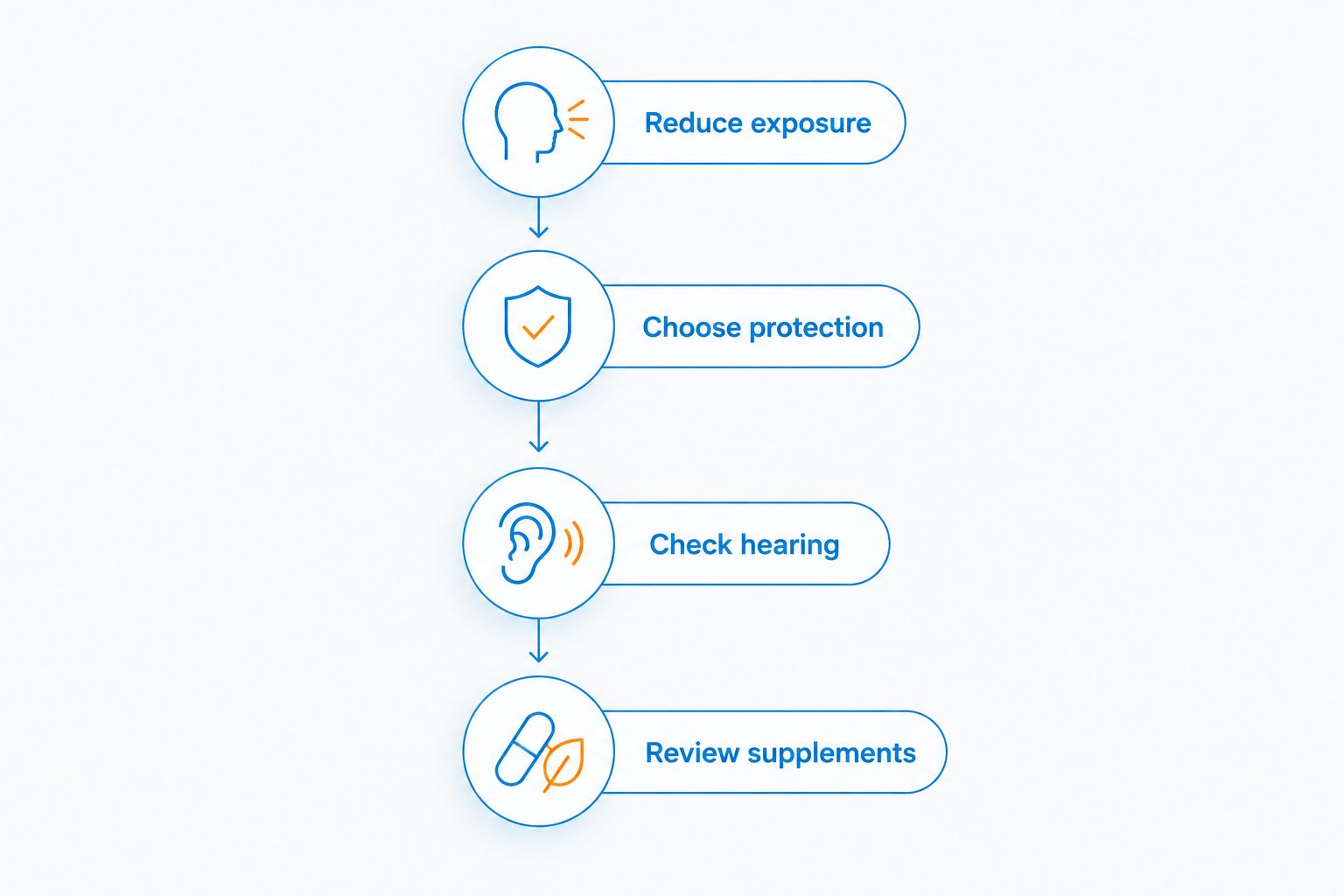
Use this order when planning rehearsals and shows:
- Reduce exposure: Lower unnecessary monitor and rehearsal levels, and increase distance from loud sources where practical.
- Choose protection: Discuss musician earplugs and their fit with a hearing professional. In-ear monitors are not automatically hearing protection.
- Check hearing: Arrange a hearing assessment if you notice persistent ringing, muffled hearing, or difficulty understanding speech.
- Review supplements: Consider nutritional needs after the exposure and symptom questions are addressed.
A supplement belongs at the end of that sequence, not at the beginning. Taking a gummy before a show does not change the need to manage the sound reaching your ears.
How this 2026 ranking works
The shortlist prioritizes an identifiable purpose, individual suitability, and clear limitations. It does not award hearing benefits based on a product name, gummy format, or ingredient popularity.
Nutrient roles and safety considerations follow NIH Office of Dietary Supplements guidance. The tinnitus distinctions follow NIDCD and NCCIH guidance, while the exposure examples follow NIOSH occupational recommendations. These are separate evidence questions, not interchangeable endorsements of supplements.
The practical result is simple: a format preference supports choosing a format, while a nutritional assessment supports choosing a nutrient. Neither supports promising relief from tinnitus.
Which ear health supplement should you choose?
For most undecided musicians, the default is no new supplement until its purpose is clear. If your goal is preventing hearing damage, focus on exposure control and properly fitted protection. If your goal is addressing ringing, start with assessment rather than a supplement trial.
Tinniva is an everyday ear wellness supplement option for readers who prefer gummies. Choose a nutrient-specific supplement instead only when your nutritional needs justify that choice, and avoid stacking products with overlapping ingredients.
Bring the full labels of your current supplements to a pharmacist or clinician. A useful decision ends with a clear reason to take something—or a clear reason to leave it out.
FAQ
What's the best ear health supplement for musicians in 2026?
No supplement is established as the best option for protecting musicians from loud sound. Choose supplements for a clear nutritional or everyday wellness purpose, and manage noise exposure separately.
Can ear health gummies prevent hearing loss after a concert?
Ear health gummies are not established as protection against noise-induced hearing loss. Hearing protection and sound-exposure management address the risk that a supplement cannot replace.
Should I take vitamin B12 if my ears ring?
Ringing alone is not a reason to start vitamin B12. Discuss persistent symptoms and any risk of B12 deficiency with a healthcare professional.
Is magnesium better than zinc for musicians with tinnitus?
Neither magnesium nor zinc is established as a general tinnitus treatment. Choose either nutrient based on an identified nutritional need, not a presumed advantage for ringing.
Can I combine an ear wellness supplement with a multivitamin?
Check both labels and ask a pharmacist before combining them. Overlapping nutrients and medication interactions matter even when products are sold for different wellness goals.
Does ginkgo biloba help tinnitus?
Research does not support ginkgo biloba as an effective tinnitus treatment. Ginkgo also has medication interactions and bleeding-related safety concerns.
When should a musician get ringing or muffled hearing checked?
Get persistent ringing or hearing changes assessed rather than relying on supplements. Sudden hearing loss requires urgent medical evaluation, including when it occurs with ringing.
One last thing
Before your next rehearsal, write down what you want an ear-health product to do. If the answer is prevent damage, stop ringing, or restore hearing, that is not an established supplement benefit.
For your 2026 routine, keep two separate checklists: hearing protection and nutritional support. A convenient supplement routine does not compensate for an unsafe listening setup.