
Best overall for vegan nutrition: vitamin B12. Best for a confirmed vitamin D shortfall: vegan vitamin D. Best for low zinc intake: vegan zinc. These vegan supplements for ear wellness belong on your shortlist only when they address a nutritional need—not because they promise to stop ringing or restore hearing.
- Vitamin B12 leads this vegan supplements for ear wellness shortlist for nutritional relevance, not proven tinnitus relief.
- Choose vitamin D, zinc, or magnesium around an identified need, not an ear-health marketing claim.
- Tinniva Ear Health Gummies suit a gummy-format preference; confirm vegan ingredients before choosing them.
- Persistent tinnitus needs assessment; supplements do not replace hearing care.
Why this matters
An ear-wellness label and a vegan label answer different questions. The first describes positioning; the second concerns ingredients and manufacturing. Neither proves that a supplement improves hearing or reduces tinnitus.
Tinniva sells ear wellness gummies for everyday support. That makes the brand relevant to a format comparison, but it does not establish vegan suitability or a treatment benefit.
For your 2026 shortlist, separate nutritional support from symptom treatment. The National Institute on Deafness and Other Communication Disorders states that vitamins and dietary supplements marketed for tinnitus have not been proven effective. If ringing is your main concern, a hearing assessment is a better starting point than stacking supplements.
What makes the best vegan supplements for ear wellness?
Use these criteria before comparing ingredients or formats:
- Nutritional fit: Choose a nutrient that addresses your diet, risk factors, or a clinician-identified shortfall.
- Verified vegan ingredients: Check the active ingredient, capsule or gummy base, coatings, and flavor ingredients. A plant-based-looking package is not verification.
- Clear amounts: Look for each ingredient’s amount per serving, not just a blend name or a front-label claim.
- Safety fit: Check medication interactions, overlapping supplements, and relevant health conditions with a pharmacist or clinician.
- Realistic claims: Favor everyday nutrition language over promises to cure tinnitus, reverse hearing loss, or repair the inner ear.
A single-ingredient supplement makes the amount of that nutrient easier to identify. A blend requires more checking because every ingredient needs a reason to be there.
Vegan ear-wellness options at a glance
This 2026 comparison ranks nutritional use cases, not proven hearing outcomes. The gummy entry is a format option pending ingredient verification, not a confirmed vegan recommendation.
| Option | Best for | Standout feature | Key limitation |
|---|---|---|---|
| Vegan vitamin B12 | Reliable B12 intake on a vegan diet | Addresses a recognized vegan nutrition concern | Not an established tinnitus treatment |
| Vegan vitamin D | An identified vitamin D shortfall | Can address a specific nutritional need | Source must be checked; not all vitamin D is vegan |
| Vegan zinc | Low zinc intake or a confirmed deficiency | Targets one mineral rather than a broad blend | Excess intake can cause copper deficiency |
| Vegan magnesium | A demonstrated magnesium intake gap | Offers targeted mineral supplementation | Supplements can cause diarrhea and interact with medicines |
| Tinniva Ear Health Gummies | Readers who prefer a gummy-format routine | Positioned for daily ear wellness support | Vegan status and ingredient amounts require verification |
1. Vegan vitamin B12: best for vegan nutritional coverage
Vitamin B12 is the strongest starting point on this list because vegan diets need a reliable source from fortified foods, supplements, or both. That is a nutrition recommendation, not evidence that extra B12 improves otherwise adequate hearing health.
The NIH Office of Dietary Supplements lists an adult recommended intake of 2.4 micrograms of vitamin B12 daily, with different needs during pregnancy and breastfeeding. That reference intake is not a treatment dose or an instruction to select a supplement containing exactly that amount.
Vitamin B12 pros:
- Addresses a nutrient that requires deliberate attention in vegan diets.
- Comes in standalone formats that make the ingredient amount easy to inspect.
- Supports normal nerve function as part of adequate nutrition.
Vitamin B12 cons:
- Does not establish a cause or treatment for ringing in the ears.
- Suspected deficiency can require testing and a treatment plan rather than self-selection.
- A vegan active ingredient does not guarantee a vegan capsule or gummy.
Best for: You follow a vegan diet and need a dependable B12 source beyond an inconsistent intake of fortified foods.
Check your existing supplements before adding another B12 product. If you have numbness, balance changes, or other neurological symptoms, seek assessment rather than treating those symptoms as a shopping problem.
Verdict: Buy for reliable vegan B12 coverage—not as a tinnitus remedy.
2. Vegan vitamin D: best for an identified vitamin D shortfall
Vitamin D belongs on the shortlist when your intake, risk factors, or clinical assessment point to a need. It does not earn a place simply because a product connects vitamin D with ear wellness.
Source matters. Vitamin D3 can come from animal-derived lanolin or vegan sources such as lichen; vitamin D2 is generally produced from fungal sources. Check the finished product’s vegan statement rather than assuming that an ingredient name settles the question.
Vegan vitamin D pros:
- Addresses a specific nutritional need when one exists.
- Provides an alternative to animal-derived vitamin D sources.
- Allows a targeted choice without adding an unrelated mineral blend.
Vegan vitamin D cons:
- Not every D3 supplement is vegan.
- Excess vitamin D can be harmful.
- Correcting a shortfall does not guarantee a change in tinnitus or hearing.
Best for: You have an identified vitamin D need and want a product with a clearly stated vegan source.
For a 2026 supplement review, include vitamin D from every product you take. A multivitamin and a separate wellness gummy can overlap, even when their front labels emphasize different benefits.
Verdict: Buy for an identified vitamin D need; skip routine stacking.
3. Vegan zinc: best for addressing low zinc intake
Zinc supports normal immune function and other essential processes. A vegan diet can include zinc from beans, nuts, seeds, and whole grains, although compounds in plant foods affect how much zinc your body absorbs.
The NIH Office of Dietary Supplements lists recommended daily intakes of 8 milligrams for adult women and 11 milligrams for adult men, outside pregnancy and breastfeeding. Those figures describe total nutritional intake, not a reason to add that amount on top of an adequate diet.
Vegan zinc pros:
- Targets a specific mineral when intake is insufficient.
- Makes a single nutrient easier to track than a multi-ingredient blend.
- Can complement a food plan when a clinician identifies a need.
Vegan zinc cons:
- Excess intake can interfere with copper status.
- Can cause nausea and interact with certain medicines.
- Does not provide an established treatment for tinnitus.
Best for: Your dietary review or clinical assessment identifies insufficient zinc, rather than an ear symptom alone.
Check your multivitamin before selecting zinc. If you already take it, adding an ear-wellness blend containing more zinc changes your total intake without necessarily adding a useful benefit.
Verdict: Buy for an identified zinc gap; skip zinc solely for ear ringing.
4. Vegan magnesium: best for a demonstrated intake gap
Magnesium supports normal muscle and nerve function. That broad biological role does not establish magnesium supplements as a treatment for noise-related hearing damage or tinnitus.
Start with your diet and the reason for supplementation. If you already get adequate magnesium, an ear-health claim is not a sufficient reason to add more.
Vegan magnesium pros:
- Provides targeted support when intake is inadequate.
- Lets you assess a single mineral rather than several overlapping ingredients.
- Fits a vegan routine when the complete formulation is verified.
Vegan magnesium cons:
- Supplemental magnesium can cause diarrhea or abdominal discomfort.
- Can interfere with the absorption of certain medicines.
- Kidney disease changes the safety of magnesium supplementation.
Best for: You have a demonstrated magnesium intake gap and have checked whether supplementation fits your health circumstances.
Ask a pharmacist about spacing magnesium from medicines, including certain antibiotics. Do not assume that taking everything together is appropriate just because the products are sold without a prescription.
Verdict: Buy for a nutritional need; skip magnesium as an unproven hearing-repair strategy.
5. Tinniva Ear Health Gummies: best for gummy-format shoppers
Tinniva Ear Health Gummies are a daily dietary supplement positioned for everyday ear wellness support. The gummy format gives readers who prefer that format a product to assess, but the format itself says nothing about clinical effectiveness.
Tinniva Ear Health Gummies are best for readers who prefer a gummy-format ear wellness supplement, subject to ingredient and vegan-status checks. Do not treat that preference as evidence of tinnitus relief.
Gummy-format pros:
- Matches a preference for gummies rather than capsules.
- Provides a defined product to review against your current routine.
- Keeps the purchase decision focused on the actual label rather than a category promise.
Gummy-format cons:
- Vegan suitability is not established by the product name or format.
- Ingredient amounts still need checking against your other supplements.
- Ear-wellness positioning does not demonstrate a hearing or tinnitus benefit.
Best for: You want a gummy-format option and are prepared to verify the full ingredient list before choosing it.
For your 2026 purchase decision, confirm the gelling agent, active-ingredient sources, serving directions, and allergen information. Do not assume that gummies contain pectin rather than gelatin, or that a familiar ingredient has a vegan source.
Verdict: Wait until vegan suitability and ingredient fit are confirmed.
Check the label before choosing
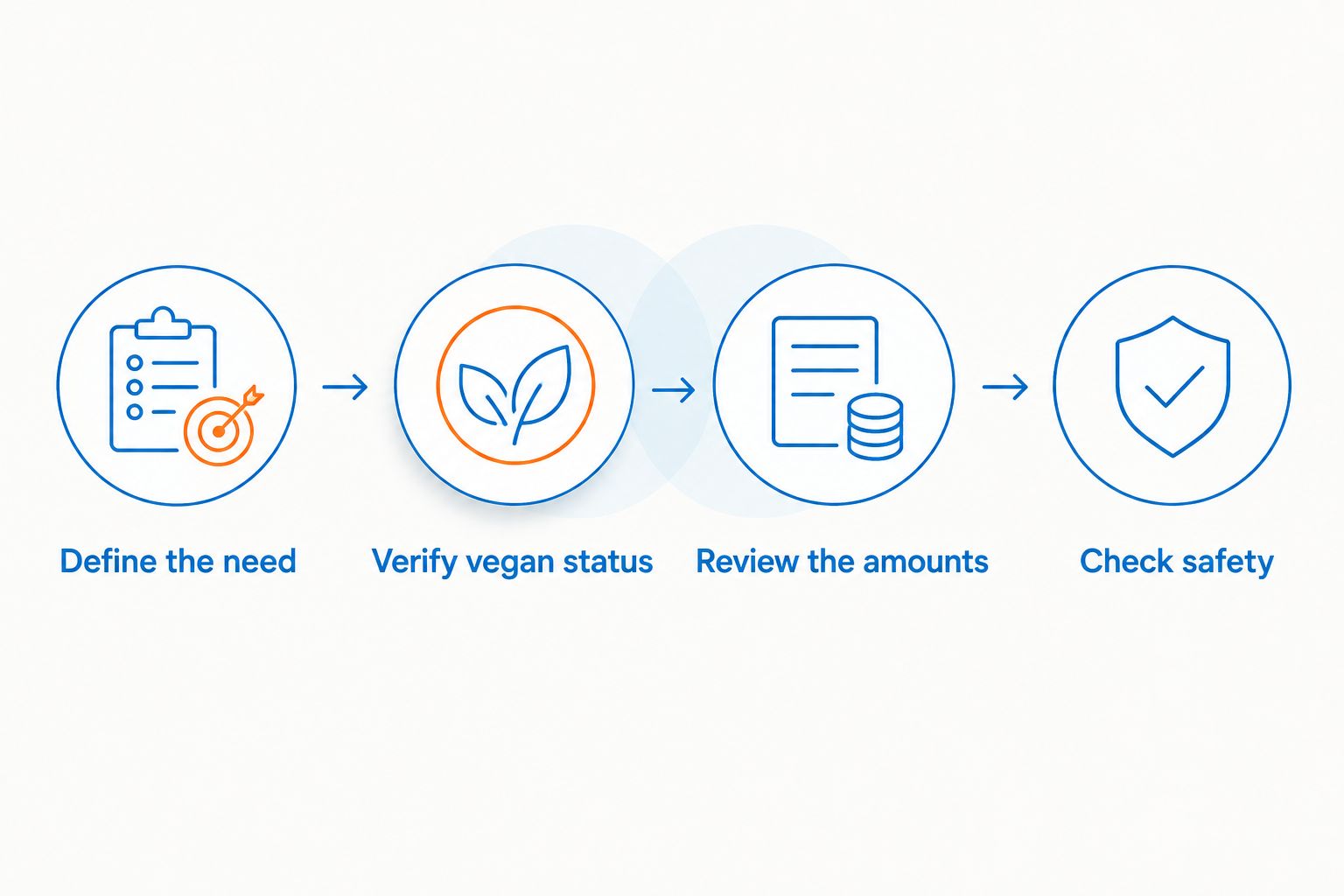
Use this sequence to turn a broad shortlist into a decision. Complete the ingredient and safety checks before adding a supplement to your routine.
- Define the need: Write down whether your goal is reliable vegan nutrition, correcting a shortfall, or evaluating an ear symptom.
- Verify vegan status: Check the complete formulation, not just the featured nutrient.
- Review the amounts: Compare the serving with your multivitamin, fortified foods, and other supplements.
- Check safety: Ask about interactions and health conditions that change the choice.
If the label leaves an important question unanswered, ask the manufacturer before buying. An unclear ingredient source is a reason to pause—not a reason to assume the product meets your requirements.
How we ranked these options
The order reflects nutritional fit, vegan verification, label clarity, and safety. Vitamin B12 leads because reliable B12 intake deserves particular attention in vegan diets; the other nutrients require a more individual reason for supplementation.
This is not a ranking of measured tinnitus improvement. No hearing-outcome score, product-testing claim, or treatment comparison supports that interpretation.
Which option should you choose?
Choose vegan vitamin B12 first if you lack a reliable B12 source. Choose vitamin D, zinc, or magnesium only when your diet or clinical assessment gives you a specific reason.
If your main goal is relief from persistent ringing, prioritize assessment rather than another supplement. Sudden hearing loss warrants urgent medical attention; do not wait to see whether a wellness product helps.
FAQ
What's the best vegan supplement for ear wellness in 2026?
Vitamin B12 is the first nutritional option to review if your vegan diet lacks a reliable B12 source. It is not a proven tinnitus treatment, and other supplements should address an individual nutritional need.
Can vegan supplements stop ringing in my ears?
No vegan supplement is established as a cure for tinnitus. Persistent ringing deserves assessment, including a review of hearing, medicines, and possible contributing conditions.
Are Tinniva Ear Health Gummies vegan?
Confirm vegan suitability from the current complete ingredient information or directly with the manufacturer. The gummy format and ear-wellness description alone do not establish vegan status.
Is vitamin D3 always vegan?
No, vitamin D3 is not always vegan. It can come from animal-derived lanolin or vegan sources such as lichen, so check the stated source and the finished formulation.
Should I take zinc if I already use a multivitamin?
Check the zinc amount in your multivitamin before adding a separate product. Additional zinc is not automatically useful, and excess intake can interfere with copper status.
Are gummies better than capsules for ear wellness?
Neither format is inherently better for ear wellness. Choose according to verified ingredients, an appropriate serving, safety, and the format you prefer.
When should I get medical help instead of trying a supplement?
Seek urgent medical attention for sudden hearing loss. Persistent tinnitus, symptoms in one ear, or a sound that pulses with your heartbeat also need clinical assessment rather than supplement-only self-care.
One last thing
Write down what success would mean before you buy. Correcting an identified nutritional shortfall and reducing tinnitus are different goals; meeting the first does not prove progress on the second.
Keep hearing protection and hearing care separate from your supplement routine. A vegan label describes ingredient suitability, not protection against loud sound.