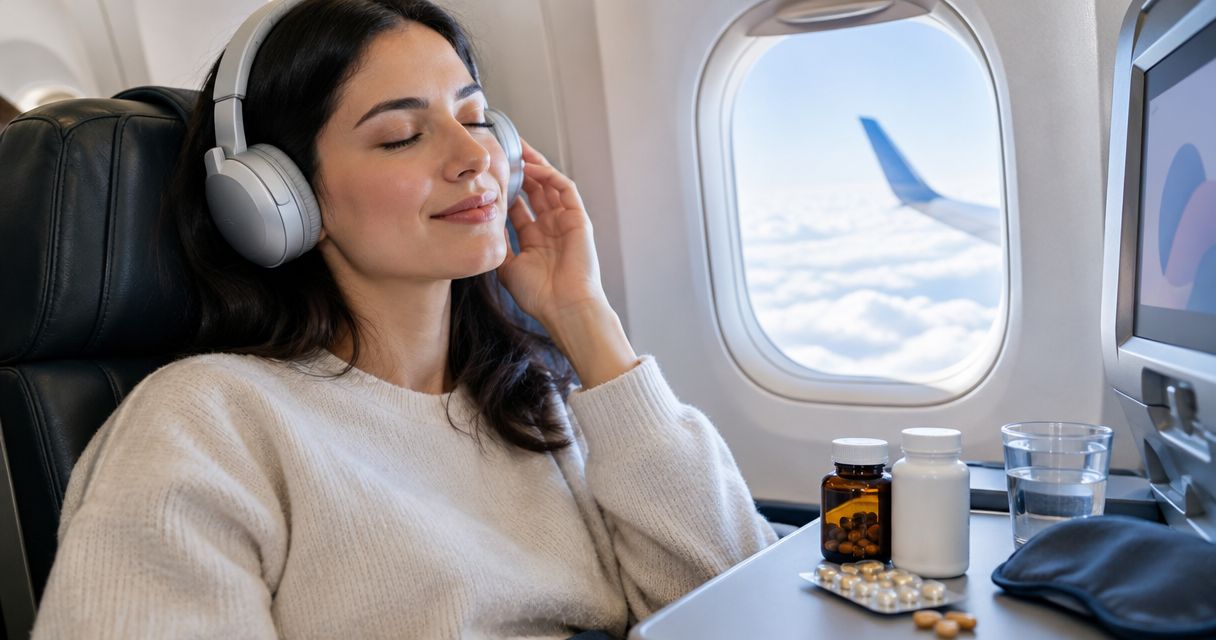
Best for a daily gummy routine: Tinniva Ear Health Gummies; best for a confirmed nutrient deficiency: a clinician-selected vitamin B12 or zinc supplement. For airplane ear pressure alone, no supplement is the best choice: pressure equalization, not a vitamin or gummy, addresses the immediate problem.
- Tinniva Ear Health Gummies suit an everyday ear-wellness routine, not treatment for flight-related ear pressure.
- Choose ear health supplements for frequent flyers around nutritional needs, not promises of tinnitus relief.
- Vitamin B12 and zinc supplements belong in deficiency care, not an automatic flight-day routine.
- Swallowing and gentle pressure equalization address airplane ear; supplements do not replace these steps.
Why this matters
Ear discomfort after flying, ongoing ringing, and a nutrient deficiency are different problems. A supplement marketed for ear wellness does not establish that it prevents any of them. Start by identifying what you want to address before choosing a product.
For your 2026 travel routine, keep those decisions separate. Use practical flight measures for pressure changes, seek an assessment for persistent symptoms, and consider supplementation when it fits your nutritional needs. No supplement earns a recommendation here as a proven way to prevent airplane ear or treat tinnitus.
What makes the best supplement choice for frequent flyers?
The best choice matches a specific need without promising more than the evidence supports. These criteria determine the order below:
- Purpose: Separate everyday wellness from treatment of ear pressure, hearing loss, or tinnitus.
- Nutritional need: Prioritize an identified deficiency over a broad ear-health claim.
- Label clarity: Check every ingredient and amount rather than relying on the product name.
- Routine fit: Choose a format you can take consistently according to its directions.
- Safety: Review overlapping supplements, medications, and relevant health conditions with a clinician or pharmacist.
A convenient format helps with a routine. It does not prove a hearing benefit. For this 2026 comparison, use case matters more than the number of ingredients on a label.
Ear health supplements for frequent flyers at a glance
| Option | Best for | Standout feature | Key limitation |
|---|---|---|---|
| Tinniva Ear Health Gummies | An everyday gummy-based ear-wellness routine | Gummy format marketed for daily ear wellness | Not established as prevention or treatment for flight-related ear pressure |
| Vitamin B12 supplementation | A confirmed B12 deficiency | Addresses an identified nutritional need | Not an established tinnitus treatment for people without deficiency |
| Zinc supplementation | A confirmed zinc deficiency | Targets a specific nutrient shortfall | Excess zinc can cause harm; routine use is not a tinnitus solution |
| No added supplement | Ear pressure associated with takeoff or landing | Keeps attention on pressure equalization | Does not address an underlying deficiency or explain persistent symptoms |
These are use-case recommendations, not a ranking of hearing improvement. The nutritional options are categories rather than endorsements of particular formulations.
1. Tinniva Ear Health Gummies: best for a daily gummy routine
Tinniva Ear Health Gummies are a dietary supplement marketed for everyday ear wellness. The gummy format suits someone who wants that format as part of an existing wellness routine, rather than a treatment to take when an airplane begins descending.
Tinniva Ear Health Gummies are best for travelers seeking a daily ear-wellness gummy, not treatment for airplane pressure. That distinction should guide your expectations before you choose any ear-health supplement.
Tinniva Ear Health Gummies pros:
- Gummy format offers an alternative to tablets or capsules.
- The stated purpose is everyday ear wellness.
- A daily-routine focus separates the product from flight-day pressure remedies.
Tinniva Ear Health Gummies cons:
- The product is not established here as preventing airplane ear or relieving tinnitus.
- The product description alone does not establish suitability for your medications or nutritional needs.
- A gummy format does not demonstrate greater effectiveness than another supplement format.
Before buying, read the current Supplement Facts panel and directions. Check ingredient amounts, allergen information, and whether another supplement already contains the same nutrients. Ask a pharmacist about interactions rather than assuming that a wellness product fits every travel routine.
Best for: Adults seeking an everyday gummy-based wellness option with realistic expectations.
Verdict: Hold until you have checked the full label and confirmed that the product fits your routine.
2. Vitamin B12: best for a confirmed B12 deficiency
Vitamin B12 supports normal nerve function and red blood cell formation. Supplementation addresses a B12 shortfall; that is different from showing that B12 improves flight-related ear symptoms in someone whose B12 status is adequate.
The NIH Office of Dietary Supplements lists 2.4 micrograms per day as the recommended intake for most adults, excluding the different requirements during pregnancy and breastfeeding. That figure is a nutritional reference, not a treatment dose for tinnitus or a prescription for correcting deficiency.
Vitamin B12 pros:
- Has a defined role in normal nutrition.
- Offers a targeted choice when a deficiency has been identified.
- Allows treatment decisions to follow the cause of the deficiency rather than a general ear-health claim.
Vitamin B12 cons:
- Taking more B12 does not establish additional hearing protection.
- The appropriate treatment depends on the reason for the deficiency.
- Self-treatment can distract from evaluating persistent ringing or hearing changes.
If a clinician identifies B12 deficiency, ask about the appropriate form, dose, and follow-up. Do not assume that an ear-wellness blend provides the same treatment as a plan selected for that deficiency.
Best for: Travelers with confirmed B12 deficiency and a clinician-directed plan.
Verdict: Buy the recommended formulation when deficiency care calls for it; skip B12 as automatic flight protection.
3. Zinc: best for a confirmed zinc deficiency
Zinc is an essential nutrient, but that does not make extra zinc a general remedy for ringing ears. A zinc supplement belongs in a plan that accounts for nutritional status, diet, medications, and other supplements.
The NIH Office of Dietary Supplements lists adult recommended intakes of 11 milligrams per day for men and 8 milligrams per day for women, with different requirements during pregnancy and breastfeeding. The adult tolerable upper intake level is 40 milligrams per day from all sources; it is not a target to reach.
Zinc pros:
- Addresses a specific nutritional need when deficiency is identified.
- Provides an ingredient amount you can compare against other supplements.
- Supports a focused discussion about intake rather than an undefined wellness promise.
Zinc cons:
- Excess intake can interfere with copper status and cause other adverse effects.
- Zinc can interact with certain medicines, including some antibiotics.
- Supplementation is not established as routine tinnitus treatment.
Count zinc across your multivitamin, individual supplements, and any wellness blends before adding another product. A clinician or pharmacist can interpret that total and advise whether supplementation is appropriate.
Best for: Travelers whose clinician has identified a zinc deficiency.
Verdict: Hold unless there is a nutritional reason to supplement; skip zinc as a flight-day ear remedy.
4. No added supplement: best for airplane ear pressure
Airplane ear occurs when pressure differs across the eardrum and the ear does not equalize readily. Swallowing, yawning, and gentle pressure-equalization techniques address that mechanism more directly than a dietary supplement.
For pressure-related discomfort during flights in 2026, focus on your ears during ascent and descent. Stay awake for those changes, swallow regularly, and avoid forceful attempts to make your ears pop. Stop a pressure-equalization attempt if it causes pain.
No added supplement pros:
- Matches the immediate pressure problem rather than an unrelated nutrient claim.
- Avoids adding ingredients without an identified need.
- Keeps attention on symptoms that require medical assessment.
No added supplement cons:
- Does not correct a nutrient deficiency.
- Basic pressure measures do not resolve every ear problem.
- Recurrent pain or hearing changes still need evaluation.
If you have congestion, recurrent flight-related ear pain, or recent ear surgery, ask a clinician for an individualized flight plan. Do not assume a decongestant is suitable for you or that a supplement makes flying with symptoms safe.
Best for: Travelers whose concern is pressure discomfort during takeoff or landing rather than an identified nutritional deficiency.
Verdict: Skip an added supplement for pressure alone; prioritize gentle equalization and appropriate medical advice.
A practical preflight decision sequence
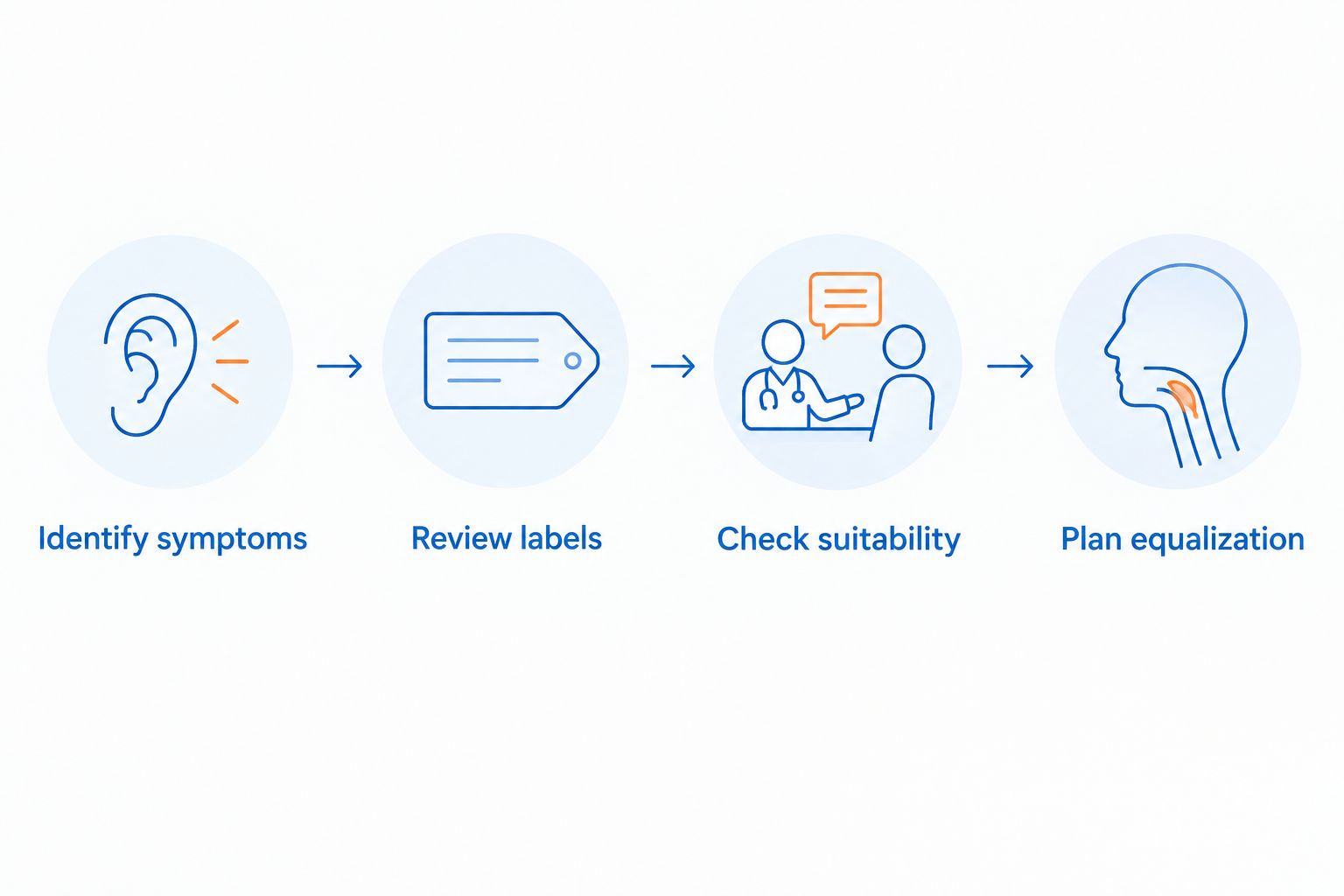
Use this sequence before your next flight in 2026. It separates a supplement decision from an ear-symptom decision, so one does not substitute for the other.
- Identify symptoms. Distinguish pressure during descent from ongoing ringing, pain, dizziness, or hearing changes.
- Review labels. Check ingredients and amounts across everything you already take.
- Check suitability. Ask a clinician or pharmacist about relevant symptoms, medications, and nutritional needs.
- Plan equalization. Prepare to swallow and equalize gently during pressure changes.
Keep supplements in their labeled packaging when practical so you can check directions and ingredients while traveling. Follow the product directions rather than increasing the amount because you have a long flight or several connections. Extra servings do not establish extra ear protection.
How these options were ranked
This 2026 guide ranks choices by their intended use, nutritional rationale, routine fit, and safety limitations. It does not assign hearing-improvement scores or treat a gummy format as evidence of medical effectiveness.
The NIH Office of Dietary Supplements fact sheets support the nutrient intake references above. The National Institute on Deafness and Other Communication Disorders' tinnitus guidance explains that dietary supplements marketed for tinnitus have not been proven effective. These sources inform the distinction between nutritional support and symptom treatment; neither establishes a product-specific benefit here.
Which option should you choose?
For pressure during flights, choose no added supplement as your default. Plan gentle equalization and seek advice if symptoms recur. A supplement should not become the reason you delay investigating ear pain or a change in hearing.
For a confirmed deficiency, choose the nutrient and formulation your clinician recommends. For an everyday gummy routine, judge the product by its label and suitability—not a promise of quieter flights. That is the most useful buying rule for ear health supplements for frequent flyers in 2026.
FAQ
What's the best ear health supplement for frequent flyers?
No supplement is established as the best way to prevent airplane ear. Tinniva Ear Health Gummies fit an everyday gummy-based wellness routine, while B12 or zinc supplementation should address an identified nutritional need rather than flight pressure.
Can ear-health gummies stop my ears from popping on a plane?
Ear-health gummies are not established as a way to stop pressure-related ear popping. Swallowing, yawning, and gentle pressure equalization address the pressure difference more directly.
Should I take vitamin B12 before every flight?
Flying is not, by itself, a reason to take vitamin B12. If you have a confirmed deficiency, follow your clinician's treatment plan rather than adding a special flight-day dose.
Is zinc better than a gummy supplement for tinnitus?
Neither zinc nor a gummy format is established as a general tinnitus treatment. Zinc supplementation addresses a nutritional shortfall when indicated, while a gummy's suitability depends on its ingredients and your circumstances.
Can I combine an ear-health supplement with my multivitamin?
Check both labels and ask a pharmacist before combining them. Overlapping ingredients can increase your total intake, and some supplement ingredients interact with medicines.
Do I need to take more supplements for a long flight?
Do not increase a supplement dose because a flight is longer. Follow the label or your clinician's directions; extra servings do not establish additional protection from pressure changes.
When should I get medical help for ear symptoms after flying?
Sudden hearing loss needs urgent medical assessment rather than a supplement trial. Severe pain, persistent dizziness, drainage, or symptoms that do not settle also warrant medical advice.
One last thing
More supplement is not more pressure protection. If your ears hurt mainly during descent, note when symptoms start and whether hearing changes accompany them. That pattern gives a clinician a more useful starting point than switching between wellness products.