
Best overall approach: choose a verified non-GMO supplement that matches a specific nutritional need. Best gummy-format option to review: Tinniva, with non-GMO status checked before purchase. This 2026 guide to non-gmo ear wellness supplements compares everyday gummies with targeted nutrients; none should be treated as a proven tinnitus treatment.
- Choose non-gmo ear wellness supplements by verified labeling and nutritional need, not promises to stop ringing.
- Tinniva offers ear wellness gummies; confirm non-GMO status before treating them as a qualifying option.
- Vitamin B12, zinc, and magnesium address different nutritional needs; they are not interchangeable tinnitus treatments.
- Sudden hearing loss needs urgent medical attention, not a supplement trial.
Why this matters
A non-GMO claim answers a sourcing question. It does not establish whether a supplement helps your ears, contains an appropriate dose, or fits your medications. Those are separate decisions.
The National Institute on Deafness and Other Communication Disorders states that dietary supplements marketed for tinnitus have not been proven effective. For your 2026 shortlist, that means separating everyday nutritional support from claims to reduce ringing or restore hearing.
You can still prefer non-GMO ingredients. Just make that preference a screening requirement rather than evidence that a product works.
What makes the best non-GMO ear wellness supplements?
Use these criteria before comparing formats or ingredients:
- Documented non-GMO status: Look for an explicit claim covering the finished product, with a clear explanation of its verification.
- A defined purpose: Choose everyday supplementation or correction of an identified nutritional gap, not a vague promise of better hearing.
- Transparent amounts: Read the Supplement Facts panel, including serving size and amounts of each ingredient.
- Appropriate safety limits: Check your total intake across supplements and review potential medication interactions.
- A usable format: Pick gummies, capsules, or tablets according to what you can comfortably take as directed.
- Realistic claims: Reject promises to cure tinnitus, reverse hearing loss, or replace a hearing evaluation.
No named product receives a confirmed non-GMO winner designation here without supporting label information. A gummy format, plant ingredient, or wellness description does not establish non-GMO status.
Non-GMO ear wellness supplements at a glance
These are buying routes, not equivalent treatments. The order starts with an everyday ear wellness format, then moves to targeted nutrients for specific nutritional needs.
| Option | Best for | Standout feature | Key limitation |
|---|---|---|---|
| Tinniva Ear Health Gummies | An everyday gummy-format ear wellness routine | An ear wellness dietary supplement in gummy form | Non-GMO status and ingredient amounts require verification |
| Vitamin B12 supplement | A clinician-identified B12 deficiency or intake concern | Targets a specific nutrient need | Not a proven tinnitus treatment; non-GMO status is product-specific |
| Zinc supplement | A confirmed zinc deficiency or clinician-directed need | Allows targeted zinc supplementation | Excess zinc can cause harm; not a general ear-ringing solution |
| Magnesium supplement | A dietary magnesium gap reviewed with a clinician | Targets magnesium intake rather than an ear-specific claim | Supplemental magnesium can cause digestive effects and medication interactions |
1. Tinniva Ear Health Gummies: best for a gummy routine
Tinniva Ear Health Gummies are marketed as an everyday ear wellness dietary supplement. The gummy format is the relevant distinction for someone who prefers that format to tablets or capsules.
Tinniva is a format-based option for adults seeking everyday ear wellness gummies, not a verified non-GMO tinnitus treatment. Confirm the current non-GMO claim, full ingredient list, and serving instructions before deciding whether the product meets your requirements.
Gummy option pros:
- Offers a gummy format for your daily supplement routine.
- Has an explicitly stated everyday ear wellness purpose.
- Provides an alternative format if you prefer not to take tablets.
Gummy option cons:
- Non-GMO status is not established by the product information available here.
- Ingredient amounts cannot be evaluated without the full Supplement Facts panel.
- An ear wellness description does not establish tinnitus relief.
Best for: Adults who want an ear wellness gummy and will check the label against their dietary and safety requirements.
For a 2026 purchase, read the actual label rather than relying on a category heading. If you cannot confirm your required non-GMO standard or identify what each serving contains, pause the purchase.
Verdict: Hold until non-GMO status and ingredient suitability are confirmed.
2. Vitamin B12: best for an identified B12 need
Vitamin B12 supports normal nerve function and red blood cell formation. A B12 supplement belongs on your shortlist when a clinician identifies a deficiency or a reason your intake or absorption needs attention—not simply because you notice ear ringing.
The NIH Office of Dietary Supplements lists the recommended daily allowance for most adults as 2.4 micrograms per day. That is a nutritional reference, not a tinnitus-treatment dose or a recommendation for treating a diagnosed deficiency.
Vitamin B12 pros:
- Addresses a specific nutrient requirement.
- Gives you a focused ingredient to discuss with your clinician.
- Allows a label comparison based on B12 amount rather than broad ear-health claims.
Vitamin B12 cons:
- Taking additional B12 does not establish a tinnitus benefit.
- Deficiency treatment depends on its cause and your clinical circumstances.
- A B12 ingredient name does not confirm a finished product is non-GMO.
Best for: People with a confirmed B12 deficiency or a clinician-identified intake or absorption concern.
Choose the preparation and dose for the nutritional issue being addressed. A larger number on the label is not evidence of better ear support.
Verdict: Buy only when B12 supplementation fits an identified need; skip it as an unproven tinnitus remedy.
3. Zinc: best for a confirmed zinc need
Zinc supports normal immune function and other essential body processes. Its role as an essential nutrient does not make a zinc supplement an appropriate default for everyone seeking ear wellness support.
The NIH Office of Dietary Supplements sets the adult tolerable upper intake level at 40 milligrams per day from food and supplements combined. Clinician-directed treatment is a separate situation; do not use that upper limit as a daily intake goal.
Zinc pros:
- Targets a defined nutrient when supplementation is appropriate.
- Makes the zinc amount straightforward to compare on a transparent label.
- Can be evaluated against your existing multivitamin and other supplements.
Zinc cons:
- Excess zinc can interfere with copper absorption.
- Zinc can interact with certain medications, including some antibiotics.
- Correcting zinc intake is not proof that tinnitus will improve.
Best for: Adults with a confirmed deficiency or a specific recommendation from a qualified clinician.
Before buying zinc in 2026, add up the zinc in everything you already take. A multivitamin and an ear wellness blend can overlap even when their front labels describe different purposes.
Verdict: Buy for an established zinc need; skip routine high-dose use for ear ringing.
4. Magnesium: best for a reviewed dietary gap
Magnesium contributes to normal nerve and muscle function. A magnesium supplement addresses magnesium intake; it does not become an ear-specific treatment because the label mentions nerve support.
The NIH Office of Dietary Supplements lists an adult upper limit of 350 milligrams per day from supplements and medications, excluding magnesium naturally present in food. That distinction matters when you compare your diet with a supplement label.
Magnesium pros:
- Addresses a specific dietary mineral need.
- Lets you evaluate the amount of magnesium per serving.
- Supports a focused discussion about diet, medications, and supplementation.
Magnesium cons:
- Supplemental magnesium can cause diarrhea and abdominal discomfort.
- Kidney disease requires particular caution and professional guidance.
- Magnesium can interfere with the absorption of some medications.
Best for: Adults whose dietary intake or clinical circumstances justify magnesium supplementation after a safety review.
Read the amount of magnesium on the Supplement Facts panel, not just the weight of a magnesium compound elsewhere on the package. Ask a pharmacist about timing if you take prescription medicines.
Verdict: Buy for a reviewed nutritional gap; skip it as a substitute for tinnitus evaluation.
How to check a non-GMO claim before ordering
For your 2026 comparison, use three separate checks: Claim scope, Ingredient amounts, and Safety fit. Passing one does not mean a product passes the others.
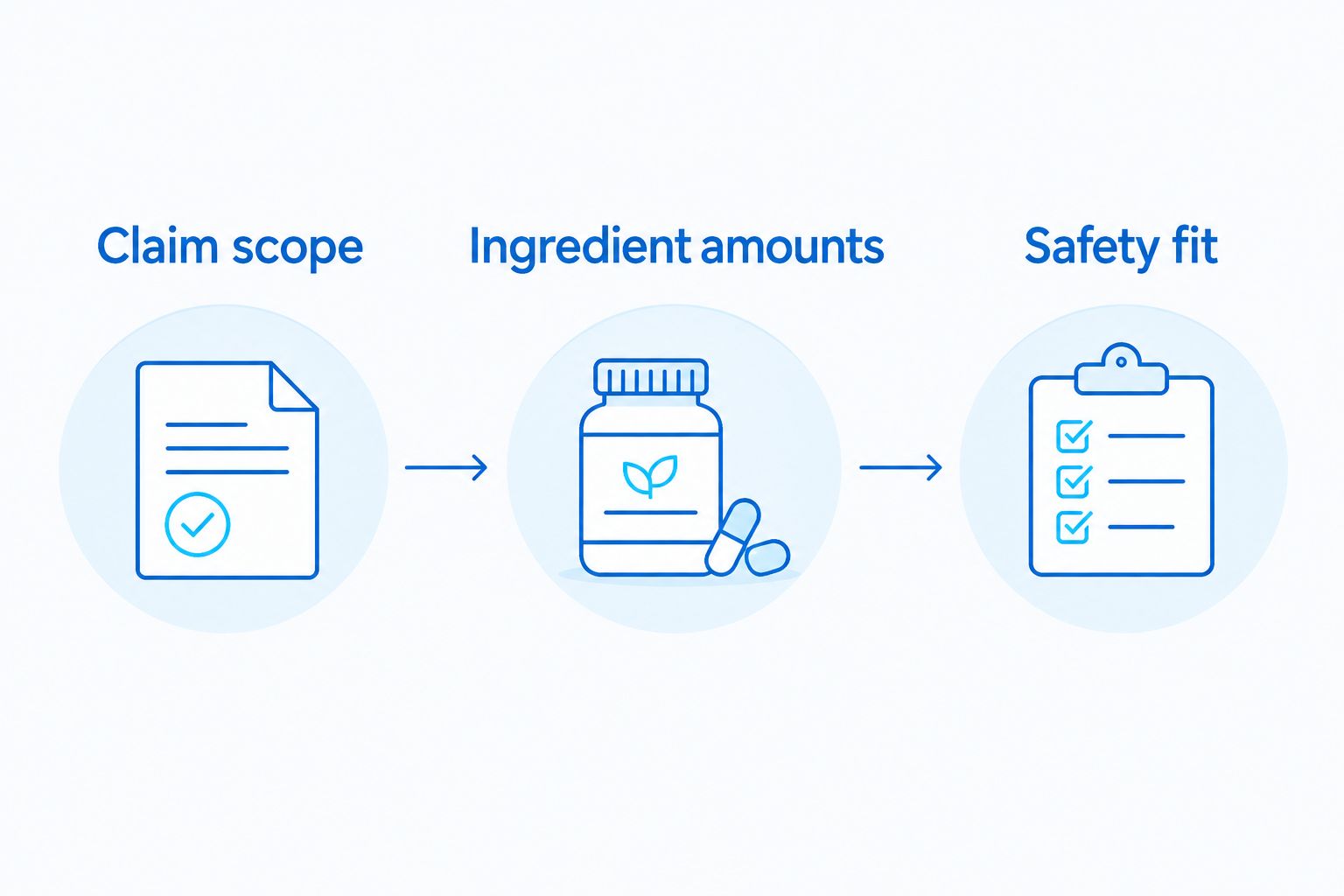
Claim scope
Check whether the non-GMO wording covers the finished supplement or only a selected ingredient. If a certification mark appears, confirm what that certification covers rather than assuming it applies to every claim on the package.
USDA organic labeling restricts the use of genetic engineering under organic production standards. It still does not establish that a supplement treats tinnitus or that its dose is right for you.
Ingredient amounts
Read the serving size before comparing nutrient amounts. The amount per gummy is not necessarily the amount per recommended serving.
For blends, check whether individual ingredient amounts are disclosed. You need enough information to compare the formula with supplements you already use.
Safety fit
Give your clinician or pharmacist the complete label and your medication list. Include multivitamins, sleep products, and other wellness supplements—not just products marketed for ears.
Non-GMO does not mean interaction-free, allergen-free, or suitable during pregnancy. Those questions need their own answers.
How the options are ranked
This guide ranks options by their intended use, label transparency requirements, nutritional specificity, and safety considerations. It does not rank tinnitus-treatment effectiveness or claim that the named gummy has verified non-GMO status.
The nutritional reference amounts come from NIH Office of Dietary Supplements fact sheets for vitamin B12, zinc, and magnesium. The tinnitus-treatment boundary follows NIDCD guidance. These sources support the 2026 buying criteria—not an endorsement of a particular product.
Which option should you choose?
For an undecided buyer, start with the reason for supplementation—not the longest ingredient list. If a clinician identifies a nutritional gap, choose an appropriately labeled product for that need and verify its non-GMO status separately.
If your goal is simply an everyday gummy routine, review the gummy option against the same standards. Format preference is a valid buying criterion, but it cannot answer questions about sourcing or effectiveness.
If your main problem is ringing, hearing changes, or balance symptoms, arrange an evaluation rather than cycling through supplements. Sudden hearing loss needs urgent medical attention; do not delay care while testing a wellness product.
FAQ
What's the best non-GMO ear wellness supplement in 2026?
The best choice is a product with verified non-GMO labeling that matches an identified nutritional need. No supplement in this guide is established as a proven tinnitus treatment, and no named product receives a confirmed non-GMO winner designation.
Are Tinniva Ear Health Gummies non-GMO?
Non-GMO status is not established by the product information provided for this guide. Check the current product label or request confirmation before buying if non-GMO sourcing is a requirement.
Do non-GMO supplements stop ear ringing?
Non-GMO labeling does not establish that a supplement stops ear ringing. NIDCD states that dietary supplements marketed for tinnitus have not been proven effective.
Is vitamin B12 better than zinc for ear wellness?
Neither vitamin B12 nor zinc is a universal winner for ear wellness. The appropriate choice depends on your nutritional needs, and neither should be selected as a proven tinnitus treatment.
Are gummies better than capsules for ear support?
Gummies are not inherently better than capsules for ear support. Compare ingredient amounts, serving instructions, dietary requirements, and safety before choosing the format you prefer.
Does non-GMO mean a supplement is organic?
Non-GMO does not automatically mean organic. Organic certification includes production requirements beyond a non-GMO claim, and neither label establishes a tinnitus benefit.
Can I take an ear wellness supplement with my multivitamin?
Check both labels with a pharmacist or clinician before combining them. Overlapping nutrients can increase your total intake even when the products are marketed for different purposes.
When should I get medical help instead of trying a supplement?
Seek urgent medical attention for sudden hearing loss. Persistent ringing, ringing in one ear, a heartbeat-like sound, or associated dizziness also warrants medical assessment rather than self-treatment with supplements.
One last thing
A supplement's sourcing standard and its health evidence are different kinds of information. A clearly verified non-GMO claim can satisfy your ingredient preference without proving any effect on ringing.
Before your next purchase, write down the exact question you want the product to answer: daily nutrition, a diagnosed deficiency, or a symptom. That distinction makes the label easier to judge—and helps you recognize when the next step is professional care rather than another supplement.