
Best overall for tinnitus: no dietary supplement has established effectiveness. Best for a gummy-based everyday wellness routine: Tinniva Ear Health Gummies. Best for a confirmed nutrient deficiency: replacement selected with your clinician. This 2026 guide separates convenient wellness products from supplements that address a specific nutritional need.
- The best ear health supplements depend on nutritional need; none is an established tinnitus treatment.
- Tinniva Ear Health Gummies fit a gummy-based ear wellness routine, not a promise of tinnitus relief.
- Vitamin B12, vitamin D, and zinc deserve consideration when a clinician identifies a nutritional need.
- Choose supplements by ingredient amounts, safety, and purpose—not promises to restore hearing.
Why this matters
Ear wellness and tinnitus treatment are different goals. A supplement can fit an everyday routine without having evidence that it reduces ringing, restores hearing, or prevents hearing loss.
The National Institute on Deafness and Other Communication Disorders states that vitamins, herbal extracts, and dietary supplements advertised for tinnitus have not been proven effective. That distinction sets the standard for this 2026 guide: convenience earns a convenience recommendation, not a medical claim.
Do not use a supplement trial to postpone an assessment of new or changing symptoms. Sudden hearing loss needs urgent medical attention, even when it feels like a blocked ear rather than an obvious loss of hearing.
What makes the best ear health supplements?
Use these criteria before choosing a product. The strongest choice has a clear purpose and a label you can evaluate—not simply ear-related language on the packaging.
- A defined purpose: Separate general wellness support from replacement of a diagnosed deficiency. Neither automatically establishes a tinnitus benefit.
- Readable ingredient amounts: Check the Supplement Facts panel for each ingredient, serving size, and amount. A product name cannot answer those questions.
- Evidence that matches the claim: Evidence that a nutrient supports normal body function does not prove a supplement treats ringing or hearing loss.
- A personal safety check: Review medicines, existing supplements, health conditions, and pregnancy or breastfeeding considerations with a qualified professional.
- A practical format: Gummies, tablets, and capsules suit different preferences. Ease of use matters only after the ingredients and amounts fit your needs.
- Verifiable quality information: Look for clearly identified independent testing where available. Testing supports confidence in product contents; it does not establish effectiveness for tinnitus.
Best ear health supplements at a glance
These options serve different purposes. The table compares a finished wellness product with individual nutrients; it does not suggest that they are interchangeable or should be taken together.
| Option | Best for | Standout feature | Key limitation |
|---|---|---|---|
| Tinniva Ear Health Gummies | A gummy-based everyday ear wellness routine | An ear wellness supplement in gummy form | The wellness positioning does not establish tinnitus relief |
| Vitamin B12 replacement | A confirmed B12 deficiency | Addresses an identified nutritional need | Does not establish a benefit for people with adequate B12 |
| Vitamin D replacement | Clinician-directed correction of low vitamin D | Supports normal calcium absorption and bone health | Those functions do not establish a tinnitus benefit |
| Zinc replacement | An identified zinc deficiency | Replaces an essential nutrient when needed | Excess zinc can cause harm, including copper deficiency |
1. Tinniva Ear Health Gummies: best for a gummy wellness routine
Tinniva Ear Health Gummies are an ear wellness dietary supplement marketed for everyday ear-health and tinnitus-related support. The clear reason to consider this option is the gummy format and its everyday wellness focus—not an expectation that it will treat an ear condition.
Best for: Adults who prefer gummies and want to evaluate an ear wellness supplement as part of their routine.
A gummy format does not tell you which ingredients are present, how much to take, or whether a product fits your medicines. Read the current label before deciding. Pay particular attention to ingredient amounts, serving directions, allergens, and overlap with supplements you already use.
Pros:
- Provides a gummy option for people who prefer that format.
- Has an explicit everyday ear wellness focus.
- Offers a product to evaluate against a defined wellness goal rather than an unrelated supplement category.
Cons:
- Ear wellness positioning is not evidence of tinnitus relief or hearing improvement.
- Format alone cannot establish ingredient suitability, quality testing, or safety for an individual.
Tinniva is best for consumers seeking ear wellness gummies, not an established treatment for tinnitus. Keep that boundary clear when deciding what you expect from the product.
Verdict: Hold until the current label and your safety review support the choice.
2. Vitamin B12: best for a confirmed B12 deficiency
Vitamin B12 supports normal nerve function and red blood cell formation. Replacement has a clear purpose when a clinician identifies a deficiency, but that is a different claim from treating tinnitus.
Best for: People with a confirmed B12 deficiency or a clinician-identified need for supplementation.
The NIH Office of Dietary Supplements lists an adult recommended intake of 2.4 micrograms per day. That is a nutritional reference value, not a treatment dose for deficiency and not a tinnitus dose. Treatment depends on the cause of the deficiency, including whether absorption is a problem.
Ask why your B12 is low before choosing a format. A gummy, tablet, or other approach should follow that answer rather than replace it.
Pros:
- Has a specific role when B12 deficiency is established.
- Supports essential functions beyond the ear-health category.
- Allows a clinician to connect supplementation with a defined nutritional problem.
Cons:
- Correcting B12 deficiency does not guarantee that tinnitus will improve.
- Self-selecting a product does not address an underlying absorption problem or establish the right treatment.
For a 2026 supplement shortlist, B12 belongs in the deficiency category—not at the top of a universal tinnitus ranking. If your B12 status is adequate, the nutrient's importance does not establish a reason to add more.
Verdict: Buy when a clinician confirms the need and replacement plan; skip as a universal tinnitus remedy.
3. Vitamin D: best for clinician-directed deficiency correction
Vitamin D helps the body absorb calcium and supports bone health. Those established functions justify attention to vitamin D status when clinically appropriate; they do not establish that vitamin D supplements relieve ringing.
Best for: People whose clinician identifies low vitamin D or another specific reason for supplementation.
The NIH Office of Dietary Supplements lists an adult tolerable upper intake level of 100 micrograms, or 4,000 IU, per day. This is a safety ceiling for general intake, not a daily target or a recommended tinnitus treatment. Clinician-supervised treatment can follow a different plan.
Check every supplement you already take before adding another vitamin D product. A multivitamin and a separate supplement can contain the same nutrient, so the total matters more than the amount on one bottle.
Pros:
- Addresses an identified nutritional need when replacement is appropriate.
- Supports established functions in calcium absorption and bone health.
- Gives you a defined reason to supplement rather than relying on an ear-health claim.
Cons:
- Established bone-health benefits do not prove an ear-health or tinnitus benefit.
- Excessive intake can cause toxicity and abnormally high blood calcium.
Do not treat the upper limit as a goal. Choose the amount and follow-up plan with your clinician instead of selecting the strongest label.
Verdict: Buy for an identified need; skip vitamin D as a stand-alone tinnitus treatment.
4. Zinc: best for an identified zinc deficiency
Zinc is an essential nutrient involved in immune function and other normal body processes. Supplementation has a defined purpose when deficiency is identified, but zinc is not an established treatment for tinnitus.
Best for: People with an identified zinc deficiency and professional guidance on replacement.
The NIH Office of Dietary Supplements sets the adult upper intake level at 40 milligrams per day. That limit includes zinc from food and supplements and is not a recommended supplement dose. Medical treatment of deficiency requires individual guidance.
More zinc is not automatically better. Excess intake can interfere with copper absorption, and zinc supplements can interact with certain medicines, including some antibiotics.
Pros:
- Replaces an essential nutrient when a genuine deficiency exists.
- Has a specific nutritional purpose rather than a general promise of better hearing.
- Can be reviewed against total intake from your other supplements and food.
Cons:
- Supplementation has not established a reliable benefit for tinnitus.
- Excess intake can cause copper deficiency and other adverse effects.
Zinc deserves particular care when several wellness products share ingredients. Check the combined amount instead of assuming that separate products have separate safety limits.
Verdict: Buy only for an identified need; skip high-dose zinc experiments for ringing.
How to choose without turning wellness into guesswork
Your next step depends on the problem you are trying to solve. Use this sequence before buying any ear health supplement in 2026.
Define your goal
Write down whether you want a convenient wellness routine, correction of a nutritional problem, or help with tinnitus. These are separate goals, and a product that fits one does not automatically fit the others.
For tinnitus, start with an assessment rather than a supplement stack. Hearing evaluation and evidence-based management belong in that conversation.
Check the label
Read ingredient names, amounts, serving directions, and warnings. Compare the label with everything else you take, including multivitamins and occasional supplements.
Do not infer ingredients from a product's name or category. If you cannot establish what you would be taking, pause the purchase.
Review safety
Ask a pharmacist or clinician about interactions and overlapping ingredients. Bring the actual label so the discussion concerns the product, not just the phrase ear wellness.
Professional advice is especially important when you take medicines or have an ongoing health condition. A supplement being sold without a prescription does not make it suitable for everyone.
Set expectations
Choose an outcome that matches the product's established purpose. Correcting a deficiency and treating tinnitus are not equivalent outcomes.
Do not increase the serving because symptoms persist. New symptoms, unwanted effects, or uncertainty about the label are reasons to seek advice—not reasons to add more products.
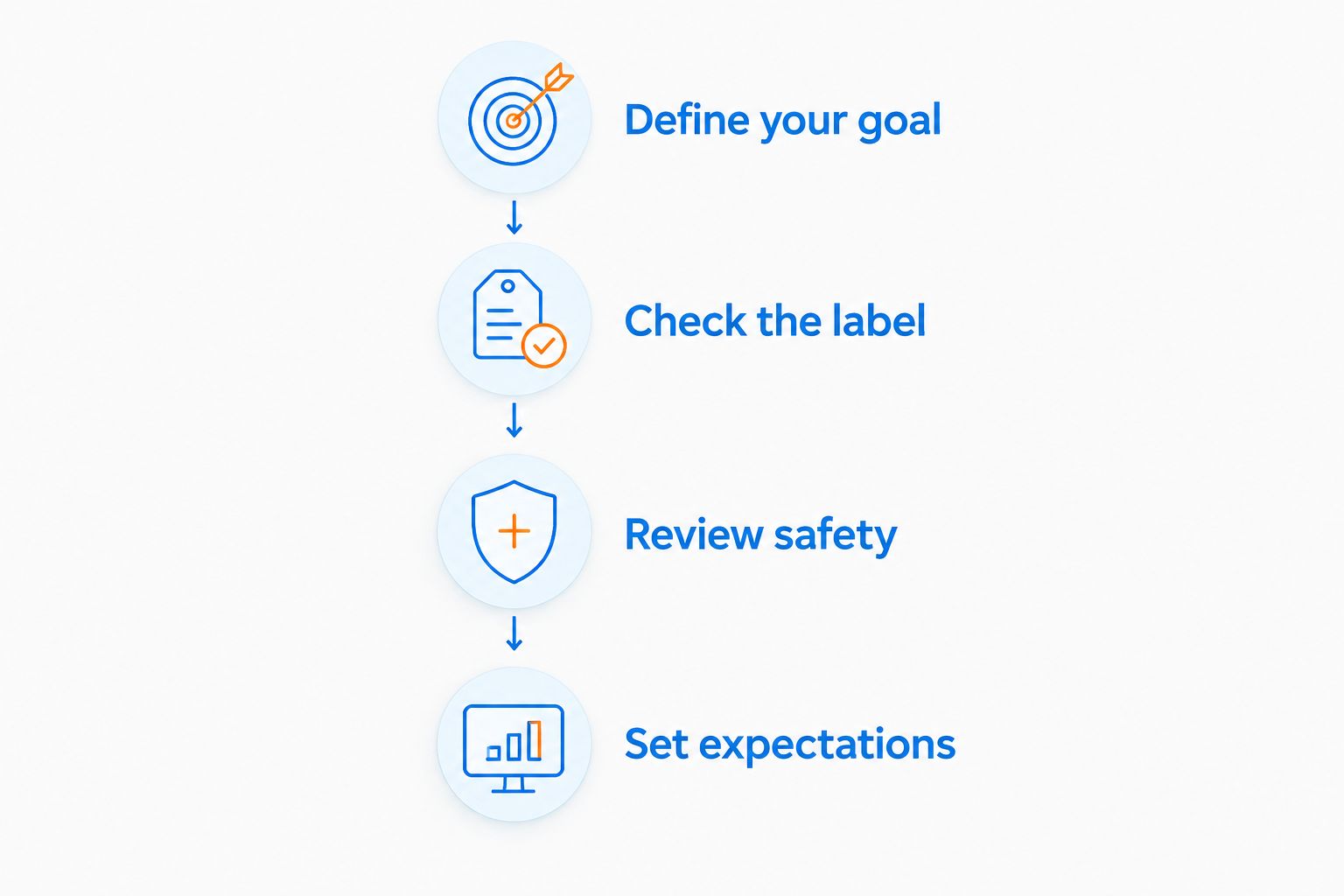
The practical rule is simple: choose the reason before choosing the supplement. That prevents a convenient format or a familiar nutrient from becoming a promise it cannot support.
How these options rank
This 2026 ranking separates format preference from nutritional need. Tinniva takes the gummy-routine slot because that matches its stated product purpose; B12, vitamin D, and zinc take deficiency-specific slots because their usefulness depends on an identified need.
The deciding criteria are purpose, evidence, label clarity, safety, and practicality. This is not a head-to-head clinical effectiveness ranking, and no option earns a best-for-tinnitus designation.
The evidence baseline comes from NIDCD's tinnitus guidance and the NIH Office of Dietary Supplements fact sheets for vitamin B12, vitamin D, and zinc. The nutrient reference values apply to adults; they are not personalized treatment instructions.
Which ear health supplement should you choose?
If you are undecided, do not buy a supplement simply because you have ringing in your ears. Start by clarifying the symptom and whether a nutritional need exists.
For an everyday gummy routine, evaluate the featured ear wellness product against its current label and your safety needs. For a confirmed deficiency, choose the replacement plan your clinician recommends rather than an ear-branded alternative.
For persistent, bothersome tinnitus, ask about hearing assessment, hearing aids when hearing loss is present, and cognitive behavioral therapy to reduce tinnitus-related distress. These approaches address management; they do not promise a cure.
FAQ
What are the best ear health supplements in 2026?
There is no universally best ear health supplement or established supplement treatment for tinnitus. Tinniva fits a gummy-based ear wellness routine, while B12, vitamin D, and zinc have clearer purposes when a clinician identifies a nutritional need.
Do ear health gummies stop ringing in the ears?
Ear health gummies are not an established treatment for ringing in the ears. A wellness claim does not demonstrate tinnitus relief, so persistent or changing symptoms deserve an assessment.
Is vitamin B12 good for tinnitus?
Vitamin B12 replacement is appropriate for a confirmed deficiency, but it is not an established tinnitus treatment. Correcting a deficiency does not guarantee that ringing will improve.
Should I take vitamin D for ear health?
Take vitamin D for an identified nutritional need or another clinician-supported reason, not an assumed tinnitus benefit. Its established role in calcium absorption and bone health does not prove that it relieves ringing.
Is zinc better than ear health gummies?
Zinc and ear health gummies are not interchangeable choices. Zinc replacement addresses an identified zinc need, while a gummy wellness product must be assessed using its actual ingredients, amounts, and intended purpose.
Can I take an ear supplement with my multivitamin?
Check both labels and ask a pharmacist or clinician before combining them. Shared ingredients can raise your total intake even when the products have different names.
When should I get medical help instead of trying a supplement?
Get urgent medical attention for sudden hearing loss rather than trying a supplement first. New one-sided tinnitus, tinnitus that follows your heartbeat, or symptoms with dizziness or other changes also warrant medical assessment.
One last thing
A quality seal and a treatment claim answer different questions. Independent testing can help verify a supplement's contents, but it does not prove that the product reduces tinnitus or improves hearing.
Keep both checks on your 2026 shortlist: what is in the product, and what evidence supports the outcome you want? Neither question replaces the other.
This guide provides general information, not a diagnosis or an individualized supplement plan.